

Maddy summaryHJRES 111 is a joint resolution seeking congressional disapproval of a U.S. Fish and Wildlife Service rule on barred owl management. The rule, published in September 2024, outlined strategies to reduce barred owl populations to protect the endangered spotted owl. Under the Congressional Review Act, this resolution would nullify the rule, preventing its implementation. If enacted, the rule would have no legal effect, and the agency could not enforce the barred owl management strategy.
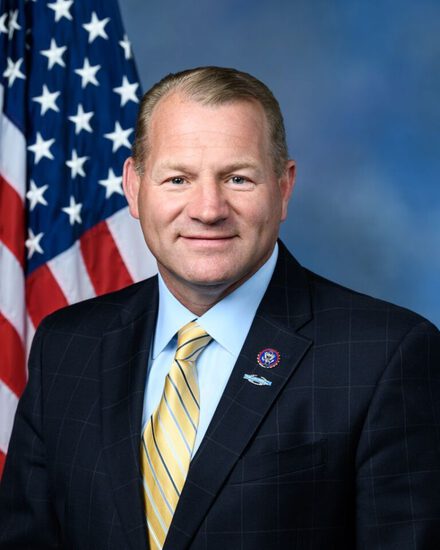
Rep. Troy E. Nehls
Sponsored bills
Maddy summaryThe PRIME Act exempts custom slaughter facilities from federal meat inspection requirements when they follow state laws and sell meat exclusively within the same state. It specifically allows facilities to slaughter animals and prepare meat without federal oversight if the products go only to household consumers or local businesses (like restaurants, hotels, or grocery stores) serving consumers directly in that state. The bill clarifies that this exemption does not override stricter state regulations governing custom slaughter or meat sales. This primarily affects small-scale slaughter operations and local food businesses operating within a single state's borders.
Maddy summaryThe End the Vaccine Carveout Act changes the National Vaccine Injury Compensation Program (NVICP) to allow individuals to sue vaccine manufacturers or administrators directly in court for vaccine-related injuries or deaths, without first needing to file a claim under the NVICP. It removes time limits for filing NVICP claims and repeals rules that previously let people choose between the program and a lawsuit for the same injury. The bill also specifically excludes COVID-19 vaccines from the definition of "covered countermeasure," meaning they are no longer protected by the same emergency liability shield that applied to other pandemic vaccines. This affects vaccine manufacturers, providers, and individuals who experience vaccine-related harm, shifting liability from the NVICP to the court system for most cases.
Maddy summaryHR 4698, the PAAW Act, prohibits the National Institutes of Health (NIH) from conducting or funding research that causes significant pain or distress to dogs or cats. This directly affects NIH-funded studies involving these animals, specifically banning research assigned to USDA-defined severe pain categories (D or E). The law takes effect 90 days after enactment and relies on existing USDA pain classification standards under the Animal Welfare Act. It creates a clear policy change limiting NIH research involving dogs and cats when severe pain is anticipated.
Maddy summaryThis bill amends the Internal Revenue Code to change how gambling losses are deducted for tax purposes. It allows taxpayers to deduct gambling losses against all income (not just gambling winnings) in the same tax year, directly affecting individuals who itemize deductions and have losses exceeding their gambling winnings. The key provision removes a prior restriction that limited loss deductions to winnings, making the deduction more broadly applicable. The change applies to taxable years beginning after December 31, 2025.
Maddy summaryThis bill (HR 4677) renames a U.S. Postal Service facility in Amarillo, Texas (located at 505 East 9th Avenue) as the "Mayor Jerry H. Hodge Post Office Building" to honor the late mayor. It updates all official U.S. government references to the building to reflect this new name. The bill has no policy impact beyond this ceremonial designation and affects no specific legislation or funding.
Maddy summaryThis bill modernizes the process for seasonal agricultural workers who need commercial driver's licenses (CDLs). It requires the Transportation Secretary to create online systems for easy license renewal (Section 2(a)) and clarifies that farm equipment like tractors and harvesters ("implements of husbandry") are not subject to commercial vehicle weight calculations (Section 2(b)). It directly affects farm-related service industries and their seasonal employees who operate restricted CDL vehicles. The changes simplify administrative processes and remove regulatory barriers for agricultural operations.
Maddy summaryThis bill establishes a new federal program to improve rural roads critical for agriculture. It provides funding for projects that replace weight-limited bridges, enhance access to farms and agricultural facilities, and upgrade safety on high-risk rural roads. The program targets local roads and rural minor collectors, with the federal government covering up to 90% of eligible project costs. It directly affects rural communities and agricultural businesses by addressing infrastructure barriers to farm operations and local economic activity. The funding is allocated through existing highway apportionment formulas under Title 23, U.S. Code.
Maddy summaryHR 4620 amends federal law to include rioting as a form of racketeering activity under Title 18, United States Code. This change would allow prosecutors to charge individuals who organize or participate in riots as part of a larger criminal enterprise under federal racketeering laws. The bill specifically targets coordinated riot activities linked to organized crime, not isolated or spontaneous protests.
Maddy summaryHR 3095 requires the U.S. Postal Service to assign a single, unique ZIP Code to 74 specific communities across 16 states (including Canyon Lake, CA; Castle Pines, CO; and Estero, FL) within 270 days of the bill's enactment. This addresses current issues where these communities share ZIP Codes with neighboring areas, causing mail delivery confusion. The bill directly affects residents and businesses in these designated locations by simplifying mail routing. It creates a concrete administrative change without altering broader postal policies or funding.