

Maddy summaryHR 5483, the Chloe Cole Act, prohibits health care professionals, hospitals, or clinics from providing certain gender-affirming treatments to minors under 18 that aim to alter their body to align with a gender identity different from their sex assigned at birth. This includes puberty blockers, sex hormones, and specific surgeries, unless the treatment falls under narrow exceptions like medically necessary care for disorders of sexual development, injuries, or detransition. The bill creates a private right for affected minors or their guardians to sue providers for damages in federal court, with strict liability for violations. It applies when interstate commerce is involved (e.g., payments, travel, communications) and sets a 25-year statute of limitations from the minor’s 18th birthday.
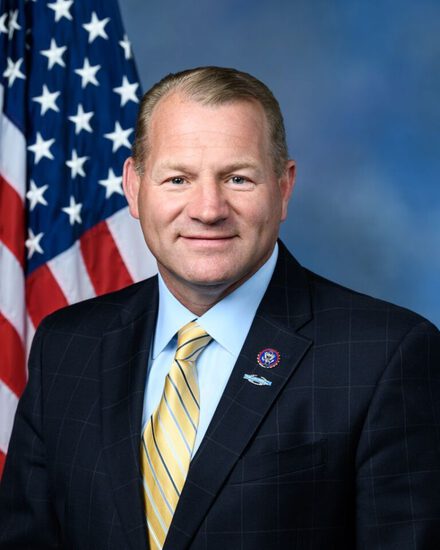
Rep. Troy E. Nehls
Sponsored bills
Maddy summaryThis bill would withhold 50% of federal highway funding from states that issue driver's licenses to people without proof of U.S. citizenship or legal residency status, starting in 2027. To comply, states must ban such licenses and allow local/state officials to share immigration status information with U.S. Customs and Border Protection. The Transportation Secretary would maintain a public database tracking each state's compliance with these requirements. The law directly affects state governments and their access to federal transportation funds, not individual drivers.
Maddy summaryHRES 702 is a symbolic resolution condemning the September 10, 2025, assassination of Charlie Kirk, founder of Turning Point USA and a conservative political activist. It expresses condolences to his family, praises first responders, and reaffirms the right to peaceful assembly. As a non-binding resolution, it does not create new laws or policies but serves as a formal statement of condemnation. The resolution directly addresses the House of Representatives' stance on this event, with no direct impact on constituents or legislation.
Maddy summaryHR 3592, the Protect LNG Act of 2025, prevents court challenges from halting LNG export permits during litigation. It requires courts to send environmental review disputes back to federal agencies (like the Department of Energy or FERC) instead of canceling permits, and mandates that agencies continue processing all LNG facility applications. The bill also sets a strict 90-day deadline for filing legal challenges after a permit is finalized. This directly affects LNG companies seeking export approvals and federal agencies overseeing these projects.
Maddy summaryThis bill amends the definition of "unauthorized alien" in immigration law by removing the phrase "or by the Attorney General" from Section 274A(h)(3) of the Immigration and Nationality Act. It is a procedural change to an existing legal definition with no new policy requirements or direct impact on specific groups. The bill does not alter enforcement mechanisms or create new obligations for employers or immigrants. This is a technical revision to statutory language, not a substantive policy change.
Maddy summaryThe PRICE Act (HR 5113) increases penalties for assaulting, resisting, or obstructing U.S. Immigration and Customs Enforcement (ICE) officers or employees. It would double the maximum prison sentence and adjust fines for such offenses when the victim is an ICE officer or employee. This bill directly affects individuals who commit violent or obstructive acts against ICE personnel by imposing harsher punishments. The key provision amends federal law to add a specific penalty enhancement for ICE-related cases within existing assault provisions.
Maddy summaryHR 5108 prohibits U.S. states from receiving federal Edward Byrne Memorial Justice Assistance Grant Program funds if they issue driver licenses to individuals without proof of U.S. citizenship or lawful presence, or if they restrict government entities from sharing immigration enforcement data with Homeland Security. States violating these rules must return unspent federal grant funds within 30 days and remain ineligible for future grants until they pass laws requiring driver license eligibility proof and permitting immigration data sharing. The bill directly affects states that currently issue licenses to undocumented immigrants or block information sharing with federal immigration authorities. It imposes concrete financial penalties rather than altering driver licensing rules themselves.
Maddy summaryHR 5015 amends the District of Columbia Home Rule Act to extend the emergency period during which the President can control the Metropolitan Police Department, changing the timeframe from 30 days to 180 days for both new and existing emergencies. This bill directly affects the President's authority to manage DC's police during declared emergencies and applies retroactively to emergencies already in place before the bill's enactment. The key change modifies specific provisions in Section 740 of the Act, replacing all references to "thirty days" with "180 days" to allow for longer presidential oversight.
Maddy summaryHR 5016, the "Keep Offenders Off Our Streets Act," requires that anyone charged with a crime in the District of Columbia must post a secured bail bond with reliable third parties (not just promise to appear) before being released before trial. This bill directly affects individuals facing pretrial release decisions in DC courts by eliminating the option of release on personal recognizance. The key mechanism replaces existing rules with a requirement that defendants execute a bail bond in an amount reasonably needed to ensure their court appearance. The law applies to all defendants appearing before a DC judicial officer, both before and after the bill's enactment.
Maddy summaryHR 4831 (ENFORCE Act) strengthens federal enforcement against specific child exploitation crimes. It removes the statute of limitations for offenses involving obscene visual representations of child sexual abuse, adds these crimes to sex offender registration requirements, and mandates courts to handle related evidence in ways that protect victims (e.g., keeping depictions with the government or court). The bill also creates a presumption for pretrial detention and extended supervised release for violations of these specific provisions. These changes directly affect individuals convicted under sections 1466A, 2252A, and related child exploitation laws, as well as federal courts handling such cases.