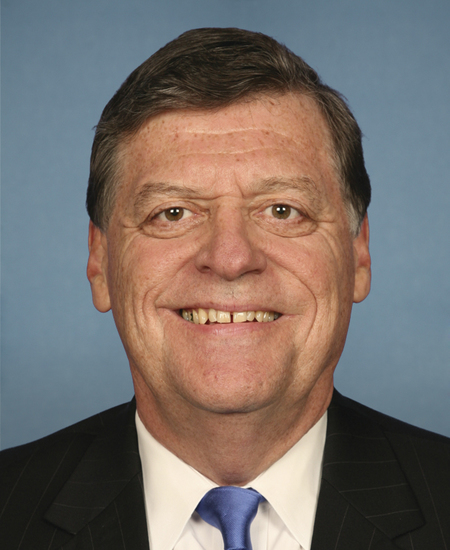
Photo of Tom Cole
R United States House · District 4 · Oklahoma On the 2026 ballot

Rep. Tom Cole

Compare
Total votes
2,818
all sessions
Attendance
98%
50 missed
Near the chamber average
With party
91%
of cast votes
Near the chamber average
Bipartisan score
5%
crosses aisle rarely
Near the chamber average
Sponsored
672
bills & resolutions
Lower than 94% of chamber peers
Committees
1
assignment
672 bills and resolutions

Sponsored bills

Total
672
Primary
61
Co-sponsor
611
This page
672
matching current filters
Co-sponsor HRES 1033
In committee · Washington House · Co-sponsor
Expressing support for the designation of the week beginning February 2, 2026, as "National Tribal Colleges and Universities Week".

Maddy summaryHRES 1033 is a symbolic resolution expressing support for designating the week beginning February 2, 2026, as "National Tribal Colleges and Universities Week." It directly recognizes 34 Tribal Colleges and Universities (TCUs) serving students from over 250 federally recognized tribes, including American Indians and Alaska Natives in economically disadvantaged areas. The resolution does not create new laws or funding but formally urges the public and organizations to observe the week through activities highlighting TCUs' role in preserving cultural traditions, providing accessible education, and contributing to the national economy (as noted in the resolution's preamble).

In committee Feb 3, 2026 1 co-sponsor
Primary HR 7325
In committee · Washington House · Lead sponsor
Truth and Healing Commission on Indian Boarding School Policies Act of 2026

Maddy summaryThis bill establishes a Truth and Healing Commission to investigate the history and impacts of U.S. Indian Boarding School policies on Native American communities, including their cultural, emotional, and physical effects. The Commission will document these policies' history through research, public meetings across all 12 Bureau of Indian Affairs regions and Hawai'i, and consultation with survivors, tribes, and relevant Federal agencies. It will develop recommendations for federal action on memorialization, education, and addressing ongoing impacts, with a final report due six years after enactment. The Commission will include a Survivors Truth and Healing Subcommittee with 15 members representing boarding school survivors, their descendants, and tribal communities. The bill requires trauma-informed care at public meetings and mandates consultation with Native American communities throughout the process.

In committee Feb 3, 2026 0 co-sponsors
Primary HR 7148
Signed into law · Washington House · Lead sponsor
Consolidated Appropriations Act, 2026

Consolidated Appropriations Act, 2026 This bill provides appropriations to several federal departments and agencies for the remainder of FY2026 and provides continuing FY2026 appropriations for the Department of Homeland Security (DHS) through February 13, 2026. It also extends various expiring programs and authorities. Specifically, the bill includes 5 of the 12 regular FY2026 appropriations bills: the Department of Defense Appropriations Act, 2026; the Departments of Labor, Health and Human Services, and Education, and Related Agencies Appropriations Act, 2026;  the Transportation, Housing and Urban Development, and Related Agencies Appropriations Act, 2026; the Financial Services and General Government Appropriations Act, 2026; and the National Security, Department of State, and Related Programs Appropriations Act, 2026. The departments, agencies, and activities funded in the bill include the Department of Defense, the Department of Labor, the Department of Health and Human Services, the Department of Education, the Department of Transportation, the Department of Housing and Urban Development,  the Department of the Treasury, the Executive Office of the President, the judiciary, the District of Columbia, the Department of State and related programs, the administration and oversight of foreign assistance programs,   bilateral economic assistance, international security assistance, multilateral assistance, export and investment assistance, and several related and independent agencies. In addition, the bill includes a continuing resolution (CR) that provides continuing FY2026 appropriations to DHS through the earlier of February 13, 2026, or the enactment of the DHS appropriations act. The CR funds most DHS programs and activities at the FY2025 levels. The bill also extends several expiring programs and authorities, including the U.S. Grain Standards Act; the Commodity Futures Trading Commission’s whistleblower program; the National Flood Insurance Program; the Forest Service's participation in the Agriculture Conservation Experienced Services Program; the Transportation Security Administration’s Reimbursable Screening Services Program; the Motor Carrier Safety Advisory Committee; several authorities and programs related to cybersecurity; the technology modernization fund and board; the U.S. Parole Commission; the special assessment on nonindigent persons or entities convicted of certain offenses involving sexual abuse or human trafficking; several immigration-related programs and authorities; the authority for the U.S. Sentencing Commission to promulgate certain guidelines or amendments related to the use of unmanned aircraft;  certain bankruptcy fees; trade preferences for Haiti and countries in sub-Saharan Africa; the Temporary Assistance for Needy Families (TANF) program; and several health care authorities and programs.


Signed into law Feb 3, 2026 0 co-sponsors
Co-sponsor HR 6874
In committee · Washington House · Co-sponsor
Roadway Safety Modernization Act of 2025

Maddy summaryThe Roadway Safety Modernization Act of 2025 requires states to integrate predictive safety tools - like data analytics and telematics - into federal highway safety programs to identify risks, evaluate projects, and improve planning. It directs the Department of Transportation to issue guidelines on data privacy, security, and validating these tools to ensure reliability. The bill also defines "intelligent freight transportation systems" to include technologies that enhance freight safety on highways. These changes apply directly to states administering highway safety funds and federal agencies like the Federal Highway Administration.

In committee Feb 2, 2026 1 co-sponsor
Co-sponsor HR 1663
Passed · Washington House · Co-sponsor
VSAFE Act of 2025

Maddy summaryThe VSAFE Act of 2025 establishes a Veterans Scam and Fraud Evasion Officer within the Department of Veterans Affairs to prevent and address fraud targeting veterans. This officer will develop communication plans, training, and reporting systems for veterans, families, caregivers, and survivors to identify and avoid scams, while coordinating with agencies like the IRS, DOJ, and Social Security Administration. The bill also modifies a home loan fee deadline in the VA loan program, changing a date from June 9, 2034, to June 23, 2034. It does not create new full-time positions or alter existing Inspector General authority.

Passed Jan 26, 2026 1 co-sponsor
Primary HR 6938
Signed into law · Washington House · Lead sponsor
Commerce, Justice, Science; Energy and Water Development; and Interior and Environment Appropriations Act, 2026

Commerce, Justice, Science; Energy and Water Development; and Interior and Environment Appropriations Act, 2026 This bill provides FY2026 appropriations to several federal departments and agencies for activities and programs related to commerce, law enforcement, science, energy and water development, public lands, and the environment. Specifically, the bill includes 3 of the 12 regular FY2026 appropriations bills: the Commerce, Justice, Science, and Related Agencies Appropriations Act, 2026; the Energy and Water Development and Related Agencies Appropriations Act, 2026; and the Department of the Interior, Environment, and Related Agencies Appropriations Act, 2026. The departments, agencies, and activities funded in the bill include the Department of Commerce, the Department of Justice, the National Aeronautics and Space Administration (NASA), the National Science Foundation, U.S. Army Corps of Engineers civil works projects, the Department of Energy, the Department of the Interior, the Environmental Protection Agency, the Forest Service, the Indian Health Service, and several related and independent agencies. The bill also sets forth requirements and restrictions for using funds provided by this and other appropriations acts.

Signed into law Jan 23, 2026 0 co-sponsors
Co-sponsor HR 7230
In committee · Washington House · Co-sponsor
Buying American Cotton Act of 2026

Maddy summaryThis bill creates a tax credit for businesses selling products made with U.S.-grown cotton. The credit equals 24% of the cotton's market value if processed only in the U.S. or in countries with U.S. trade deals, or 18% for other processing locations. To qualify, cotton must be digitally traced from U.S. farms to finished products and certified by the USDA as meeting origin requirements. It directly affects clothing and textile manufacturers selling qualifying products in the U.S. market.

In committee Jan 22, 2026 1 co-sponsor
Co-sponsor HR 1723
In committee · Washington House · Co-sponsor
Tribal Labor Sovereignty Act of 2025

Maddy summaryThe Tribal Labor Sovereignty Act of 2025 amends the National Labor Relations Act to explicitly include tribal governments and their enterprises as covered employers under federal labor law. It adds new definitions clarifying that "Indian tribe," "Indian," and "Indian lands" encompass federally recognized tribes, their members, and lands held in trust or within reservation boundaries. This change directly affects tribal nations, their member-owned businesses, and tribal employees by bringing them under the same labor protections (like collective bargaining rights) previously applicable to most private-sector employers. The bill does not create new programs but adjusts the legal definition to ensure tribal entities operating on tribal lands are subject to the NLRA’s standard labor regulations.

In committee Jan 16, 2026 1 co-sponsor
Primary HR 7006
Passed · Washington House · Lead sponsor
Financial Services and General Government and National Security, Department of State, and Related Programs Appropriations Act, 2026

Maddy summary# Summary of U.S. Department of State, Foreign Operations, and Related Programs Appropriations Bill This document is a comprehensive federal appropriations bill for the Department of State, foreign operations, and related programs for fiscal year 2026. It contains detailed provisions governing the allocation, use, and reporting requirements for foreign assistance funds. ## Key Provisions 1. **Funding Restrictions**: - Prohibits funding for abortions as a method of family planning or involuntary sterilization - Bans direct assistance to governments of Cuba, North Korea, or Iran - Prohibits assistance to countries that have experienced a military coup d'état - Restricts assistance to countries in default on U.S. loans - Prohibits funding for countries supporting international terrorism 2. **Notification Requirements**: - Mandates 15-day advance notification to Congress for program changes exceeding $1 million or 10% - Requires prior consultation for major program changes or reprogramming - Requires notification for assistance to specific countries including Afghanistan, Iran, Syria, and others 3. **Funding Allocation Rules**: - Specifies minimum funding levels for various programs - Limits deviations from designated amounts to 10% (up to 50% for national security emergencies) - Requires detailed reports on fund allocation at program, project, and activity levels 4. **Prohibited Expenditures**: - Bans first-class travel in contravention of federal regulations - Prohibits use of funds for tobacco promotion - Restricts use of funds for entertainment at recreational events - Requires computer network filters to block sexually explicit websites 5. **Reporting and Transparency**: - Requires posting of reports on public websites within 45 days - Mandates detailed beneficiary feedback collection for assistance programs - Requires impact evaluations of foreign assistance programs - Requires coordination of foreign assistance with Department of State programs 6. **Transfer Authorities**: - Allows limited transfers between appropriations accounts (up to 5%) - Requires prior consultation for significant transfers - Prohibits transfers to other departments without specific authorization This bill represents a comprehensive framework for U.S. foreign assistance, emphasizing accountability, transparency, national security considerations, and restrictions on certain types of funding. It contains numerous specific prohibitions and requirements aimed at ensuring U.S. foreign aid serves American interests while adhering to specific policy constraints.

Passed Jan 15, 2026 0 co-sponsors
Co-sponsor HRES 993
In committee · Washington House · Co-sponsor
Recognizing and expressing support for the Iranian people protesting for a free and democratic Iran.

Maddy summaryThis symbolic House resolution expresses U.S. congressional support for Iranian protesters demanding democracy and human rights. It condemns the Iranian regime's violent suppression of protests, including killings, mass arrests, and internet restrictions, while urging the regime to release political prisoners and restore communication access. The resolution reaffirms the Iranian people's right to self-determination through free elections and echoes a 2023 resolution (HCR 7) that similarly praised protesters. As a non-binding expression of support, it does not impose new policies or alter U.S. government actions.

In committee Jan 13, 2026 1 co-sponsor
Showing 31 to 40 of 672 bills
Previous 1 3 4 5 68 Next