

Maddy summaryThe Affordable Housing Credit Improvement Act of 2025 would reform the Low-Income Housing Credit program, which provides tax credits to developers of affordable housing. It would increase state allocations based on population with annual cost-of-living adjustments, modify tenant eligibility rules to allow higher income limits for some residents, and add protections for domestic violence victims in housing. The bill would simplify rules for rural and Native American housing projects, clarify credit eligibility requirements, and require greater transparency in program administration. These changes would directly affect developers, property owners, and low-income tenants in housing projects that receive LIHC tax credits.
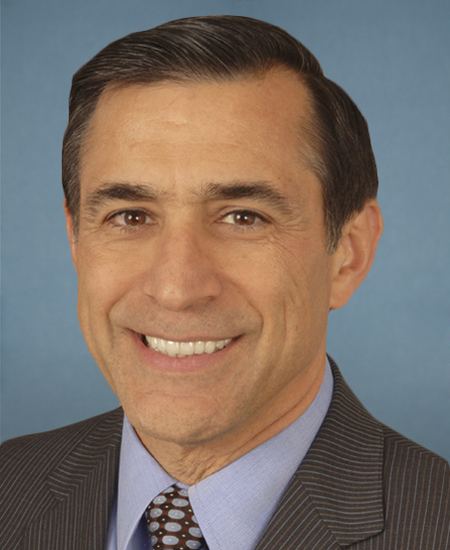
Rep. Darrell Issa
Sponsored bills
Maddy summaryHR 2694, the Election Results Accountability Act, sets strict deadlines for states to count ballots and certify results in federal elections. It requires states to count at least 90% of ballots within 72 hours of polls closing and complete full counting with official certification within two weeks. Exceptions apply for major disasters, cyberattacks, technical issues, or recounts, but states missing deadlines risk losing federal election administration funds unless they submit a compliance plan. This bill directly affects all states administering federal elections, aiming to standardize and expedite the certification process while maintaining flexibility for genuine emergencies.
Maddy summaryHR 2666, the CBO Scoring Accountability Act, requires the Congressional Budget Office (CBO) to annually analyze and publicly report on the actual costs and revenue impacts of major federal legislation for the first 10 years after it becomes law. It mandates that the CBO compare actual spending/revenue results against prior estimates, and if discrepancies exceed 10% for costs or revenue, the CBO must explain the causes in a report to Congress. This applies to bills projected to affect at least 0.25% of U.S. GDP in spending or revenue (defined as "major legislation"), and federal agencies must provide data to support these analyses. The bill aims to improve transparency around budget estimates without altering legislative processes.
Maddy summaryThis bill creates a $500 non-refundable tax credit for homeowners who purchase emergency generators for their primary residence. It applies only to individuals whose homes were in areas affected by two or more federally declared major disasters (excluding public health emergencies) within the past five years, and who previously received individual disaster assistance. The credit phases out for higher-income households ($300,000 joint filer limit, $150,000 for others) and expires two years after the bill becomes law. The credit covers generator costs up to $500 per household, aiming to help disaster-prone communities prepare for power outages.
Maddy summaryThe Recovery of Stolen Checks Act (HR 1155) allows taxpayers who have lost or had a paper tax refund check stolen to choose receiving a replacement refund via direct deposit instead of a paper check. Taxpayers must make this election within six months of the law's enactment, and the Treasury Department will establish the required procedures. The bill amends the Internal Revenue Code to require the Secretary of the Treasury to create regulations for this process, directly affecting individuals eligible for a replacement paper check due to loss or theft. This change simplifies the replacement method without altering eligibility for refunds.
Maddy summaryHRES 279 is a symbolic resolution expressing congressional support for designating the last Saturday of March 2025 as "Welcome Home Vietnam Veterans Day." It directly honors veterans who served in the Vietnam War (1961-1975), recognizing their service and the challenges they faced upon returning home. The resolution encourages public observance through ceremonies and activities to raise awareness of their contributions and support for veterans' re-adjustment to civilian life. It does not create new laws or allocate funding, serving only as a formal expression of support.
Maddy summaryThe Free Speech Fairness Act (HR 2501) would amend tax law to allow 501(c)(3) organizations, such as charities and educational nonprofits, to make political campaign statements as part of their regular activities without risking their tax-exempt status. The bill specifies that these statements must be made in the ordinary course of the organization's exempt purpose and result in only minimal additional costs. This change clarifies that routine political commentary by these groups does not violate their tax-exempt status under current rules. The provision would apply to tax years beginning after the bill's enactment.
Maddy summaryThe Freedom from Unfair Gun Taxes Act of 2025 would prohibit states and local governments from imposing taxes on the sale of firearms, ammunition, or firearm parts during interstate or foreign commerce. This bill directly affects state tax policies and manufacturers or dealers selling these items across state lines. It explicitly states that the bill does not change the existing federal tax on firearms and ammunition that funds wildlife conservation programs. The key provision bans state-level taxes for these sales in interstate transactions while preserving current federal funding mechanisms.
Maddy summaryHRES 254 is a non-binding resolution recognizing the 250th anniversary of the United States Marine Corps, to be observed on November 10, 2025. The resolution honors the Corps' founding at Tun Tavern in Philadelphia on November 10, 1775, its history of service in major conflicts, and its values of honor, courage, and commitment. It encourages public participation in commemorative events and local recognition of Marines' contributions to national defense.
Maddy summaryThe Air America Act of 2025 authorizes one-time payments of $40,000 to individuals who worked for Air America or its affiliated companies for at least five years during 1950-1976, or to their surviving spouses, children, or dependents. Additional payments of $8,000 per full year beyond five years are allowed. The program is capped at $60 million total funding, with claims required within two years of final regulations. Payments are a single lump sum with no ongoing benefits, and the bill explicitly states it does not create new entitlements beyond this one-time award.