Modification of sentence for marijuana-related offenses. Creates a process by which a person adjudicated delinquent or convicted of certain felony offenses involving, or violations of probation or community supervision related to, the possession, manufacture, selling, giving, distribution, transportation, or delivery of marijuana committed prior to July 1, 2021, who remains incarcerated or on probation or community supervision on July 1, 2026, may receive an automatic hearing to consider modification of such person's sentence. The bill sunsets on July 1, 2029. This bill is identical to SB 62.
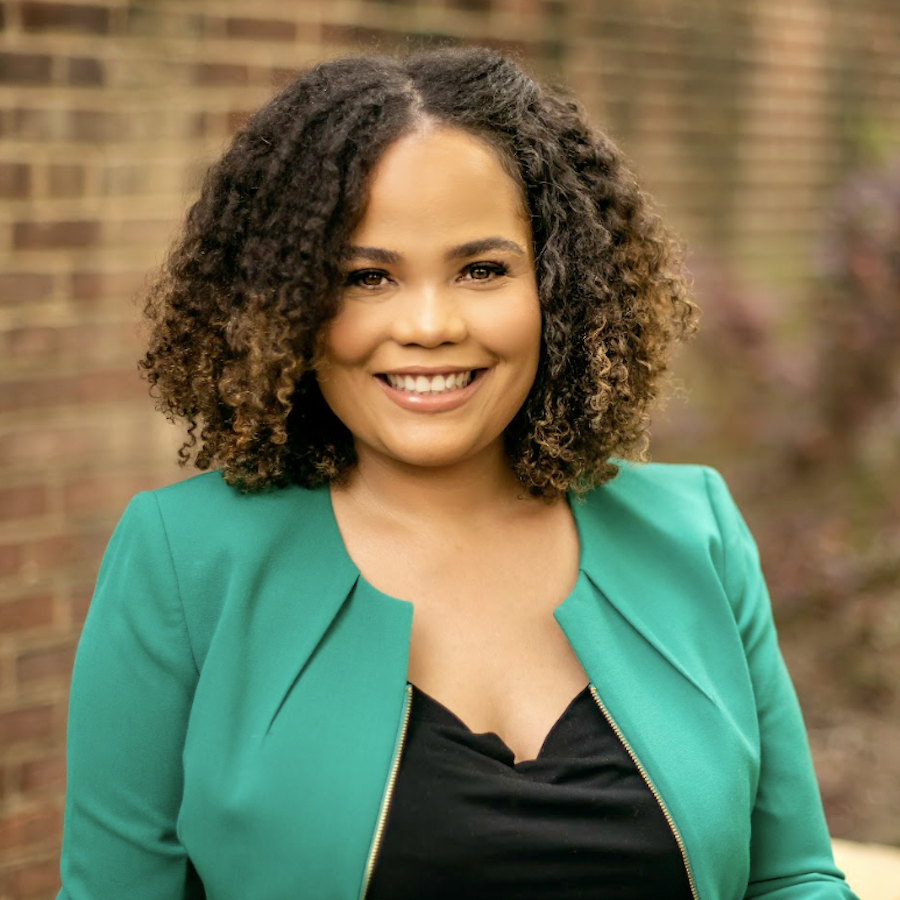
Del. Rae Cousins
Sponsored bills
Overtime for certain employees; domestic workers. Adds domestic workers, as defined in the bill, to provisions related to overtime pay. The bill has a delayed effective date of July 1, 2027. This bill is identical to SB 28.
Department of Small Business and Supplier Diversity; Small SWaM Business Procurement Enhancement Program established. Establishes the Small SWaM Business Procurement Enhancement Program with a statewide goal of 42 percent of certified small SWaM business, as such term is defined in the bill, utilization in all discretionary spending by executive branch agencies and covered institutions in procurement orders, prime contracts, and subcontracts, as well as a target goal of 50 percent subcontracting to small SWaM businesses in instances where the prime contractor is not a small SWaM business for all new capital outlay construction solicitations that are issued. The bill provides that executive branch agencies and covered institutions are required to increase their small SWaM business utilization rates by three percent per year until reaching the 42-percent target or, if unable to do so, to implement achievable goals to increase their utilization rates. In addition, the bill provides for a small SWaM business set-aside for executive branch agency and covered institution purchases of goods, services, and construction, requiring that purchases between $10,000 and $200,000 be set aside for award to certified small SWaM businesses, and a microbusiness set-aside for such purchases, requiring that such purchases up to $10,000 be set aside for award to microbusinesses.The bill creates the Division of Procurement Enhancement within the Department of Small Business and Supplier Diversity for purposes of collaborating with the Department of General Services, the Virginia Information Technologies Agency, the Department of Transportation, the State Council of Higher Education for Virginia, and covered institutions to further the Commonwealth's efforts to meet the goals established under the Small SWaM Business Procurement Enhancement Program, as well as implementing initiatives to enhance the development of small businesses, microbusinesses, women-owned businesses, minority-owned businesses, and service disabled veteran-owned businesses in the Commonwealth.Finally, the bill requires the Director of the Department of Small Business and Supplier Diversity to conduct, or contract with an independent entity to conduct, a disparity study every five years, with the next disparity study due no later than January 1, 2031. The bill specifies that such study shall evaluate the need for enhancement and remedial measures to address the disparity between the availability and the utilization of women-owned and minority-owned businesses.

Department of Human Resource Management; State Government Internship Coordinator. Requires the Department of Human Resource Management to establish and employ a State Government Internship Coordinator to attract high quality interns to the service of the Commonwealth with the goal of developing such interns in a manner that supports their ability to compete for positions in agencies of the Commonwealth upon conclusion of their internships and completion of their educational programs. The bill also requires the Department to establish and administer a system to provide professional development opportunities for state agency interns, intern supervisors, and human resources staff. This bill is identical to SB 286.
Prohibiting certain acts in furtherance of federal immigration enforcement in certain protected areas; exceptions; penalties. Prohibits certain federal civil immigration enforcement activities in certain protected areas including any courthouse, within 40 feet of any polling place or building used as a meeting place for the local electoral board while the electoral board meets to ascertain the results of an election, and any place or facility owned by the Commonwealth that is a hospital or other health care facility, a school or public institution of higher education, or an office of the attorney for the Commonwealth. The bill prohibits any civil arrest in a courthouse pursuant to a civil administrative warrant, subject to certain exceptions such as service or enforcement of an order for failure to pay child support or for any arrest occurring in connection with a court proceeding that is taking place or is scheduled to take place. The bill provides that such provisions shall not apply when such arrest is authorized by a judicial warrant or judicial subpoena.The bill also authorizes a local school board to include in its written school crisis, emergency management, and medical emergency response plan a procedure for notifying school board employees and parents of enrolled students of the presence of certain individuals on school property for immigration investigation or enforcement purposes. The bill requires each public institution of higher education to adopt a policy that requires an individual present on campus to investigate compliance with, enforce, or assist in an investigation or enforcement of any federal immigration law to present a valid judicial warrant or judicial subpoena before accessing any nonpublic area of the campus. This bill incorporates HB 1260, HB 1265, HB 1440, and HB 1442 and is identical to SB 351.
Law-enforcement officers; restrictions on wearing of facial coverings; exceptions; penalty. Prohibits any law-enforcement officer, defined in the bill, from wearing a facial covering, defined in the bill, while engaged in the performance of his official duties. The bill sets out several exceptions to such prohibition, including protective facial coverings to protect against disease, infection, and exposure to toxic substances and facial coverings worn by any law-enforcement officer assigned to a special weapons and tactics team while engaged in the performance of his official duties with such team. The bill subjects the law-enforcement officer to disciplinary action, including dismissal, demotion, suspension, transfer, or decertification, and creates a Class 1 misdemeanor for any law-enforcement officer who wears a facial covering in violation of the provisions of the bill unless the law-enforcement agency that employs such law-enforcement officer has adopted and established a written policy for and restrictions on the use of facial coverings. The bill also directs the Department of Criminal Justice Services to develop a model policy for and restrictions on the use of facial coverings by law-enforcement officers. This bill is identical to SB 352.
Virginia Residential Landlord and Tenant Act; landlord remedies; noncompliance with rental agreement; payment plan. Requires a landlord who owns more than four rental dwelling units or more than a 10 percent interest in more than four rental dwelling units, before terminating a rental agreement due to nonpayment of rent if the exact amount of rent owed is less than or equal to one month's rent plus any late charges contracted for in the rental agreement and as provided by law, to serve upon such tenant a written notice informing the tenant of the exact amount due and owed and offer the tenant a payment plan under which the tenant must pay the exact amount due and owed in equal monthly installments over a period of the lesser of six months or the time remaining under the rental agreement. The bill prohibits the landlord from charging any additional late fees during the payment plan period in connection with the unpaid rental amount for which the tenant entered into the payment plan so long as the tenant makes timely payments in accordance with the terms of the payment plan. The bill also outlines the remedies a landlord has if a tenant fails to pay the exact amount due and owed or enter into a payment plan within five days of receiving notice or if a tenant enters into a payment plan and after such plan becomes effective fails to pay rent when due or fails to make a payment under the terms of the agreed-upon payment plan. The bill has a delayed effective date of January 1, 2027.
Employment; paid sick leave; civil penalties; civil actions. Requires one hour of paid sick leave for every 30 hours worked for all employees of private employers and state and local governments, with certain exceptions. The bill requires that employees who are employed and compensated on a fee-for-service basis accrue paid sick leave in accordance with regulations adopted by the Commissioner of Labor and Industry. The bill provides that employees transferred to a separate division or location remain entitled to previously accrued paid sick leave and that employees retain their accrued paid sick leave under any successor employer. The bill allows employers to provide a more generous paid sick leave policy than prescribed by its provisions and specifies that employees, in addition to using paid sick leave for their physical or mental illness or to care for a family member, may use paid sick leave to seek or obtain certain services or to relocate or secure an existing home due to domestic abuse, sexual assault, or stalking. The bill requires the Commissioner to promulgate regulations for the implementation and enforcement of the bill's provisions by July 1, 2027.The bill authorizes the Commissioner, in the case of a knowing violation, to subject an employer to a civil penalty not to exceed $150 for the first violation, $300 for the second violation, and $500 for each successive violation. The Commissioner or Attorney General may commence administrative proceedings or bring a civil action to enforce the bill's provisions. Additionally, the bill authorizes an aggrieved employee to bring a civil action against the employer in which he may recover double the amount of any unpaid sick leave and the amount of any actual damages suffered as the result of the employer's violation. Certain provisions of the bill have a delayed effective date of July 1, 2027. This bill is identical to SB 199.
Voter registration; restoration of political rights upon release from incarceration; certain adjudications. Provides that any person who loses his political rights as a result of a felony conviction shall be invested with those rights upon his release from incarceration and shall be entitled to register to vote. The bill directs the Department of Corrections and the State Board of Local and Regional Jails to transmit to the Department of Elections certain information for incarcerated persons with a pending date of release and requires the Department of Elections to process the information and make the necessary changes to the voter registration system to permit such persons to register to vote by the date of the person's scheduled date of release. On the date of an incarcerated person's release, the appropriate authority is required by the bill to provide a voter registration application, information on returning the form by mail or completing it by electronic means, and an official release document to serve as a safety net for voter registration. The bill also amends the language regarding adjudications of mental incompetency for purposes of being qualified to vote; a person adjudicated to lack the capacity to understand the act of voting shall not be entitled to vote until that capacity has been reestablished. The bill has a delayed effective date of January 1, 2027, contingent upon the approval of the constitutional amendments at the November 3, 2026, general election. This bill is identical to SB 162.
Elections; conduct of election; ranked choice voting; locally elected offices; report. Expands the option to use ranked choice voting from only elections for county board of supervisors and city councils to any local governing body. The bill requires the State Board of Elections to provide standards and to approve vote tabulating software for use with existing voting systems in elections conducted by ranked choice voting. The bill provides for copying damaged or defective ballots that cannot be properly counted by electronic voting systems. The bill allows localities to request risk-limiting audits of elections conducted using ranked choice voting and provides that no such election may be included in any random drawing required to satisfy the general requirements for risk-limiting audits. The bill specifies that the State Board is required to produce generalized voter education materials on ranked choice voting and is also permitted to create and modify recount procedures to the extent necessary to accommodate a recount of an election. The bill directs the Department of Elections to review the testing and approval framework for voting equipment in the Commonwealth and submit a report of such review no later than the first day of the 2027 Regular Session of the General Assembly. Finally, the bill repeals the 2031 expiration of the option to use ranked choice voting in elections, making such option permanent. This bill is identical to SB 176.