

Paid family and medical leave insurance program; notice requirements; civil action. Requires the Virginia Employment Commission to establish and administer a paid family and medical leave insurance program with benefits beginning January 1, 2028. Under the program, benefits are paid to covered individuals, as defined in the bill, for family and medical leave. Funding for the program is provided through premiums assessed to employers and employees beginning January 1, 2027. The bill provides that the amount of a benefit is 80 percent of the employee's average weekly wage, not to exceed 120 percent of the state weekly wage, which amount is required to be adjusted annually to reflect changes in the statewide average weekly wage. The bill caps the duration of paid leave at 12 weeks in any application year and provides self-employed individuals the option of participating in the program.
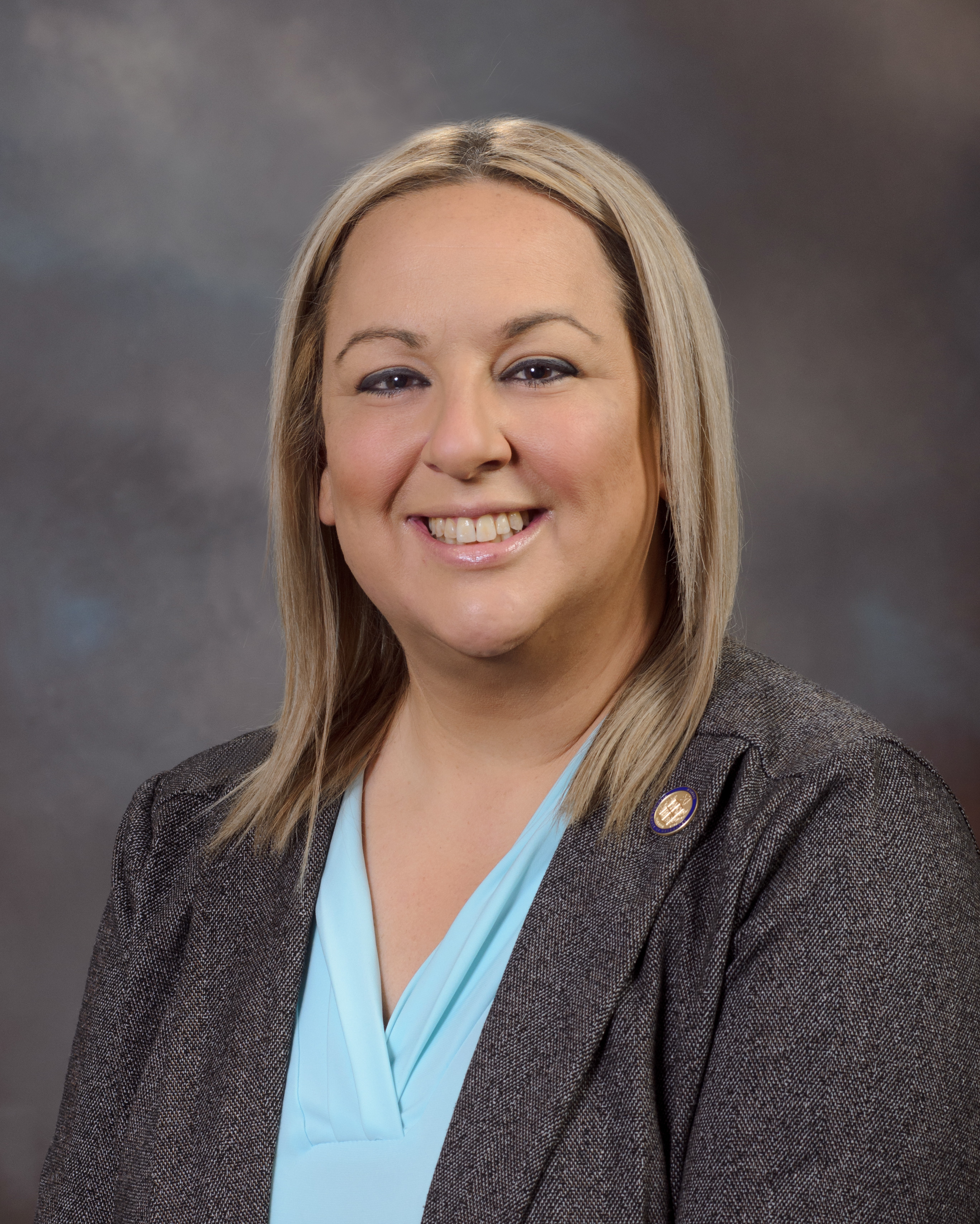
Del. Holly Seibold
Sponsored bills
Restorative housing and isolated confinement; restrictions on use. Prohibits the use of isolated confinement, defined in the bill, in state correctional facilities, subject to certain exceptions. The bill requires that before placing an incarcerated person in restorative housing or isolated confinement for his own protection, the facility administrator shall place the incarcerated person in a less restrictive setting, including by transferring such person to another institution or to a special-purpose housing unit for incarcerated persons who face similar threats. The bill requires that if an incarcerated person is placed in restorative housing or isolated confinement, such placement shall be reviewed every 48 hours and the facility administrator shall ensure that the incarcerated person receives a medical and mental health evaluation from certified medical and mental health professionals within one working day of placement in restorative housing or any form of isolated confinement. The bill also requires the facility administrator to notify the regional administrator in writing that an incarcerated person was placed in restorative housing or isolated confinement within 24 hours of such placement. Finally, the bill requires that formal reviews of an incarcerated person's placement in any form of isolated confinement shall be held in such person's presence, to inform him of any reason or reasons administrative officials believe isolated confinement remains necessary and give him an opportunity to respond to those reasons and that a formal ruling shall be provided to the incarcerated person within 24 hours. The bill has a delayed effective date of July 1, 2026, and is identical to SB 1409.
Virginia Public Procurement Act; solar photovoltaic equipment and facilities. Prohibits state and local agencies from including a provision in any request for proposal, procurement agreement, contract, ordinance, policy, permit, or accompanying document that directs the exclusion from use of any materials contained in or products associated with solar photovoltaic equipment and facilities that are manufactured in the United States. This bill is identical to SB 1165.
Speech-language pathology assistants; licensure, qualifications, scope of practice; revocation or suspension of license; continuing education. Adds speech-language pathology assistants to the professions governed by the Board of Audiology and Speech-Language Pathology. The bill also establishes qualifications, scope of practice, and supervision requirements for speech-language pathology assistants. The bill directs the Board of Audiology and Speech-Language Pathology to adopt regulations governing the speech-language pathology assistant profession by July 1, 2026, and specifies that the provisions governing the licensure of speech-language pathology assistants have a delayed effective date of July 1, 2027.
Intelligent Speed Assistance Program established; penalty. Establishes the Intelligent Speed Assistance Program to be administered by the Commission on the Virginia Alcohol Safety Action Program. The bill authorizes enrollment in such Program as an alternative to suspending a person's driver's license upon such person's conviction of certain speed-related offenses. The bill requires a court to order enrollment in such Program for a person convicted of reckless driving and who was found to have been driving in excess of 100 miles per hour, unless the court has otherwise ordered the suspension of such person's driver's license. The bill requires the Commissioner of the Department of Motor Vehicles to provide the option in a written notice for enrollment in such Program instead of license suspension for a person who has accumulated certain amounts of demerit points, and if such person does not respond to such notice within 30 days, the bill requires such suspension of his license. The bill requires any person enrolled in the Program to enter into and successfully complete the Program and install an intelligent speed assistance system, defined in the bill, in any motor vehicle owned by or registered to the participant and prohibits such person from driving any motor vehicle that does not have such a system installed. The bill creates a Class 1 misdemeanor for tampering with or attempting to bypass or circumvent such a system. The bill provides that any person who enters into the Program prior to trial may pre-qualify with the Program to have an intelligent speed assistance system installed on any motor vehicle owned or operated by him and that the court may consider such pre-qualification and installation. The bill has a delayed effective date of July 1, 2026.
Minimum wage. Increases the minimum wage incrementally to $15.00 per hour by January 1, 2027. The bill codifies the adjusted state hourly minimum wage of $12.41 per hour that is effective January 1, 2025, and increases the minimum wage to $13.50 per hour effective January 1, 2026, and to $15.00 per hour effective January 1, 2027. The bill requires the Commissioner of Labor and Industry to establish an adjusted state hourly minimum wage by October 1, 2027.
Purchase, possession, or transportation of firearm; assault and battery of a family or household member or intimate partner; penalties. Adds to the definition of "family or household member," as such definition relates to juvenile and domestic relations district court, a person's intimate partner, defined in the bill as an individual who, within the previous 12 months, was in a romantic, dating, or sexual relationship with the person as determined by the length, nature, frequency, and type of interaction between the individuals involved in the relationship. The bill also adds to the definition of "family or household member," as such definition relates to a person's purchase, possession, or transportation of a firearm following an assault and battery of a family or household member, any individual who cohabits or who, within the previous 12 months, cohabitated with the person. Finally, the bill provides that any person who knowingly and intentionally purchases, possesses, or transports any firearm following a misdemeanor conviction for an offense that occurred on or after July 1, 2025, for the offense of assault and battery against an intimate partner or an offense substantially similar under the laws of any other state or of the United States is guilty of a Class 1 misdemeanor. This bill is identical to SB 883.
Importation, sale, manufacture, etc., of assault firearms and certain ammunition feeding devices prohibited; penalties. Creates a Class 1 misdemeanor for any person who imports, sells, manufactures, purchases, or transfers an assault firearm, as that term is defined in the bill with some exceptions, and prohibits a person who has been convicted of such violation from purchasing, possessing, or transporting a firearm for a period of three years from the date of conviction. The bill provides that an assault firearm does not include any firearm that is an antique firearm, has been rendered permanently inoperable, is manually operated by bolt, pump, lever, or slide action, or was manufactured before July 1, 2025. The bill also prohibits the sale of a large capacity ammunition feeding device, as that term is defined in the bill. The bill provides that any person who willfully and intentionally (i) sells an assault firearm to another person or (ii) purchases an assault firearm from another person is guilty of a Class 1 misdemeanor and that any person who imports, sells, barters, or transfers a large capacity ammunition feeding device is guilty of a Class 1 misdemeanor. The bill also makes it a Class 1 misdemeanor for any person younger than 21 years of age to import, sell, manufacture, purchase, possess, transport, or transfer an assault firearm regardless of the date of manufacture of such assault firearm with some exceptions. This bill is identical to SB 1181.
Collective bargaining by public employees; exclusive bargaining representatives. Repeals the existing prohibition on collective bargaining by public employees. The bill creates the Public Employee Relations Board, which shall determine appropriate bargaining units and provide for certification and decertification elections for exclusive bargaining representatives of state employees and local government employees. The bill requires public employers and employee organizations that are exclusive bargaining representatives to meet at reasonable times to negotiate in good faith with respect to wages, hours, and other terms and conditions of employment. The bill repeals a provision that declares that, in any procedure providing for the designation, selection, or authorization of a labor organization to represent employees, the right of an individual employee to vote by secret ballot is a fundamental right that shall be guaranteed from infringement. The bill has a delayed effective date of July 1, 2026. This bill is identical to SB 917.
Purchase of firearms; waiting period; penalty. Provides that no person shall sell a firearm unless at least five days have elapsed from the time the prospective purchaser completes the written consent form to have a licensed dealer obtain criminal history record information, with exceptions enumerated in relevant law. The amendments to the Code of Virginia in the bill are identical to the amendments to the Code of Virginia in HB 2631.