High-risk artificial intelligence; development, deployment, and use; civil penalties. Creates requirements for the development, deployment, and use of high-risk artificial intelligence systems, defined in the bill, and civil penalties for noncompliance, to be enforced by the Attorney General. The bill has a delayed effective date of July 1, 2026.
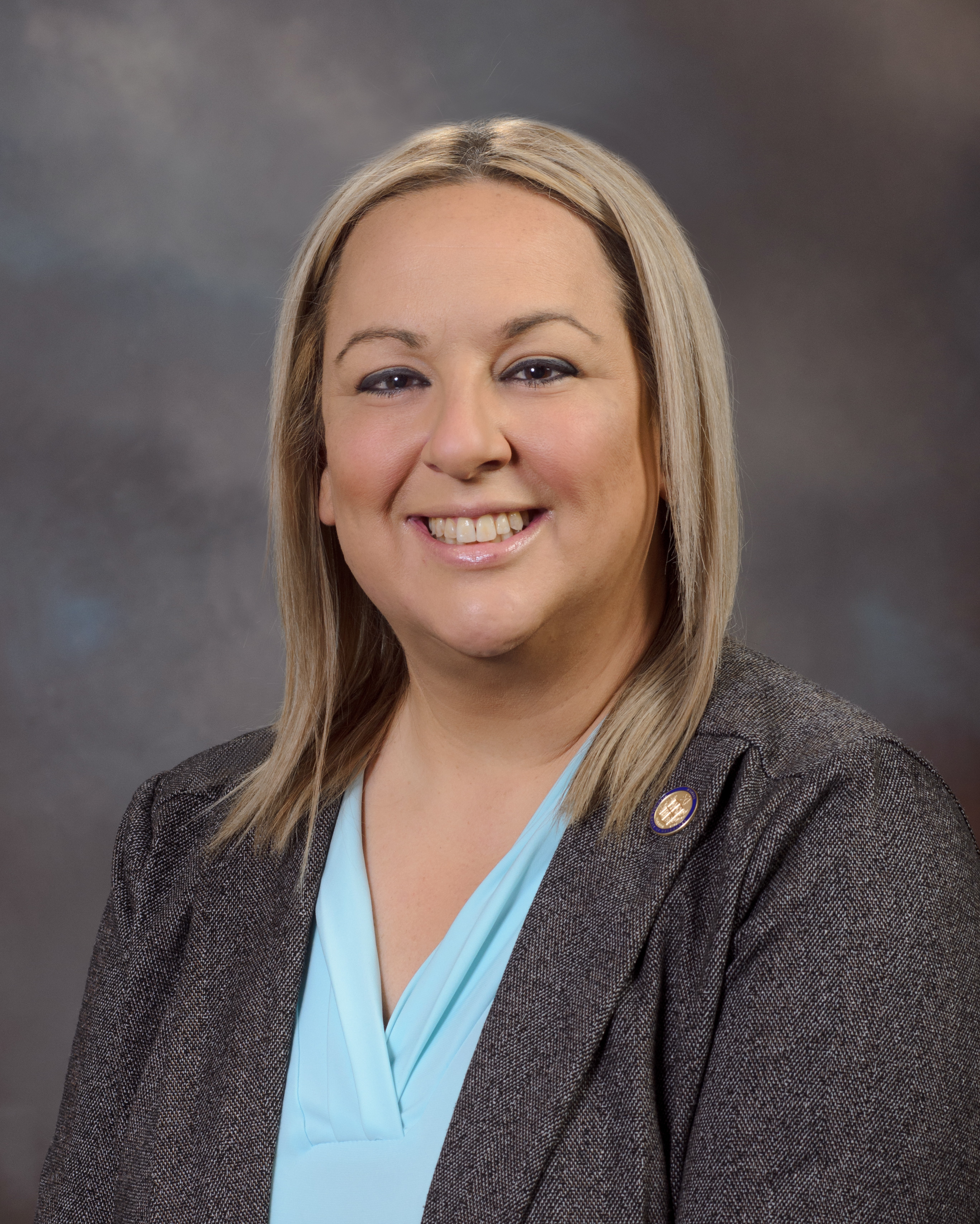
Del. Holly Seibold
Sponsored bills
Office of the Public Utility Ombudsman; established. Requires the State Corporation Commission to establish the Office of the Public Utility Ombudsman to protect the interests of residential customers of public utilities. The Office of the Public Utility Ombudsman shall serve (i) residential customers of public utilities that are jurisdictional or of limited jurisdiction and (ii) residential customers who cannot be assisted by other Commission staff due to a potential conflict of interest. The bill has a delayed effective date of July 1, 2026.
Electric utilities; integrated resource plans. Makes various changes related to the content and process for an integrated resource plan (IRP) developed by an electric utility that provides a forecast of its load obligations and a plan to meet those obligations. The bill (i) extends the planning timeframe from 15 to 20 years; (ii) requires Appalachian Power to file an IRP by removing an exception from the definition of "electric utility"; (iii) changes the frequency a utility is required to file an IRP from biennially to triennially; and (iv) requires utilities to consider the use of grid-enhancing technologies as alternatives to new transmission infrastructure, and when new transmission lines are envisioned, to provide the reasons grid-enhancing technologies are not sufficient to defer or eliminate the need for new transmission infrastructure.The bill requires that the current stakeholder review process for integrated resource plans be facilitated by a third-party facilitator selected by the State Corporation Commission and compensated by the utility. The bill requires, as part of the stakeholder review process, the utility to provide stakeholders with reasonable access to the same modeling software, modeling assumptions, modeling inputs, and data used by the utility to evaluate supply and demand resources in its integrated resource plan to enable stakeholders to create modeling scenarios for the utility's consideration during the development of its integrated resource plan.The bill requires the Commission to (a) establish guidelines that ensure that utilities develop comprehensive integrated resource plans and provide meaningful public engagement and maximum transparency during the planning process; (b) conduct a proceeding by July 1, 2026, and at least once every five years thereafter, to identify and review each of its existing orders relevant to integrated resource plans to determine if such orders remain necessary and effective and are not overly burdensome; and (c) to convene a work group to make recommendations on the required guidelines.Finally, the bill requires any petition to permit the construction and operation of electrical generating facilities filed by an electric utility that is required to file an integrated resource plan to (1) incorporate the intent to construct and operate such generating facilities or (2) if the utility's intent to construct and operate such generating facilities was not identified in the utility's most recently approved integrated resource plan, provide a detailed explanation of why the utility did not anticipate the need for such generating facilities.As introduced, this bill was a recommendation of the Commission on Electric Utility Regulation. This bill is identical to SB 1021.

State correctional facilities; cell conditions; temperature monitoring; report. Requires the Department of Corrections to require that heat and air conditioning be provided in all state correctional facilities that are capable of controlling the interior temperature of such facilities so that a temperature of not less than 65 degrees Fahrenheit or more than 80 degrees Fahrenheit is maintained in each such facility. The bill also directs the Department of Corrections to evaluate the implementation of remote temperature monitoring and to report its findings to the General Assembly by October 1, 2025.
Prevailing wage rate; apprenticeship requirements; RPS-eligible source work; penalties. Requires each public service company, including its contractors and subcontractors, or third-party developer to ensure payment at the prevailing wage rate set by the Department of Labor and Industry for any mechanic, laborer, or worker employed, retained, or otherwise hired to perform construction, maintenance, or repair work for certain electricity generating sources. The bill requires each public service company to (i) ensure that 15 percent of the total labor hours of such work is performed by qualified apprentices and (ii) employ at least one qualified apprentice if four or more individuals are employed to perform such work. Under the bill, a public service company that fails to meet the requirements of its provisions is required to make penalty payments to the Commissioner of Labor and Industry. This bill is identical to SB 853.
Overtime for certain employees; domestic service workers and live-in domestic workers. Adds domestic workers, as defined in the bill, to provisions related to overtime pay. The bill has a delayed effective date of July 1, 2026. This bill is identical to SB 897.
Carrying a firearm or explosive material within Capitol Square or building owned or leased by the Commonwealth; exemptions; public institutions of higher education; penalty. Permits the governing board of a public institution of higher education to adopt a policy prohibiting the carrying of any firearm, ammunition, or components or combination thereof within any building owned or operated by such public institution of higher education. The bill allows such policy to include security measures that are designed to reasonably prevent the unauthorized access of buildings that are open to the public. Finally, the bill exempts certain activities, defined in the bill, operated at public or private institutions of higher education from any policy created by a governing board. This bill is identical to SB 1182.
Public school buildings; indoor air quality; inspection and evaluation. Establishes several enumerated requirements for local school divisions to ensure indoor air quality in each public school building in the local school division, including providing for an inspection and evaluation program at least once every two years and an industry-recognized uniform inspection and evaluation at least once every four years. This bill is identical to SB 1413.
Maddy summaryThis bill (HR 750) is a symbolic resolution commending Virginia Union University for its contributions to education and the community. It does not create new laws, allocate funds, or affect any specific policies or individuals beyond expressing formal recognition. The resolution passed the House of Representatives by voice vote on February 18, 2025, and is now formally recorded. As a commemorative measure, it has no binding legal effect.
Maddy summaryHR 719 is a non-binding House resolution commemorating the life of Joshua Plante. It does not create new laws or affect any policies, as it is a symbolic gesture honoring an individual. The resolution was formally agreed to by the House on February 18, 2025, and passed without committee referral or debate. Such resolutions are common for recognizing community members or public figures but carry no legal effect. The bill's sole purpose is to express collective remembrance, consistent with standard congressional commemorative practice.