

Maddy summaryThis bill amends Vermont state law to clarify how harassment is defined and evaluated in schools, directly affecting students, families, and school administrators. It removes the requirement that harassment must be "severe or pervasive" to be unlawful, allowing a single incident to constitute harassment if it objectively undermines a student's education or creates an intimidating environment. The law also specifies that harassment can be determined by looking at all circumstances together rather than isolating individual incidents, and it clarifies that harassment can occur even if the student continues their education or if the conduct happens outside school grounds. However, the bill maintains that behavior considered a petty slight or trivial inconvenience by a reasonable person would not qualify as harassment. These changes take effect on July 1, 2024.
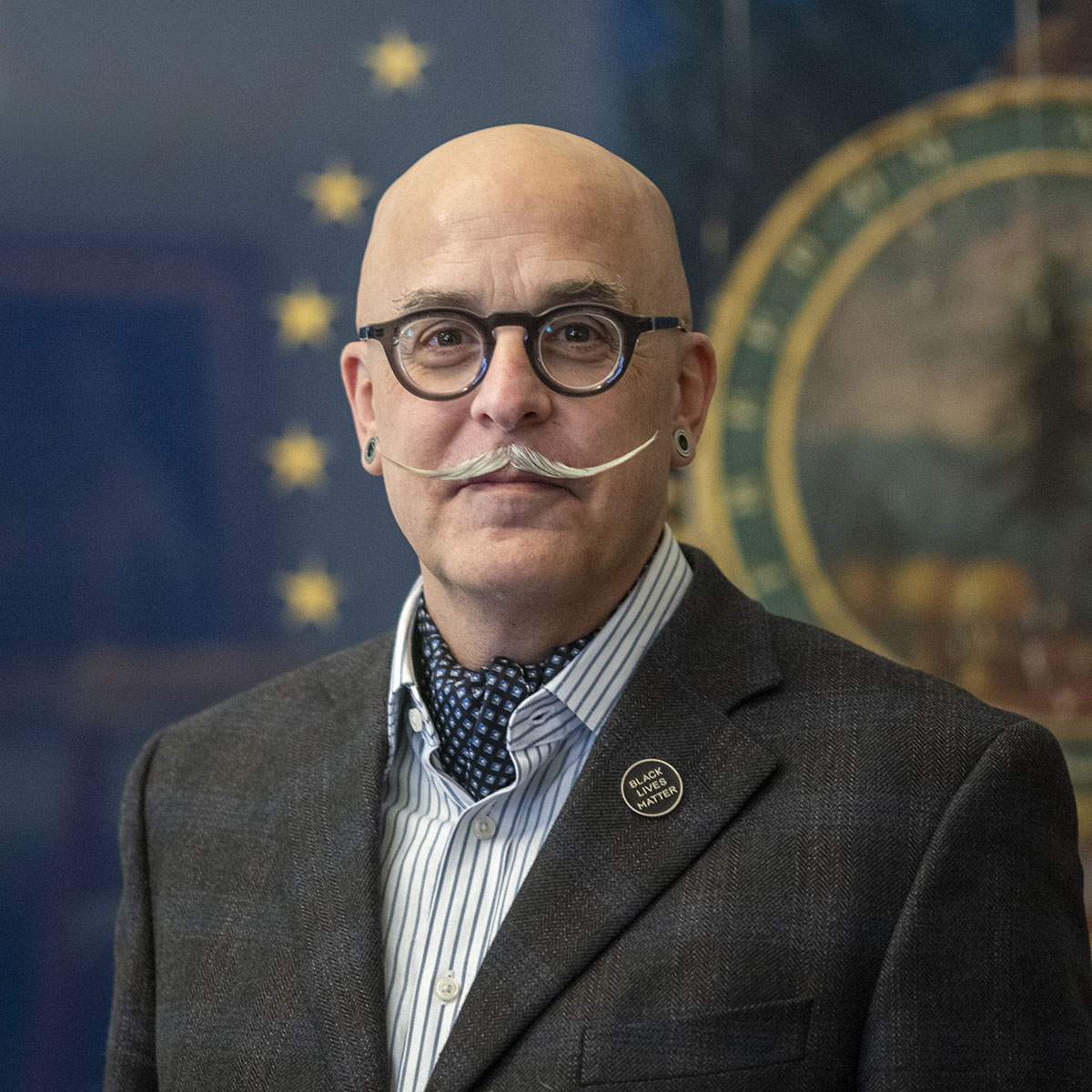
Rep. Troy Headrick
Sponsored bills
Maddy summaryThis bill prohibits public and school libraries in Vermont from banning or removing books and other library materials based on partisan or doctrinal disapproval. It requires the State Librarian to create rules that protect library collections, aligning with the American Library Association's Library Bill of Rights, and mandates that each library adopt a materials retention policy complying with these rules. Libraries that violate these retention rules would lose eligibility for state grants and funding, as they must submit an affidavit confirming compliance before receiving any state financial support. The legislation applies to both public and school libraries and takes effect on July 1, 2024.
Maddy summaryThis bill creates the Climate Superfund Cost Recovery Program, which would require fossil fuel companies that operated in Vermont between 2000 and 2019 to pay for their share of climate change costs. The program targets entities involved in extracting coal, oil, or natural gas, charging them based on how much greenhouse gas their products contributed to global emissions. Money collected from these payments would go into a dedicated fund to finance climate resilience projects like flood protections, upgraded infrastructure, and health programs addressing climate-related health risks. The law defines specific types of infrastructure projects eligible for funding and establishes rules for determining which companies must pay and how much they owe.
Maddy summaryThis bill requires Vermont school districts and approved independent schools to create and enforce policies for selecting library materials, guided by the First Amendment and established intellectual freedom standards. The legislation specifically prohibits removing library materials based on partisan politics, author or character demographics, personal discomfort, or content addressing sexual health and student educational needs. School library staff will be responsible for curating collections that match students' developmental levels while protecting students' First Amendment rights. The policy must be made available to the public and takes effect on July 1, 2024.
Maddy summaryThis bill updates Vermont's laws to strengthen protections for threatened and endangered species by requiring the Secretary of Natural Resources to revise the state species list every three years and to designate critical habitat for each listed species. It prohibits the sale, transport, or import of these species within the state and restricts their taking to specific purposes like scientific research or enhancing their survival. The legislation also mandates that the Secretary develop rules to help farmers and foresters avoid harming species or their habitats while consulting with affected landowners and neighboring jurisdictions.
Maddy summaryThis bill establishes the Center of Literacy Research and Reading Success within Vermont's Agency of Education to oversee statewide literacy assessment, instruction, and teacher training. It requires public schools to provide research-based reading instruction and mandates screening for reading proficiency in kindergarten through third grade, with additional screening for students in grades four through eight who fall below proficiency. The legislation prohibits the use of the three-cueing system in literacy instruction and sets new standards for educator preparation programs and licensing related to reading instruction. The bill also creates funded positions to support literacy work, develops a model student reading plan, and requires annual reporting on student reading performance and district compliance starting in 2026.
Maddy summaryThis bill creates a two-year pilot program to fund a community-based organization that coordinates mental wellness and climate resilience efforts across Vermont. The program would receive $100,000 in fiscal year 2025 from the state's General Fund to support activities that address how extreme weather events and other social stresses impact mental health. The coordinating body must include representatives from diverse groups including schools, faith organizations, environmental groups, disaster response agencies, and people with lived experience of mental health challenges. The program uses a public health approach to prevent mental health problems before they emerge and to help entire communities build resilience against various adversities.
Maddy summaryThis bill, titled the Vermont Defend the Guard Act, would require the Governor of Vermont to review every federal order placing the Vermont National Guard on active duty for combat to ensure it complies with the U.S. Constitution. The law specifically mandates that deployment only occur if Congress has declared war or explicitly called the Guard for specific purposes like repelling invasions, suppressing insurrections, or executing constitutional laws. If the Governor determines an order does not meet these requirements, the bill authorizes the Governor to take action to prevent deployment and requires a written report to state legislative committees within 30 days. The Attorney General would also be authorized to represent the state in legal challenges to prevent unconstitutional federal deployment orders. This measure directly affects the Vermont National Guard and the state's executive and legal branches by establishing new review procedures for federal military orders.
Maddy summaryThis bill proposes term limits for Vermont's state legislators and executive officers, restricting how many consecutive terms individuals can serve in these positions. It would allow state senators to serve a maximum of five consecutive two-year terms and state representatives to serve five consecutive terms, while executive officials like the governor, attorney general, and secretary of state would be limited to four or five consecutive two-year terms depending on the office. The legislation includes a provision allowing individuals who reach their term limits to run for different offices where they have not yet met the limit, and it applies these restrictions retroactively to current officeholders, permitting them to finish their current terms but preventing them from seeking re-election to the same position. The bill would take effect on July 1, 2024, and was introduced by four state representatives who referred it to the Committee on Government Operations and Military Affairs.
Maddy summaryThis bill proposes a new 11 percent excise tax on the retail sale of firearms, firearm precursor parts, and ammunition in Vermont, which would be paid by sellers at the time of each transaction. The tax applies to both licensed firearm dealers and ammunition vendors, with licensed dealers required to collect the tax during background checks and remit it quarterly to the state. All revenue generated from this tax would be deposited into the Domestic and Sexual Violence Special Fund, which supports grants for domestic and sexual violence prevention services. The legislation excludes transfers exempt from background checks, such as those to law enforcement agencies or immediate family members, and would take effect on July 1, 2025.