Issue · Healthcare

Healthcare

Every healthcare bill, vote, and legislator stance in Vermont, automatically classified by Maddy, our AI policy reader.

Total bills
223
2025-2026 Regular Session
Top supporter
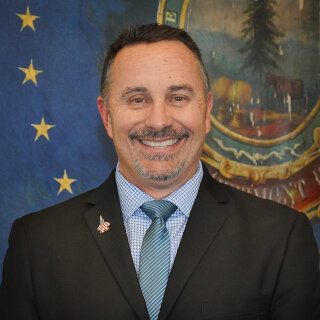
Tony Micklus
83% support rate
Top opponent
Mike Morgan
17% support rate
Ranked legislators
10
5 support · 5 oppose
Key legislators

Who's moving healthcare in Vermont

Legislators moving healthcare in Vermont
Legislator Party Stance Support rate Votes
Tony Micklus
Tony Micklus House · District Chittenden-Franklin
R
Strong +
83% 14
Rob North
Rob North House · District Addison-3
R
Strong +
83% 13
Marty Feltus
Marty Feltus House · District Caledonia-3
R
Strong +
83% 14
Beth Quimby
Beth Quimby House · District Caledonia-3
R
Strong +
80% 12
Chris Morrow
Chris Morrow House · District Windham-Windsor-Bennington
D
Strong +
80% 13
Mike Morgan
Mike Morgan House · District Grand Isle-Chittenden
R
Strong −
17% 13
James Gregoire
James Gregoire House · District Franklin-6
R
Strong −
17% 13
Woody Page
Woody Page House · District Orleans-2
R
Strong −
20% 11
Tom Burditt
Tom Burditt House · District Rutland-2
R
Strong −
20% 12
Pattie McCoy
Pattie McCoy House · District Rutland-1
R
Oppose
33% 14
Showing 21–30 of 223 bills

All healthcare bills

introduced · Vermont · House Jan 6, 2026

H 522: An act relating to prescriptions for psychotropic medications used by children and youth in the Dr. Dynasaur program

H 522 would require enhanced oversight, informed consent processes, and accountability measures for prescriptions of psychotropic medications (medications affecting mood or behavior) for children and youth enrolled in Vermont's Dr. Dynasaur program. The bill mandates that healthcare providers obtain specific, documented informed consent from parents or guardians before prescribing these medications and establishes clearer reporting requirements for providers. It directly affects children and youth in the Dr. Dynasaur program and the healthcare providers who prescribe these medications within it. The bill aims to strengthen safeguards around the use of such medications for vulnerable young people.
introduced · Vermont · House Jan 27, 2026

H 776: An act relating to the use of artificial intelligence in health care coverage decisions

This Vermont bill (H.776) requires health insurance companies using artificial intelligence to make coverage decisions to base those decisions on individual patient medical records - not group data - and prohibits AI from denying coverage. Final coverage decisions must be made by licensed human health care providers after reviewing patient-specific clinical information. The bill also mandates quarterly AI performance reviews, transparency about AI use in policies, and ensures tools are applied fairly across all patients with similar needs. It takes effect July 1, 2026.
introduced · Vermont · House Jan 8, 2026

H 625: An act relating to adoption of the Interstate Massage Compact

Vermont's H.625 adopts the Interstate Massage Compact, allowing licensed massage therapists from participating states to practice in Vermont without obtaining a separate license. This directly affects massage therapists seeking to work across state lines, particularly military members and their families who relocate frequently. The compact creates a shared regulatory framework through an interstate commission, requiring background checks and continuing competence, while enabling states to share disciplinary information to protect public safety. It streamlines licensing for therapists in member states but does not override individual state laws governing massage therapy practice.
introduced · Vermont · House Jan 6, 2026

H 581: An act relating to limiting the reporting of certain medications to the Vermont Prescription Monitoring System

H.581 exempts medications prescribed for reproductive health care or gender-affirming care from being reported to Vermont’s Prescription Monitoring System (PMS), unless the Commissioner of Health determines reporting is necessary for public health. It also prohibits sharing any existing PMS data about these medications with other states’ monitoring systems. This directly affects healthcare providers prescribing these medications in Vermont, removing a reporting requirement for their patients’ care. The changes take effect July 1, 2026, modifying Vermont law (18 V.S.A. §4283 and §4288).
introduced · Vermont · Senate Jan 13, 2026

S 242: An act relating to dementia respite and dementia capable programming

This bill appropriates $750,000 for Vermont's dementia respite grant program to support unpaid family caregivers of people with dementia, with funds capped at $3,000 per person for individuals at or below 400% of the federal poverty level. It also allocates $100,000 for a one-year pilot program creating dementia-capable social activities in Rutland and Washington Counties, funding community organizations like senior centers with $25,000 grants. The respite program specifically covers in-home care, adult day services, and "out-of-home day" respite, prioritizing caregivers with high care burdens. It directly affects Vermonters with dementia and their 20,000 unpaid caregivers, who collectively provide 29 million hours of annual care.
Sub-Topics Long-Term Care
in committee · Vermont · House Jan 21, 2026

H 661: An act relating to workers’ compensation coverage for firefighters with cancer

This bill (H.661) expands Vermont workers' compensation coverage for firefighters diagnosed with specific cancers. It adds larynx, pharynx, and trachea cancers to the list of covered conditions and removes the previous requirement that firefighters be under 65 years old to qualify. To be eligible, firefighters must have completed cancer screenings as recommended by the American Cancer Society before or during service, worked firefighting duties for at least five years, and not used tobacco in the 10 years prior to diagnosis. The bill affects Vermont firefighters diagnosed with covered cancers who meet these new criteria, effective July 1, 2026.
vetoed · Vermont · Senate May 29, 2026

S 190: An act relating to reference-based pricing and the Green Mountain Care Board

This bill requires Vermont hospitals and health insurers to adopt reference-based pricing for services, setting payment limits based on Medicare rates starting in 2027. It mandates hospitals to report all outsourced clinical services (like emergency medicine or radiology) in budget reviews, closing loopholes where outsourced revenue bypassed oversight. Hospitals must display pricing both as a percentage of Medicare rates and in dollars, and use unique identifiers for off-campus services. The goal is to ensure price transparency, apply cost controls across all hospital services, and prevent surprise bills for patients receiving outsourced care.
Sub-Topics Hospitals Medicare
introduced · Vermont · House Jan 6, 2026

H 523: An act relating to town, city, and village reporting on the use of Opioid Abatement Special Funds

This bill requires towns, cities, and villages in Vermont that receive Opioid Abatement Special Funds to publicly post detailed reports on their websites about how they spent those funds. The key provision mandates that each municipality must make these utilization reports accessible online, ensuring transparency for residents. It directly affects all local governments receiving these specific state funds allocated to address opioid use disorder. The bill aims to provide clear, public accountability for how communities use opioid-related funding without altering the funds' purpose or allocation.
Sub-Topics Substance Abuse
introduced · Vermont · House Jan 23, 2026

H 764: An act relating to inpatient psychiatric bed capacity

This bill removes the requirement for special approval when hospitals build or renovate psychiatric units, streamlining the process for expanding mental health services. It creates a Psychiatric Inpatient Capacity Working Group - comprising mental health officials, patient advocates, and healthcare professionals - to study bed shortages, identify barriers to expansion, and recommend a 25% increase in statewide inpatient psychiatric beds by July 2028. The group must submit its findings and recommendations to legislative committees by January 2027, with the policy changes taking effect on July 1, 2026. The bill directly affects hospitals seeking to expand psychiatric services, the state mental health system, and patients requiring inpatient care.
introduced · Vermont · House Jan 8, 2026

H 617: An act relating to seizure disorders in schools

H 617 requires Vermont public and independent schools to create individualized seizure action plans for students diagnosed with seizure disorders, developed collaboratively with parents and school staff. Schools must designate at least two trained staff members per school to administer seizure rescue medications or assist with vagus nerve stimulators, and obtain parental written authorization including a healthcare provider’s detailed medication plan and the medication in its original sealed packaging. Additionally, schools must provide biennial staff training on seizure recognition and first aid using guidelines from the Epilepsy Foundation, and the Agency of Education will collect compliance data for annual reporting to the legislature. This bill directly affects students with seizure disorders, school staff, and parents/guardians through new safety protocols and documentation requirements.
Showing 21 to 30 of 223 bills
Previous 1 2 3 4 23 Next