Issue · Criminal Justice

Criminal Justice

Every criminal justice bill, vote, and legislator stance in Vermont, automatically classified by Maddy, our AI policy reader.

Total bills
148
2025-2026 Regular Session
Top supporter
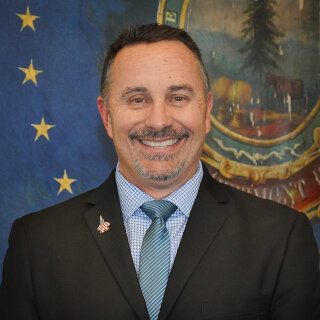
Jed Lipsky
100% support rate
Top opponent
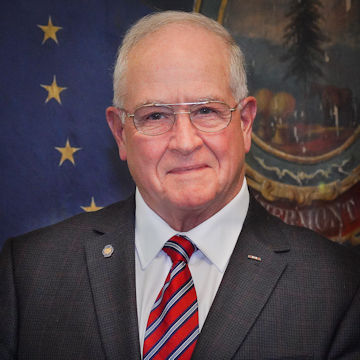
Tom Oliver
17% support rate
Ranked legislators
10
5 support · 5 oppose
Key legislators

Who's moving criminal justice in Vermont

Legislators moving criminal justice in Vermont
Legislator Party Stance Support rate Votes
Jed Lipsky
Jed Lipsky House · District Lamoille-1
I
Strong +
100% 14
Ashley Bartley
Ashley Bartley House · District Franklin-1
R
Strong +
100% 15
Tony Micklus
Tony Micklus House · District Chittenden-Franklin
R
Strong +
89% 15
Leland Morgan
Leland Morgan House · District Grand Isle-Chittenden
R
Strong +
89% 16
Mike Morgan
Mike Morgan House · District Grand Isle-Chittenden
R
Strong +
88% 15
Tom Oliver
Tom Oliver House · District Franklin-4
R
Strong −
17% 13
Russ Ingalls
Russ Ingalls Senate · District Essex
R
Oppose
22% 13
Terry Williams
Terry Williams Senate · District Rutland
R
Oppose
22% 13
Steven Heffernan
Steven Heffernan Senate · District Addison
R
Oppose
22% 12
Zak Harvey
Zak Harvey House · District Rutland-3
R
Oppose
29% 14
Showing 101–110 of 148 bills

All criminal justice bills

introduced · Vermont · House Jan 9, 2025

H 19: An act relating to grand larceny of a firearm

This Vermont bill (H.19) changes the definition of grand larceny to automatically include the theft of any firearm, regardless of its value. Previously, grand larceny required stolen property to exceed $900 in value; this bill removes that threshold specifically for firearms. The key mechanism amends Vermont law to list "a firearm of any value" as a separate basis for grand larceny charges under § 2501(2). This directly affects individuals who steal firearms, subjecting them to the same penalties as other high-value thefts (up to 10 years in prison or $5,000 fine). The law takes effect upon passage.
Sub-Topics Corrections Firearms
introduced · Vermont · House Feb 11, 2025

H 176: An act relating to developing the Department of Corrections’ community restitution program

H 176 requires Vermont's Department of Corrections to reinstate its community work program (called "work crew") by July 1, 2025, after it was discontinued in 2023. The bill mandates reinstating prior policies and sets minimum requirements: offenders must be assigned at least 20 work crew days per court order, or 60 days total across multiple orders. This directly affects individuals sentenced to community restitution and the Department of Corrections, which must implement the program by the deadline. The law takes effect upon passage.
introduced · Vermont · House Feb 27, 2025

H 411: An act relating to public safety

H 411 updates Vermont's public safety laws with several key changes. It extends extradition timelines to 120 days for individuals violating bail, probation, or parole in another state, and mandates a minimum five-year prison sentence for high-risk sex offenders who fail to comply with registry requirements. The bill restricts judges from using alternative sentences for repeat offenders or those violating probation without written justification, and changes the process for sealing criminal records to make sealing standard for most completed sentences with limited access for criminal justice and licensing purposes. Additionally, it transfers juvenile case jurisdiction for certain offenses from the Family Division to the Criminal Division and repeals a law that had raised the age of juvenile jurisdiction to 19.
introduced · Vermont · Senate Mar 13, 2025

S 116: An act relating to crimes against an unborn child

Vermont's S.116 would define an unborn child as a "person" under criminal law when bodily injury or death results from a crime, allowing prosecutors to charge perpetrators without proving they knew about the pregnancy or intended harm to the fetus. This directly affects individuals who commit crimes (like assault or homicide) causing fetal harm, while explicitly protecting pregnant women from prosecution for their own actions and legal medical procedures like abortions with consent. The bill adds a new section to Vermont law clarifying that an unborn child is deemed a person for criminal offenses involving injury or death, but excludes abortion and medical treatments from prosecution. It aims to resolve inconsistencies in past court rulings about fetal personhood under criminal statutes.
Sub-Topics Courts Violent Crime
introduced · Vermont · House Jan 22, 2025

H 59: An act relating to approval of amendments to the charter of the City of Burlington

This bill approves amendments to the City of Burlington's charter that reform police oversight. It directly affects the Burlington Police Department, the Board of Police Commissioners, and the Chief of Police by: (1) allowing the Board and Chief to jointly propose department rules; (2) giving the Board sole authority to review all misconduct allegations and conduct independent investigations; and (3) enabling the Board to request an independent panel to resolve disagreements with the Chief over misconduct outcomes. These changes, approved by Burlington voters in November 2024, aim to strengthen civilian oversight of police conduct through clearer procedures and independent review processes. The bill does not change police staffing or funding but modifies how misconduct reviews and rule-making are handled.
Sub-Topics Policing
introduced · Vermont · House Jan 23, 2025

H 64: An act relating to after-hours access to orders against sexual assault

H 64 creates a process for victims of sexual assault to obtain emergency protective orders outside regular court hours, weekends, and holidays. It requires the Court Administrator to establish procedures where an authorized person can receive requests (including electronically), administer a sworn statement over the phone, and relay the case to a judicial officer for a decision. This directly affects individuals seeking immediate protection from sexual assault when courts are closed. The judicial officer decides solely based on the submitted information, and if approved, the order is delivered to law enforcement for service. The bill takes effect September 1, 2025.
passed · Vermont · House Feb 6, 2026

H 5: An act relating to a hearsay exception for a child under 16 years of age

H.5 amends Vermont's evidence rules to allow statements made by children aged 12-15 who are victims of specific abuse crimes (like sexual assault, cruelty, or exploitation) to be used as evidence in court. The bill requires courts to verify that such statements are trustworthy, made before legal proceedings began, and not prepared for trial. It directly affects child victims in criminal, civil, or juvenile cases involving listed abuse offenses under Vermont law. The change takes effect July 1, 2025, and applies only to cases where the child’s statements relate to the alleged abuse.
introduced · Vermont · House Feb 18, 2025

H 252: An act relating to prohibiting earned time for second or subsequent felony convictions

This bill (H 252) prohibits individuals convicted of a second or subsequent felony from earning time off their prison sentence through Vermont's earned time program. It amends 28 V.S.A. § 818 to explicitly exclude people sentenced for a felony after a prior felony conviction from participating in the program. The key change removes this group from eligibility, meaning repeat felony offenders cannot reduce their sentences via earned time. This applies to all current and future offenders meeting this criteria, excluding them from the standard earned time provisions. The bill is currently pending referral to the Committee on Corrections and Institutions.
Sub-Topics Corrections
signed · Vermont · House Apr 30, 2025

H 118: An act relating to expanding the scope of hate-motivated crimes

H.118 expands the scope of hate-motivated crimes in Vermont by amending existing law. This bill specifies that a person who commits a crime motivated, in whole or in part, by another person's or a group of persons' actual or perceived membership in a protected category will face enhanced penalties. The penalties vary based on the severity of the underlying crime, with courts considering motivation as a sentencing factor for more serious offenses. "Protected category" includes characteristics like race, religion, gender identity, sexual orientation, and disability.
Sub-Topics Sentencing
introduced · Vermont · House Jan 9, 2025

H 18: An act relating to decriminalizing nonmoving DLS violations for third-time offenders

H.18 would reclassify third-time nonmoving license violations (such as parking tickets) as civil offenses instead of criminal ones for drivers with suspended licenses. Specifically, it changes penalties for individuals who operate a vehicle with a suspended license after their third nonmoving violation within a two-year period, shifting from potential jail time or large fines to civil penalties like fines and community service. This applies only to nonmoving violations (not moving traffic offenses like speeding), affecting repeat offenders who commit nonmoving violations after multiple license suspensions. The bill, if passed, would take effect July 1, 2025.
Sub-Topics Corrections
Showing 101 to 110 of 148 bills
Previous 1 10 11 12 15 Next