Issue · Criminal Justice

Criminal Justice

Every criminal justice bill, vote, and legislator stance in Vermont, automatically classified by Maddy, our AI policy reader.

Total bills
119
2025-2026 Regular Session
Top supporter
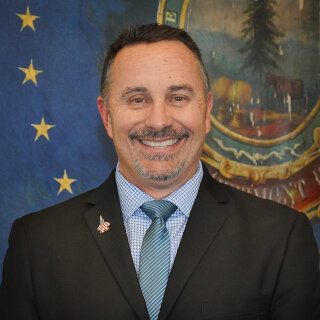
Jed Lipsky
100% support rate
Top opponent
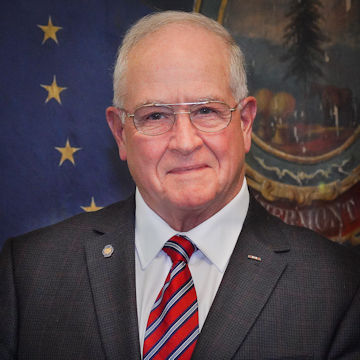
Tom Oliver
17% support rate
Ranked legislators
10
5 support · 5 oppose
Key legislators

Who's moving criminal justice in Vermont

Legislators moving criminal justice in Vermont
Legislator Party Stance Support rate Votes
Jed Lipsky
Jed Lipsky House · District Lamoille-1
I
Strong +
100% 14
Ashley Bartley
Ashley Bartley House · District Franklin-1
R
Strong +
100% 15
Tony Micklus
Tony Micklus House · District Chittenden-Franklin
R
Strong +
89% 15
Leland Morgan
Leland Morgan House · District Grand Isle-Chittenden
R
Strong +
89% 16
Mike Morgan
Mike Morgan House · District Grand Isle-Chittenden
R
Strong +
88% 15
Tom Oliver
Tom Oliver House · District Franklin-4
R
Strong −
17% 13
Russ Ingalls
Russ Ingalls Senate · District Essex
R
Oppose
22% 13
Terry Williams
Terry Williams Senate · District Rutland
R
Oppose
22% 13
Steven Heffernan
Steven Heffernan Senate · District Addison
R
Oppose
22% 12
Zak Harvey
Zak Harvey House · District Rutland-3
R
Oppose
29% 14
Showing 1–10 of 119 bills

All criminal justice bills

passed · Vermont · Senate May 13, 2026

S 329: An act relating to criminal procedures involving firearms

This bill strengthens Vermont's firearm laws by increasing penalties for theft and possession. It classifies stealing any firearm as a serious felony and raises prison sentences for individuals with prior convictions who possess guns again. The legislation also bans firearm ownership for people with certain mental health court findings, prohibits machine guns, and restricts carrying weapons on licensed alcohol premises.
introduced · Vermont · House Mar 11, 2026

H 926: An act relating to taking account of a defendant’s ability to pay for purposes of criminal fines, fees, and surcharges

This bill would prevent courts in Vermont from charging interest on unpaid criminal fines, fees, and surcharges while a defendant is in prison and for 90 days after their release. It also gives judges the authority to reduce or eliminate these surcharges when a defendant shows they cannot afford to pay them. The legislation aims to align financial penalties with a defendant's actual ability to pay during and shortly after incarceration.
Sub-Topics Corrections
signed · Vermont · House May 29, 2026

H 937: An act relating to miscellaneous judiciary procedures

This bill amends Vermont's judicial procedures to clarify how courts handle profits obtained from crimes and strengthens protections for victims seeking financial recovery. It expands the legal definition of "profits from crimes" to include income generated from selling illicit goods, assets obtained through unique criminal knowledge, and property whose value increased due to the notoriety of a conviction. The legislation requires businesses that pay profits from crimes to notify the Attorney General, who must then inform all known victims. It also establishes a three-year window for victims to sue for damages up to the value of the profits and allows the state to recover certain incarceration costs if victims do not claim the full amount. Additionally, the bill updates penalties for minors under 21 who misrepresent their age to purchase alcohol, possess alcohol or cannabis, or drive with a blood alcohol concentration of 0.02 or higher.
signed · Vermont · House Apr 29, 2026

H 849: An act relating to a civil action for damages for deprivation of federal constitutional rights by any government official

This bill (H.849) would allow any individual to file a civil lawsuit seeking monetary damages against federal, state, or local government officials who interfere with or violate their State or federal constitutional rights. It directly affects people whose constitutional rights - such as free speech, due process, or equal protection - are allegedly violated by officials acting in their government capacity. The key provision creates a legal pathway for victims to pursue compensation through the court system rather than relying solely on other remedies. The bill focuses on clarifying and enabling this specific civil action process without altering constitutional rights themselves.
Sub-Topics Civil Rights Courts Tags Civil Liberties
passed · Vermont · House Mar 24, 2026

H 887: An act relating to crime victim status under the Fair Employment Practices Act

This bill (H.887) adds survivors of domestic violence, sexual assault, and stalking to the definition of "crime victim" under Vermont's Fair Employment Practices Act. It directly affects these survivors by expanding their legal protections against employment discrimination. The key provision modifies the Act's definition to explicitly include these survivors, ensuring they are covered by existing anti-discrimination safeguards in the workplace. This change clarifies that employers cannot discriminate against individuals based on their status as survivors of these specific crimes. The bill focuses on updating definitions to align with current protections, not creating new employment rules.
introduced · Vermont · House Feb 27, 2026

H 919: An act relating to classifying incarcerated individuals as temporary State employees

H.919 would classify incarcerated individuals working under the Vermont Department of Corrections as temporary state employees for labor-related rights. This applies to anyone performing work "for, at the direction of, or under the supervision of" the Department. The bill grants these individuals access to wage and hour protections, workers’ compensation, unemployment insurance, and collective bargaining rights during their labor. It directly affects incarcerated people working in Vermont correctional facilities, changing their legal status for employment benefits without altering prison operations.
introduced · Vermont · House Feb 10, 2026

H 895: An act relating to secondary enforcement of certain motor vehicle violations

H 895 would restrict enforcement of 13 specific minor traffic violations (such as obscured license plates, improper lane changes, or loud mufflers) to situations where an officer has already stopped a driver for a different, primary violation. It prohibits officers from using these minor infractions as the sole reason to stop a vehicle or to request consent for a vehicle search. The bill directly affects drivers who might otherwise be stopped solely for these technical traffic issues. This policy change aims to limit traffic stops based on minor violations and prevent secondary searches after such stops.
introduced · Vermont · House Feb 18, 2026

H 905: An act relating to miscellaneous amendments to the prohibitions on discrimination

H.905 is a Vermont civil rights bill that updates and integrates protections against discrimination across state laws. It creates a statutory definition of "disparate impact" for civil rights violations, allows individuals to sue for discrimination (private right of action), and requires state/municipal employees to complete bias training. The bill mandates annual law enforcement reports on certain offenses, requires contractors and grant recipients to obtain equity certifications, and establishes new entities including a Civil Rights Data Repository and a Civil Rights Fund. It also prohibits unauthorized federal agreements that would weaken Vermont’s civil rights standards.
introduced · Vermont · House Feb 3, 2026

H 860: An act relating to establishing the Justice and Recovery Hub and Spoke System Working Group

H 860 creates a working group to develop a proposal for a "Justice and Recovery Hub" on state land near Burlington's Costello Courthouse and Department of Labor, plus identify additional "spoke" sites along public transit corridors. The group, composed of state agency directors and regional planning representatives, will design a hub including a 200-bed residential facility for people recently released from incarceration, recovery housing for youth (prioritizing those with Department for Children and Families history), and nonresidential components like firehouse space and business storefronts. It will also identify sites for "spoke" locations offering similar services in Addison, Chittenden, Franklin, and Washington Counties. The group must submit a report with recommendations by January 2027 and is allocated $200,000 for stakeholder engagement and expert support. This bill establishes a process for planning, not direct funding or construction.
introduced · Vermont · House Feb 3, 2026

H 856: An act relating to possessing regulated drugs and establishing the Drug Use Health and Safety Advisory Board

H.856 establishes Vermont's Drug Use Health and Safety Advisory Board to determine "benchmark personal use supply" amounts for regulated drugs, aiming to reduce criminal penalties for small-scale possession. The bill lowers penalties for low-level drug possession: reducing misdemeanor charges to a maximum $500 fine or six months in jail, and reclassifying some felony-level offenses as misdemeanors. The Advisory Board, composed of 13 members including people with lived drug use experience and harm reduction experts, must recommend these benchmarks by January 2027. These changes directly affect individuals possessing small, personal-use amounts of drugs like cocaine or LSD under specified thresholds.
Showing 1 to 10 of 119 bills
1 2 3 12 Next