

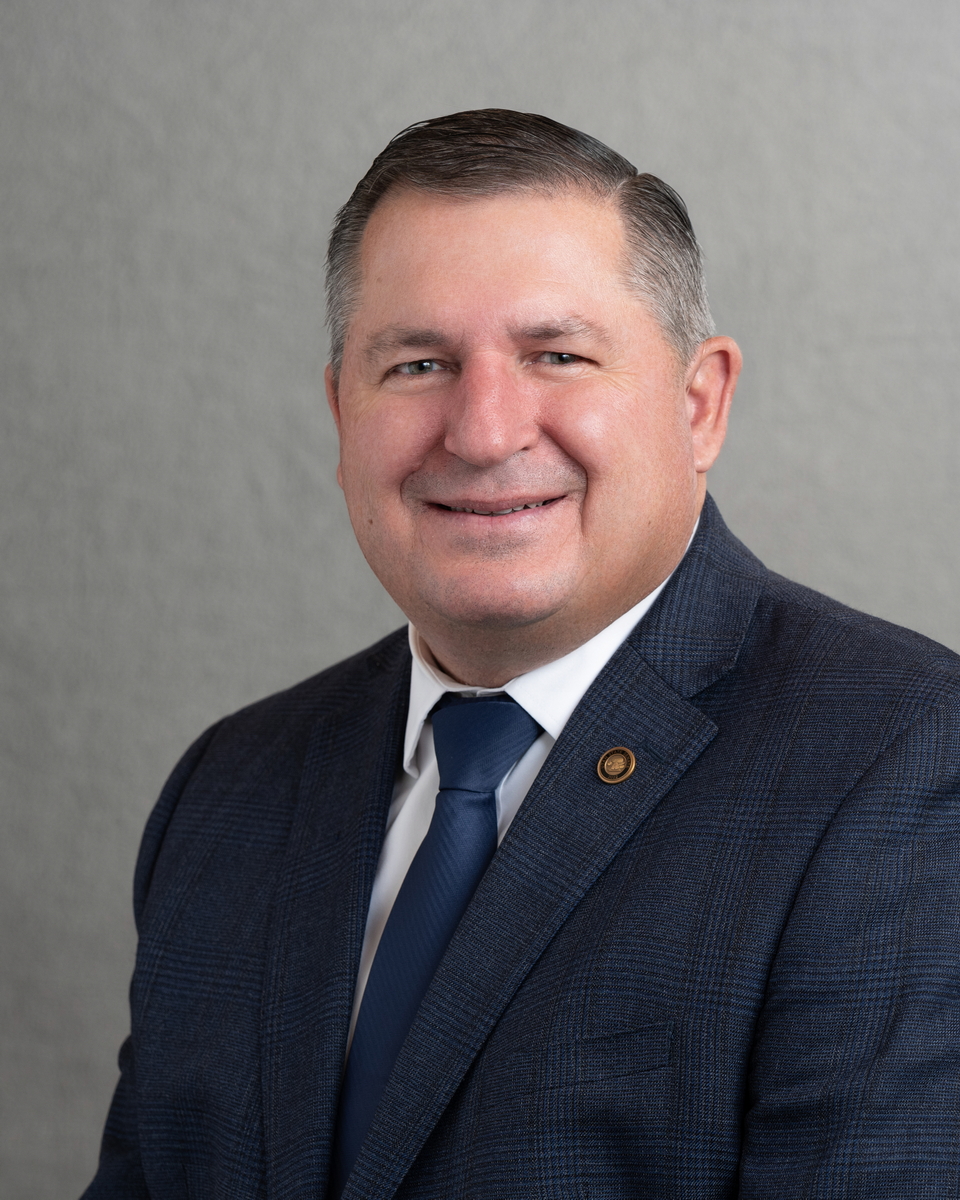
Photo of Derrin Owens
R Utah Senate · District 27

Sen. Derrin Owens

Compare
Total votes
5,658
all sessions
Attendance
94%
63 missed
Near the chamber average
With party
97%
of cast votes
Lower than 80% of chamber peers
Bipartisan score
2%
crosses aisle rarely
Near the chamber average
Sponsored
146
bills & resolutions
Near the chamber average
Committees
10
assignments
146 bills and resolutions

Sponsored bills

Total
146
Primary
54
Co-sponsor
92
This page
146
matching current filters
Co-sponsor HB 157
Signed into law · Utah House · Co-sponsor
Energy Education Amendments

Maddy summaryHB 157 requires Utah's Office of Energy Development to create and maintain energy education programs and curricula for K-12 schools, aligned with state science standards. It also mandates professional development training for educators (including licensure renewal opportunities) and energy-related workforce development programs for students. The bill establishes an advisory group with representatives from education, energy industries, and rural associations to guide these efforts. The office must report annually to the Public Utilities, Energy, and Technology Interim Committee, with no new state funding allocated for implementation.

Signed into law Mar 27, 2025 1 co-sponsor
Co-sponsor HB 177
Signed into law · Utah House · Co-sponsor
Glass Recycling Amendments

Maddy summaryHB 177 requires Utah's Division of Waste Management to study how to improve glass recycling statewide, focusing on current methods, potential expansion areas, and specific strategies like adding drop-off locations, funding recycling facilities, expanding curbside collection, and public education. The study must include an inventory of existing practices and recommendations for increasing glass recycling, with findings due to the Natural Resources, Agriculture, and Environment Interim Committee by September 2025. The bill does not allocate funding or create new regulations but mandates a time-limited study with a repeal date of July 1, 2026. This bill directly affects state agencies conducting the study and future policymakers reviewing its recommendations, but it does not change current recycling rules or directly impact residents or businesses.

Signed into law Mar 27, 2025 1 co-sponsor
Co-sponsor HB 391
Signed into law · Utah House · Co-sponsor
Emergency Medical Services Revisions

Maddy summaryHB 391 revises Utah's emergency medical services (EMS) regulations by granting the Bureau of Emergency Medical Services (Bureau) enforcement authority and requiring the Trauma System and Emergency Medical Services Committee to annually recommend a fine schedule for licensed EMS providers. It creates the "Emergency Medical Services Critical Needs Account," into which all fines collected from EMS provider violations must be deposited. The Bureau must use 25% of quarterly account balances to fund critical needs grants, with 21% allocated as per capita block grants to nonprofit prehospital EMS providers. This directly affects licensed EMS providers (who pay fines), the Bureau (which enforces rules and manages funds), and nonprofit EMS organizations (which receive grant funding).

Signed into law Mar 26, 2025 1 co-sponsor
Primary SB 192
Signed into law · Utah Senate · Lead sponsor
Commercial Wind and Solar Incentives Amendments

Maddy summarySB 192 modifies Utah's tax credit program for commercial wind and solar energy systems. It requires commercial systems of 660 kilowatts or larger to include energy storage that can provide at least six hours of the system's peak daily power output to qualify for tax credits. This applies directly to businesses installing or financing large-scale renewable energy systems for commercial use. The bill also clarifies definitions related to energy storage, system reliability, and commercial energy systems without appropriating new funds. These changes aim to ensure stored energy is available when needed, making the systems more reliable for the grid.

Signed into law Mar 26, 2025 0 co-sponsors
Primary SB 74
Signed into law · Utah Senate · Lead sponsor
Corrections Modifications

Maddy summarySB 74 restricts certain legal changes for people in Utah's corrections system. It prohibits individuals in custody from petitioning courts to change their birth certificate sex designation or name, and adds parolees to a list where government entities aren't required to respond to certain record requests. The bill also clarifies that the Department of Corrections can independently investigate criminal allegations against inmates and employees, modifies rules for prison phone surcharges, and requires probationers/parolees to sign waivers allowing drug test results to be shared with their supervising officers. These changes directly affect incarcerated individuals, parolees, and the Department of Corrections' operational procedures.

Signed into law Mar 26, 2025 0 co-sponsors
Primary SB 215
Signed into law · Utah Senate · Lead sponsor
Emergency Medical Services Modifications

Maddy summarySB 215 requires Utah counties and municipalities to ensure a minimum level of ground ambulance services for transporting patients between medical facilities. Local governments must conduct four-year reviews of ambulance providers using competitive bidding, offer current 911 ambulance providers first right to continue service, and share interlocal agreements with healthcare facilities. The bill removes the state Bureau of Emergency Medical Services from selecting providers (except to verify qualifications) but grants the Bureau investigative authority and class B misdemeanor penalties for ignoring subpoenas or cease-and-desist orders. This directly affects local governments and ambulance service providers without adding new state funding.

Signed into law Mar 26, 2025 0 co-sponsors
Primary SB 209
Signed into law · Utah Senate · Lead sponsor
Emergency Medical Services

Maddy summarySB 209 designates 911 ambulance services as essential services and clarifies the roles of Utah's Department of Health and Human Services, Department of Public Safety, and Bureau of Emergency Medical Services (Bureau). It creates the Emergency Medical Services Critical Needs Account to fund rural county ambulance grants, increasing the maximum vehicle purchase amount for rural recipients. The bill also requires the Bureau to set training center designation standards, subject training centers to Bureau disciplinary oversight, and establishes a class B misdemeanor for willfully ignoring Bureau subpoenas or cease-and-desist orders. These changes aim to strengthen EMS oversight, funding, and compliance across Utah.

Signed into law Mar 26, 2025 0 co-sponsors
Primary SB 61
Signed into law · Utah Senate · Lead sponsor
Energy Corridor Amendments

Maddy summarySB 61 modifies Utah's eminent domain laws for high voltage power line projects, requiring utilities to conduct an infrastructure siting analysis before seeking to take private land. This analysis must identify reasonable route alternatives, prioritize existing utility corridors and federal public lands, and document why federal lands aren't feasible. The bill also mandates coordination with federal land agencies and annual reporting to a state committee on eminent domain actions. These changes directly affect public utilities planning power lines and landowners whose property may be subject to condemnation.

Signed into law Mar 26, 2025 0 co-sponsors
Co-sponsor HB 49
Signed into law · Utah House · Co-sponsor
Juror Eligibility Amendments

Maddy summaryHB 49 amends Utah's jury eligibility rules to change who can serve on juries. It removes an automatic disqualification for people convicted of felonies, allowing those with felony convictions to serve if their conviction has been overturned (expunged) or reduced to a misdemeanor. The bill also makes minor technical updates to the existing law. This directly affects individuals with felony convictions who meet the expungement or reduction criteria. The changes take effect on May 7, 2025.

Signed into law Mar 25, 2025 1 co-sponsor
Co-sponsor HB 70
Signed into law · Utah House · Co-sponsor
Decommissioned Asset Disposition Amendments

Maddy summaryHB 70 sets rules for decommissioning coal-powered electrical generation facilities in Utah. It directly affects project entities (like power companies) by requiring them to maintain critical infrastructure - such as equipment providing power to station service and existing interconnections - during decommissioning. The bill prohibits altering these essential systems or disconnecting from the grid, and creates the Utah Energy Council to oversee the selection of facility operators through a competitive process with defined qualifications. It also repeals previous rules about the Decommissioned Asset Disposition Authority and mandates that project entities offer assets for sale at fair market value to the state for two years starting July 2025.

Signed into law Mar 24, 2025 1 co-sponsor
Showing 31 to 40 of 146 bills
Previous 1 3 4 5 15 Next