

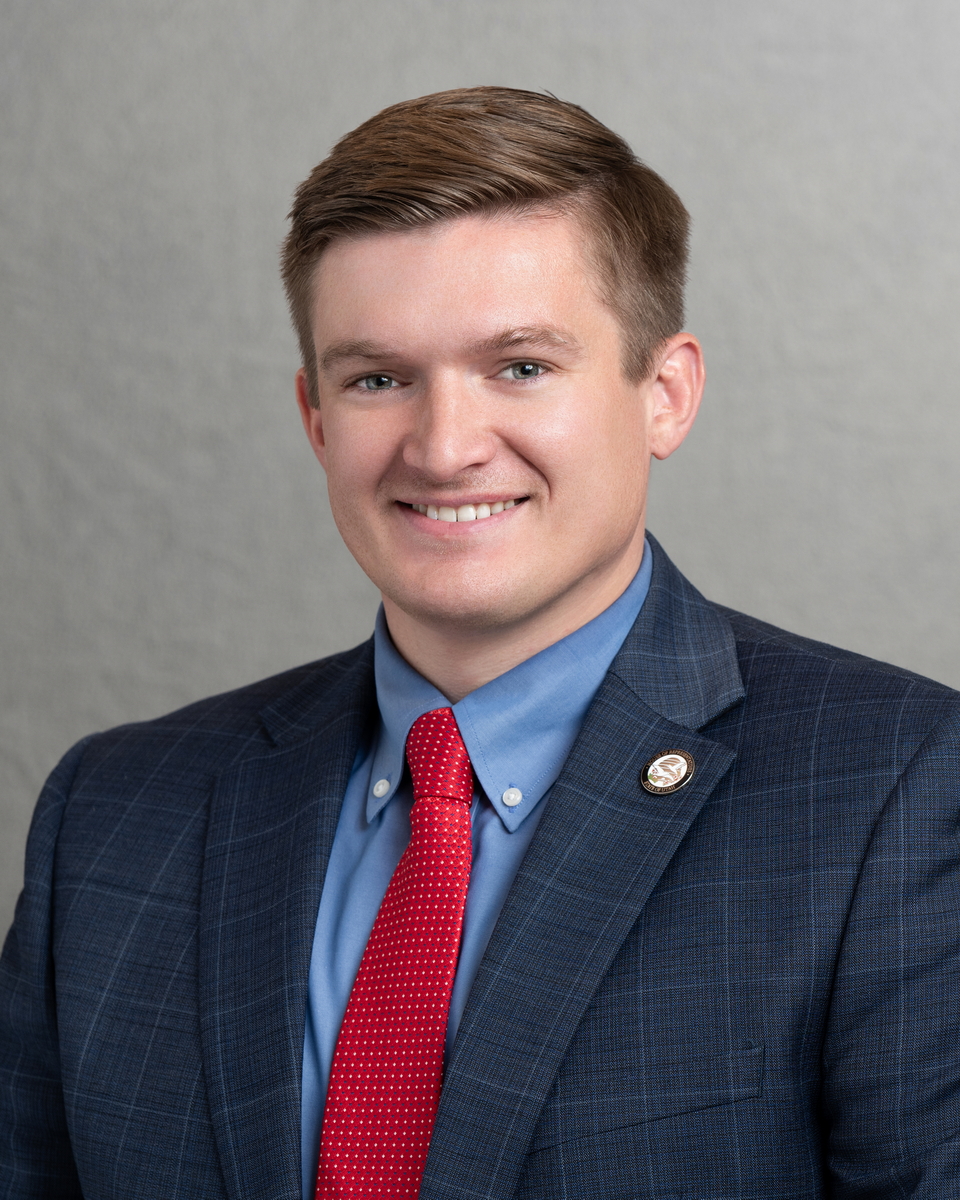
Photo of Tyler Clancy
R Utah House · District 60

Rep. Tyler Clancy

Compare
Total votes
1,947
all sessions
Attendance
93%
121 missed
Near the chamber average
With party
97%
of cast votes
Near the chamber average
Bipartisan score
2%
crosses aisle rarely
Near the chamber average
Sponsored
76
bills & resolutions
Higher than 94% of chamber peers
Committees
0
assignments
76 bills and resolutions

Sponsored bills

Total
76
Primary
39
Co-sponsor
37
This page
76
matching current filters
Co-sponsor SB 48
Signed into law · Utah Senate · Co-sponsor
Behavioral Health Amendments

Maddy summarySB 48 modifies Utah's licensing rules for mental health therapists by updating definitions and requirements for clinical supervision. It expands therapists' scopes of practice, clarifies standards for clinical supervisors (including training and oversight rules), and creates the Mental Health Professionals Education and Enforcement Fund. These changes directly affect licensed mental health therapists, their supervisors, and trainees by adjusting practice boundaries and supervision protocols. The bill makes technical corrections to existing code but does not appropriate new funding.

Signed into law Mar 26, 2025 1 co-sponsor
Primary HB 100
Signed into law · Utah House · Lead sponsor
Food Security Amendments

Maddy summaryHB 100 requires Utah public schools to provide free lunch to eligible students (those qualifying for reduced-price meals under federal standards based on household income) in grades K-12. It prohibits schools from stigmatizing students unable to pay for meals, mandates that meal debt communications go only to parents, and encourages reducing food waste through share table programs and wellness policies. The state board of education must reimburse schools for the federal reimbursement difference for these meals, though no new state funds are appropriated. The bill takes effect July 1, 2025, and applies to all local education agencies participating in the National School Lunch Program.

Signed into law Mar 25, 2025 0 co-sponsors
Primary HB 199
Signed into law · Utah House · Lead sponsor
Substance Use Treatment and Enforcement Amendments

Maddy summaryThis bill improves access to substance use and mental health treatment by requiring local authorities to include provider lists in annual plans (usable by first responders) and allowing first responders to refer overdose patients to care. It also establishes mobile opioid treatment units with specific operational requirements, updates syringe exchange program rules, and creates a new criminal offense for "maintenance of a drug-involved premises" while amending related enforcement laws. These changes directly affect county substance abuse/metal health authorities, first responders (police, EMTs, firefighters), and treatment providers. The bill makes no new funding commitments and focuses on policy adjustments to treatment access and enforcement.

Signed into law Mar 24, 2025 0 co-sponsors
Primary HB 167
Signed into law · Utah House · Lead sponsor
Offender Reintegration Amendments

Maddy summaryHB 167 strengthens reintegration support for people leaving incarceration in Utah by requiring local mental health authorities to coordinate with the Department of Corrections for ongoing mental health services during probation or parole. It also prohibits public employers from excluding job applicants based on expunged convictions or juvenile arrests, and reduces the time period considered for certain professional misconduct definitions. The bill creates a dedicated fund accepting donations to support reintegration services, with $2 million allocated for fiscal year 2026. These changes directly affect former offenders, county service providers, and public employers seeking to hire them.

Signed into law Mar 24, 2025 0 co-sponsors
Primary HB 85
Signed into law · Utah House · Lead sponsor
Environmental Permitting Modifications

Maddy summaryHB 85 modifies Utah's air quality permitting rules by requiring the Division of Air Quality to develop new guidance on federal plantwide permit rules, review its current permit-by-rule program, and add five new categories of polluters to that program. The bill also mandates a report to the Natural Resources, Agriculture, and Environment Interim Committee on the review results and sets a repeal date for outdated sections of the law. These changes directly affect businesses seeking air quality permits and the state agency managing the permitting process. The bill makes no new funding requests or fee changes.

Signed into law Mar 24, 2025 0 co-sponsors
Co-sponsor SB 121
Signed into law · Utah Senate · Co-sponsor
Property Loss Amendments

Maddy summarySB 121 creates the Property Loss Related to Homelessness Compensation Enterprise Fund to compensate businesses and individuals affected by property loss near homeless services facilities. It provides no-interest loans to businesses within 1/5 mile of such facilities for documented property damage or repair costs, or direct compensation for similar losses experienced by businesses or residents in the same proximity. The fund, initially funded with $10,000 from the General Fund, requires documentation like closed insurance claims and cannot duplicate other existing support. Funds are nonlapsing (do not expire) and will sunset for review by July 1, 2028.

Signed into law Mar 19, 2025 1 co-sponsor
Co-sponsor SB 284
Signed into law · Utah Senate · Co-sponsor
Medicaid Doula Services

Maddy summarySB 284 authorizes Utah's Medicaid program to cover doula services for enrollees during pregnancy, childbirth, and postpartum. The bill requires the Department of Health and Human Services to apply for a Medicaid state plan amendment by October 1, 2025, after consulting with stakeholders like doulas and healthcare providers. It also mandates the department to establish training and registration rules for doulas serving Medicaid members. This policy change directly affects Medicaid enrollees seeking non-medical support during pregnancy and childbirth, without appropriating new state funds.

Signed into law Mar 19, 2025 1 co-sponsor
Primary HB 149
Introduced · Utah House · Lead sponsor
Single Family Homes Ownership Amendments

Maddy summaryHB 149 prohibits institutional investors from purchasing single-family homes in Utah, directly affecting large real estate firms, corporations, or investment trusts (excluding affordable housing nonprofits, family trusts, or family-owned LLCs). The bill requires any institutional investor that violates this ban to sell the home within one year of purchase. It defines key terms like "institutional investor," "family trust," and "single-family housing" to clarify scope and exemptions. The law takes effect on May 7, 2025, with no funding impact.

Introduced Mar 8, 2025 0 co-sponsors
Primary HB 185
Introduced · Utah House · Lead sponsor
Railroad Modifications

Maddy summaryHB 185 requires Utah's Division of Air Quality to study and reduce emissions from railroad locomotives operating in railyards within five ozone nonattainment counties (Davis, Salt Lake, Tooele, Utah, and Weber) by 2027. The bill mandates an emissions inventory by September 2025 for nitrogen oxides, carbon monoxide, and particulate matter, followed by a reduction plan targeting specific limits: 5.0 grams of nitrogen oxides per brake horsepower-hour, 2.4 grams of carbon monoxide, and 0.10 grams of particulate matter by December 2027. It directly affects railroads operating locomotives used for local yard service or under 2300 horsepower in those counties. The state agency must report findings and recommendations to lawmakers by November 2025. The bill does not appropriate new funds and expires in 2028.

Introduced Mar 8, 2025 0 co-sponsors
Primary HB 544
Introduced · Utah House · Lead sponsor
Worker Protection Modifications

Maddy summaryHB 544 modifies Utah's Labor Code to protect warehouse workers in large distribution centers (employing 100+ in one facility or 500+ across multiple). It prohibits employers from forcing employees to attend meetings or listen to communications about religious or political topics, with limited exceptions, and bans retaliation for reporting violations. The bill also requires employers to implement written safety programs for extreme heat and cold risks, including specific break schedules, hydration access, temperature monitoring, and recordkeeping for workplace temperature incidents. These provisions apply to facilities classified under specific warehouse, delivery, or distribution NAICS codes, directly affecting workers in those settings.

Introduced Mar 8, 2025 0 co-sponsors
Showing 41 to 50 of 76 bills
Previous 1 4 5 6 8 Next