

Maddy summaryHB 55, "County Office Amendments," allows Utah county legislative bodies to authorize elected county officers to maintain additional office space outside the county seat and to hold regular meetings at locations within the county other than the county seat, as approved by ordinance. This replaces the previous requirement that county offices and meetings must be held at the county seat. The bill makes these changes without new funding or altering other duties, such as the requirement for county offices to remain open for business. It affects counties currently required to have offices at the county seat (typically those with a population of 8,000 or more).
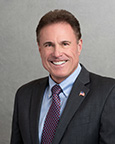
Rep. Jim Dunnigan
Sponsored bills
Maddy summaryHJR 6 is a procedural bill that updates Utah's legislative rules to streamline operations. It removes the annual requirement for Senate and House Rules committees to review joint rules, clarifies procedures for roll call votes during electronic meetings, and requires the Executive Appropriations Committee to annually approve legislative staff budgets. The bill also modifies sponsorship transfer limits, committee subcommittee composition rules, and deadlines for appropriations bills, directly affecting legislators, committee staff, and the Office of Legislative Research. These changes aim to improve efficiency and clarity in how bills move through the legislative process without altering policy content.
Maddy summarySB 26 amends Utah's Housing and Transit Reinvestment Zone Act to create a new process for designating "Convention Center Reinvestment Zones" in first-class counties. It allows counties to capture increased sales and property tax revenue generated by development near convention centers to fund revitalization projects, including bonding for infrastructure. The bill also adjusts housing requirements (using county median income for unit affordability) and adds rules limiting fund use in convention zones, while clarifying tax increment collection timelines and frequency. This directly affects counties managing convention centers and developers working on mixed-use projects within designated zones. The changes restructure existing tax mechanisms but do not appropriate new state funds.
Maddy summaryHB 385 modifies stop-loss insurance rules for small employers with 15 or more enrolled employees. It requires contracts to include minimum annual cost thresholds ($30,000 specific attachment point, 90% aggregate attachment point) and prohibits insurers from selling to employers with fewer than 15 employees. The bill also bans direct payments to employees and requires existing contracts renewed before July 1, 2025, to comply by July 1, 2027. It takes effect July 1, 2025, with no new funding.
Maddy summaryHB 50 increases civil penalties for workplace safety violations in Utah by adjusting maximum fine amounts under Utah Code § 34A-6-307. It raises the maximum penalty per violation from $13,653 to $16,131, with higher amounts for serious violations ($11,518-$161,323) and repeat offenses (up to $161,323). The bill directly affects employers who fail to comply with occupational safety standards, particularly those with serious or repeated violations. This amendment, effective May 7, 2025, adjusts penalty levels without adding new safety requirements or enforcement mechanisms.
Maddy summaryHB 59 updates Utah's fireworks laws by replacing outdated terms like "class A, B, or C explosives" with current federal classifications (e.g., "division 1.1G") in the Utah Code. This technical correction affects the Utah Fire Prevention Board, local governments, and fireworks businesses by aligning terminology with national safety standards without changing existing regulations. The bill amends specific sections (11-3-10, 53-7-204, 53-7-225, and 53-7-225.1) to ensure consistency in rules governing fireworks sales, display safety, and storage. It makes no substantive policy changes - only clarifying language to reduce confusion in enforcement and compliance.
Maddy summaryThis bill (HR 3) modifies internal House of Representatives procedures in Utah. It clarifies the chief clerk's role in making technical corrections to legislation (like fixing spelling or numbering errors), updates rules for sharing draft legislation with caucus staff, and specifies when bills can pass without committee recommendations. It also grants legislators the right to attend committee meetings (with some restrictions) and defines "censure" for procedural clarity. The bill affects all Utah state legislators, House staff, and committee processes, but contains no policy changes or funding. It is purely procedural, altering how the legislature operates rather than impacting public policy.
Maddy summaryHR 5 is a procedural House Rules Resolution that amends Utah House of Representatives operating procedures. It modifies the appointment and duties of the sergeant-at-arms (clarifying enforcement of House Rules and the Utah Indoor Clean Air Act) and updates the chief clerk's responsibilities (including technical corrections to legislation and managing legislative records). The resolution also clarifies that a motion to "saunter" (likely a typo for "recess") is permissible during floor debate, adding it to the list of allowed motions. These changes primarily affect House staff, leadership, and the internal operations of legislative proceedings.
Maddy summaryThis joint rules resolution (HJR 4) modifies internal legislative procedures for Utah's state legislature. It updates requirements for news media seeking press credentials, mandating annual training on discriminatory conduct and agreement to Legislative Management Committee Policy E. The resolution also renames the "Executive Offices and Criminal Justice Appropriations Subcommittee" to "Criminal Justice Appropriations Subcommittee," removes outdated language, and corrects terminology across multiple rules. These changes affect legislative staff, committee operations, and media members needing access to legislative facilities, but do not create new public policy or appropriate funds.
Maddy summaryThis bill (HR 1) is a procedural House Rules Resolution that updates internal House operations. It directly affects House committee members and floor procedures by renaming the "Business and Labor" committee to "Business, Labor, and Commerce," requiring most legislative changes to use a "motion to substitute" instead of a "motion to amend," and prohibiting committee members from requesting personal privileges during meetings. The resolution also clarifies rules for verbal amendments (limiting them to 15 words) and updates definitions related to House space, staff, and committee procedures. As a procedural update, it does not appropriate funds or change public policy.