

Stop Funding Rioters Act This bill makes a person convicted of an offense relating to the assault of a law enforcement officer or a person convicted of a felony in connection with a riot that results in the destruction of a small business ineligible for any assistance or program administered by the Small Business Administration.
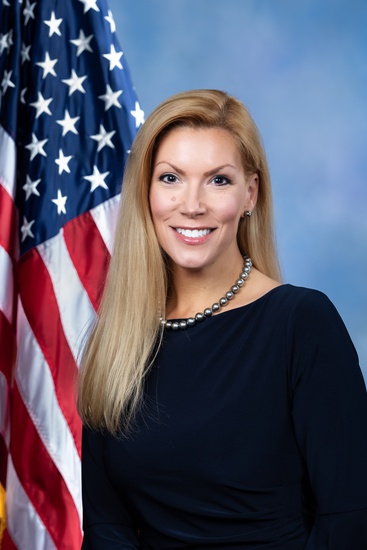
Rep. Beth Van Duyne
Sponsored bills
Protecting Family and Small Business Tax Cuts Act of 2022 This bill makes permanent provisions affecting individual and business taxpayers that were enacted in 2017 by the Tax Cuts and Jobs Act and are scheduled to expire at the end of 2025. The bill makes permanent provisions that reduce individual and capital gain tax rates. The bill increases the standard tax deduction for individual taxpayers. It also increases and modifies the child tax credit and raises the contribution base for the tax deduction of charitable contributions. The bill allows additional contributions to ABLE accounts (tax-exempt accounts designed to enable individuals with disabilities to save and pay for disability-related expenses). It exempts from taxation combat zone benefits of members of the Armed Forces serving in the Sinai Peninsula of Egypt and the moving expenses of servicemembers. Additionally, the bill lowers to $750,000 the amount of mortgage debt eligible for an interest expense tax deduction; excludes from the gross income of student borrowers income attributable to the discharge after 2025 of loan debt due to death or disability; makes permanent the limitation on the tax deduction for state and local taxes and denies a deduction for foreign real property taxes; makes permanent the tax deduction of the income of certain pass-through business entities; repeals the tax deduction for personal tax exemptions and the exclusion of employer-provided bicycle commuter fringe benefits; terminates certain miscellaneous itemized tax deductions; doubles the estate and gift tax exemption amount; and makes permanent the increase of the alternative minimum tax exemption amount for individual taxpayers.
Equal Access to Therapeutics Act This bill prohibits using race or ethnicity as a factor in decisions about an individual's access to COVID-19 treatments (e.g., monoclonal antibody therapies). Specifically, the Department of Health and Human Services (HHS) may not adopt any policy or guidance that allows race or ethnicity to be factored into such decisions. Furthermore, the Secretary of HHS shall be personally liable for the death of any individual who is denied access to COVID-19 treatments pursuant to a prohibited policy or guidance. The bill also prohibits hospitals or other health care providers that have policies restricting access to COVID-19 treatments based on race or ethnicity from receiving federal funds.
Informed Lawmaking to Combat Inflation Act This bill requires the Congressional Budget Office to provide inflation estimates for certain legislation that is projected to cause an annual gross budgetary effect of at least 0.25% of the projected gross domestic product of the United States. The estimates must determine whether the legislation will have no significant impact on inflation, a quantifiable inflationary impact on the consumer price index, or a significant impact on inflation that cannot be quantified at the time the estimate is prepared. The requirement does not apply to legislation that (1) provides for emergency assistance or relief at the request of any state, local, or tribal government; or (2) is necessary for the national security or the ratification or implementation of international treaty obligations.
Designates the facility of the United States Postal Service located at 3903 Melear Drive in Arlington, Texas, as the "Ron Wright Post Office Building."
Licensing Individual Commercial Exam-takers Now Safely and Efficiently Act of 2022 or the LICENSE Act of 2022 This bill provides statutory authority for waivers of training, testing, and other requirements for commercial driver's licenses that were issued by the Federal Motor Carrier Safety Administration to respond to the COVID-19 pandemic.
TSA Security Threat Assessment Application Modernization Act This bill requires the Transportation Security Administration (TSA) to standardize the enrollment and renewal system for individuals applying for or renewing multiple TSA Security Threat Assessment programs, including the Transportation Worker Identification Credential, Hazardous Materials Endorsement, and TSA PreCheck programs. The standardization shall permit an individual to (1) enroll at a TSA-designated universal enrollment center once and use the application for one of such programs to enroll in two or more of such programs,with specified exceptions for those applying for or renewing enrollment in more than one program at different times; (2) apply successful, valid clearance results from a TSA Security Threat Assessment to satisfy vetting requirements for participation in any related program without additional cost; and (3) undergo a streamlined and expeditious renewal process. Additionally, the TSA must publish on its website information relating to the standardization of the enrollment system.
Kids in Classes Act This bill prohibits a state educational agency from receiving specified federal education funds unless funds are provided directly to a parent or guardian of an eligible child for certain qualified educational expenses (e.g., educational materials, tutoring, or private school tuition). Eligible child refers to a child who attends a public elementary or secondary school and such school (1) receives specified federal education funds; and (2) does not provide, for more than three days during a school year and for reasons related to a public health emergency or collective bargaining action, in-person instruction for all students who wish to attend.
Stop Arduous Vaccine Enforcement Act of 2022 or the SAVE Act of 2022 This bill prohibits transplant centers from discriminating against an individual on the basis of COVID-19 vaccination status for purposes of determining eligibility or assigning priority for organ transplants.
Family Plus Health Care Act of 2022 This bill extends coverage under private health insurance to enrollees' parents who are not eligible for separate coverage under Medicare or Medicaid. Specifically, private health insurers that offer dependent coverage of enrollees' children must also offer coverage of enrollees' parents, at an enrollee's option, if such parents are not eligible for Medicare or Medicaid. The bill also provides for the treatment of such parents as dependents for related tax purposes.