

American Energy Independence from Russia Act This bill addresses U.S. energy security, the production of oil and gas, and the importation and exportation of oil and gas. Specifically, the President must submit an energy security plan that (1) evaluates U.S. crude oil, petroleum products, and natural gas imports and exports; (2) assesses the energy security risks of such imports; and (3) includes strategies to encourage increased domestic production of crude oil, petroleum products, and natural gas to offset Russian imports. The bill also approves the TransCanada Keystone Pipeline in Phillips County, Montana for the import of oil from Canada to the United States. In addition, the bill grants the Federal Energy Regulatory Commission the authority to approve or deny applications for facilities to export natural gas from the United States to foreign countries or import natural gas from foreign countries. The President and federal agencies must obtain congressional approval before (1) prohibiting or substantially delaying certain new energy mineral leases or permits on federal lands, or (2) withdrawing certain federal lands from mineral and geothermal leasing activities. The Department of the Interior must resume issuing oil and gas leases on federal lands and offshore submerged lands in the Outer Continental Shelf as specified under the bill. Finally, the bill limits the drawdown of petroleum in the Strategic Petroleum Reserve until the Department of Energy develops a plan to increase the percentage of federal lands leased for oil and gas production.
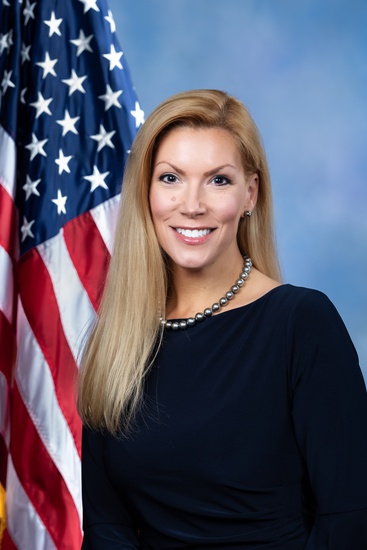
Rep. Beth Van Duyne
Sponsored bills
Prohibition on Imports of Russian Oil Act This bill requires the President to prohibit the importation of petroleum products from Russia. Petroleum product means crude oil, residual fuel oil, or any refined petroleum product, including natural gas liquid product. Further, the bill authorizes the President to (1) modify or remove the prohibition for some or all petroleum products if the President notifies Congress that such modification or removal is appropriate given the situation in Ukraine, and (2) use appropriate authorities to impose civil or criminal penalties as necessary to enforce the prohibition.
This concurrent resolution expresses the sense of Congress that the International Criminal Court should immediately proceed with prosecuting Russian President Vladimir Putin with war crimes should any harm befall Ukrainian President Volodymyr Zelenskyy as a result of actions taken or directed by any Russian entity or authority.
This resolution expresses that the House of Representatives does not recognize Russia as the inheritor of the Union of Soviet Socialist Republics' seat as a permanent member on the U.N. Security Council, and encourages the Biden Administration to take all necessary action at the United Nations to remove Russia from its position as a permanent member of the Security Council.
Secure Our Ports Act of 2022 This bill prohibits an owner or operator of a U.S. port from entering into a contract with a Chinese, Russian, North Korean, or Iranian state-owned enterprise for the operation or management of such port. It also prohibits entering into a contract with any foreign entity for which a percentage is owned by one of those countries.
Bringing Oligarch Accountability Through Seizure Act or the BOATS Act This bill prohibits Russian vessels from entering or operating in the navigable waters of the United States or transferring cargo in any port or place under U.S. jurisdiction, except for national security purposes. Violation of this prohibition subjects a vessel to seizure and forfeiture. Any Russian vessel seized and forfeited to the United States shall be sold at an auction to any entity that is not affiliated with Russia. The proceeds of such auction may only be used for humanitarian aid to Ukraine that is provided by other member states of the North Atlantic Treaty Organization.
This joint resolution nullifies the rule titled Medicare and Medicaid Programs; Omnibus COVID-19 Health Care Staff Vaccination , which was issued by the Centers for Medicare & Medicaid Services on November 5, 2021. The rule requires health care providers, as a condition of Medicare and Medicaid participation, to ensure that staff are fully vaccinated against COVID-19.
Promoting Ties with Taiwan Act This bill requires the Department of State to submit to Congress a strategy to (1) work with allies and partners to support the expansion of Taiwan's relations and engagement with countries around the world, (2) promote the establishment of Taiwan's presence in countries and partners where Taiwan does not have a permanent presence, and (3) strengthen economic relations and supply chain resilience among Taiwan and like-minded partners to counter threats and malign influences from authoritarian regimes. Within one year of submitting the strategy, the State Department must report to Congress on actions taken to carry out the strategy.
Can't Cancel Your Own Debt Act of 2022 This bill prohibits a Member of Congress from receiving student loan cancellation for time served in Congress or from a student loan program established or amended by an act of Congress, or set forth by an executive order or agency action, during the period in which the individual is serving as a Member.
Health Care for Burn Pit Veterans Act This bill updates policies and procedures related to Department of Veterans Affairs (VA) health care and benefits for veterans who have been exposed to toxic substances. Specifically, the bill extends the eligibility period for VA hospital care, medical services, and nursing home care for combat veterans who served after September 11, 2001, and were exposed to toxic substances, radiation, or other conditions, including those who did not enroll to receive VA care during the eligibility period. The VA must incorporate into its existing health care screening a screening to help determine potential exposures to toxic substances during military service. Among other requirements, the VA must also provide annual training to health care and benefits personnel with respect to veterans who were exposed to toxic substances; analyze total and respiratory disease mortality in veterans who served in specified locations on specified dates; conduct an epidemiological study on the health trends of veterans who served in the Armed Forces after September 11, 2001; conduct a study to determine trends in the rates of the incidence of cancer in veterans; publish a list of VA resources for veterans who were exposed to toxic substances, families and caregivers of such veterans, and survivors of such veterans who are receiving death benefits; and report on the data quality of the Individual Longitudinal Exposure Record and its usefulness in supporting veterans in receiving VA health care and benefits.