

Child Health Savings Account Act of 2022 This bill allows for the establishment of child health savings accounts for the benefit of the minor children of a taxpayer. These accounts provide for a tax deduction for amounts paid in cash, up to $3,000 in a taxable year, by an individual taxpayer to such accounts. The bill sets forth rules for the taxation of distributions from such accounts for children under and over the age of 18 years and allows for exceptions to such rules in the case of the disability or death of a child.
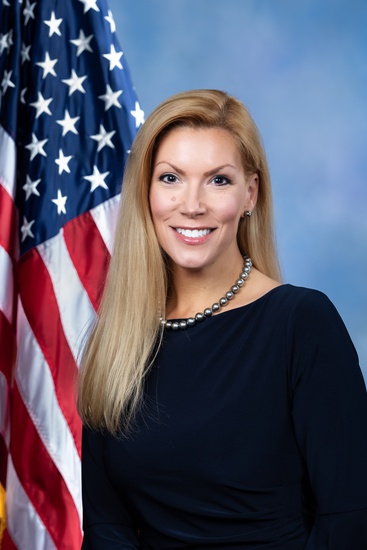
Rep. Beth Van Duyne
Sponsored bills
Health Savings Freedom Act of 2022 This bill revises health savings account (HSA) provisions to (1) increase the limit on contributions to such accounts for individuals and families, (2) eliminate the requirement to maintain high deductible coverage as a condition of eligibility for participation in such accounts, and (3) expand the definition of qualified medical expenses for purposes of HSAs to include medicine and drugs and certain long-term care expenses.
Workforce and Education Partnership Act of 2022 This bill allows certain Workforce Innovation and Opportunity Act grants allocated to states and local areas to be used to develop partnerships between educational institutions and employers to create or improve workforce development programs.
This bill posthumously provides for the award of a Congressional Gold Medal in commemoration of the 13 service members who died on August 26, 2021, while stationed at Hamid Karzai International Airport in Afghanistan.
This resolution recognizes the importance of Christmas symbols and traditions. The resolution (1) disapproves of attempts to ban references to Christmas, and (2) supports the use of these symbols and traditions by those who celebrate Christmas.
Continuing Robust and Uninhibited Drilling and Exporting Act or the CRUDE Act This bill limits the President's authority to restrict the export of crude oil from the United States. Currently, the President may restrict the export of oil for up to a year if the President declares a national emergency; the restrictions apply to countries, persons, or organizations for reasons of national security; or the Department of Commerce finds and reports to the President that the export of crude oil has caused sustained material oil supply shortages or sustained oil prices significantly above world market levels and those shortages or price increases have caused or are likely to cause sustained material adverse employment effects. However, this bill only allows the President to make such restrictions if the restrictions apply to countries, persons, or organizations for reasons of national security; or the Department of Defense, the Department of Energy, and Commerce jointly make those findings and report them to the President and Congress.
Preserving Rights Of Tenants by Ensuring Compliance To the Second Amendment Act or the PROTECT the Second Amendment Act This bill establishes a right for a resident of covered federally assisted rental housing to lawfully possess a firearm within the residential dwelling unit occupied by the resident and any common area of the federally assisted rental housing in which the resident resides in the course of entering or exiting the rental housing.
Employee Retention Tax Credit Reinstatement Act This bill provides for a reinstatement of the employee retention tax credit through 2021. The credit was established to compensate employers whose businesses were negatively impacted by the COVID-19 pandemic for wages paid to their employees.
Eliminating Global Market Distortions to Protect American Jobs Act of 2021 This bill addresses unfair trade practices by making various changes to U.S. antidumping and countervailing duty law. Antidumping provides relief to U.S industries and workers that are materially injured or threatened with injury due to imports of like products sold in the U.S. market at less than fair value, while countervailing duty provides such relief from imports of products subsidized by a foreign government or public entity. Specifically, the bill establishes a process for successive antidumping and countervailing duty investigations. Successive investigations may be concurrent (an ongoing investigation of the same product from different countries) or recently completed (not more than two years before the date of the initiation of the successive investigation). Further, the bill establishes a time line for the Department of Commerce to issue determinations in successive investigations. Among other provisions, the bill authorizes Commerce to apply countervailing duty law to subsidies provided by a foreign government or public entity to a company operating in a different country, use another method for calculating the cost of production in specific circumstances, and require importers to provide a certification that the imported merchandise is not subject to an antidumping or countervailing duty order. Additionally, the bill establishes procedures for Commerce to conduct circumvention inquiries, including by specifying the deadlines for preliminary and final determinations. The bill repeals the Softwood Lumber Act of 2008, which addresses the importation of softwood lumber and softwood lumber products.
Parents Bill of Rights Act This bill outlines various rights of parents and guardians regarding the elementary or secondary school education of their children. Among other requirements, the bill (1) directs local educational agencies to publicly post the curriculum for each elementary and secondary school grade level; and (2) requires schools to notify parents and guardians of their rights, including the right to review the school's curriculum and budget.