

Maddy summaryThis bill, known as the Community Health Profiles Act, creates a pilot program at the Centers for Disease Control and Prevention to fund up to 25 local health departments, municipalities, or counties in building publicly accessible online platforms that display neighborhood-level health data. The program prioritizes jurisdictions serving medically underserved, low-income, or environmentally burdened communities and requires grant recipients to integrate data from multiple sources including federal, state, and local systems covering topics like housing, education, and health outcomes. All data submitted to the new National Neighborhood Health Data Repository must be de-identified and aggregated to protect privacy while allowing national comparisons across jurisdictions. The initiative includes requirements for technical assistance, independent review of data methodology, and a final report to Congress on program outcomes within four years.
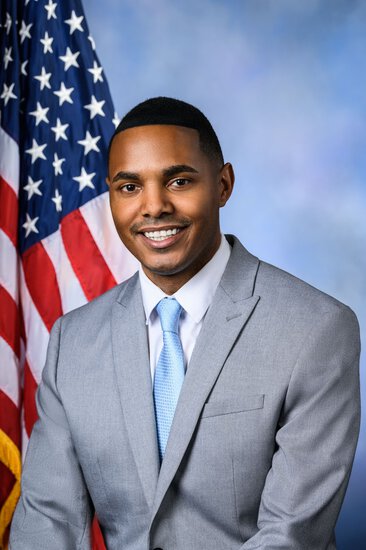
Rep. Ritchie Torres
Sponsored bills
Maddy summaryHR 2969, the Finding ORE Act, authorizes the U.S. Secretary of the Interior to enter into memorandums of understanding (MOUs) with partner countries that supply critical minerals and rare earth elements. The bill requires these MOUs to include cooperative mapping of mineral reserves, give U.S. or allied foreign country companies the "right of first refusal" for development, and facilitate U.S. private-sector investment through financial institutions like the Development Finance Corporation. It also mandates data protection for mapping information against unauthorized access by non-partner or non-allied countries. This legislation directly affects partner foreign countries (mineral sources), U.S. companies, and the U.S. Geological Survey, focusing on securing supply chains through international scientific collaboration.
Maddy summaryHR 7599 creates a federal framework for extreme risk protection orders (ERPOs), allowing family members or law enforcement to petition courts to temporarily prohibit individuals from possessing firearms when they pose a risk of harm to themselves or others. The bill establishes a process for issuing ex parte orders (up to 14 days) followed by a hearing within 72 hours to determine if a longer-term order (up to 180 days) should be issued, requiring respondents to surrender firearms to U.S. Marshals or designated law enforcement. Courts must consider specific factors like recent threats, violence, substance abuse, or cruelty to animals before issuing orders, with no fees for petitioners. The law requires law enforcement training to address bias, includes annual reporting requirements, and ensures firearms are returned once the order expires and the individual is eligible to own firearms under federal law.
Maddy summaryHR 7543, the Plastic Pellet Free Waters Act, prohibits plastic pellets and pre-production plastic materials from being discharged into waterways through wastewater, spills, or runoff from specific facilities. It directly affects plastic manufacturing, molding, packaging, and transportation facilities regulated under existing environmental rules. Within 60 days of enactment, the EPA must issue a rule banning these discharges and update all relevant wastewater, stormwater, and performance standards in permits. The law requires all permits and standards for these facilities to reflect the new ban, ensuring plastic pellets cannot enter water systems. This is a concrete regulatory change to prevent plastic pollution at its source.
Maddy summaryHRES 1061 is a symbolic resolution recognizing the cultural and historical significance of Lunar New Year in 2026. It does not create new laws or policies, but formally acknowledges Lunar New Year's origins (over 4,000 years in China), its celebration as Seollal in Korea and Tết in Vietnam, and its observance by millions of Asian Americans and others in the U.S. The resolution expresses respect for Asian Americans and extends holiday wishes for a "happy and prosperous new year" during the Year of the Horse. As a non-binding resolution, it has no legal effect or direct impact on any individuals or groups.
Maddy summaryThis bill requires most employers to provide workers with earned paid sick leave. Employees would earn 1 hour of paid sick time for every 30 hours worked, up to 56 hours per year, which can be used for their own illness, medical care, caring for family members (including children, parents, spouses, domestic partners, or other family-like relationships), or addressing domestic violence, sexual assault, or stalking situations. The bill prohibits employers from retaliating against workers who use this leave and requires employers to inform employees about their rights. It ensures that workers who leave and return to the same employer within a year can reinstate their unused sick leave. This law would not override more generous state or local paid leave policies.
Maddy summaryHR 7519, the Army Corps Congressional Engagement Act, requires Army Corps of Engineers district commanders to provide annual briefings to each Member of Congress whose district overlaps with Corps projects. These briefings detail specific project information - including location, funding status, delays, environmental impacts, and community effects - for projects within the Corps' districts and watersheds that are funded, led, or consulted on by the Corps. If a briefing is missed, the Corps must submit a written explanation by year-end, and the Army Inspector General must investigate failures to brief and report to Congress. The bill aims to improve transparency between the Corps and lawmakers about ongoing infrastructure projects in their districts.
Maddy summaryHRES 1058 is a non-binding House resolution recognizing the federal government’s duty to develop a Transgender Bill of Rights. It calls for specific policy changes, including amending civil rights laws to explicitly prohibit discrimination based on gender identity in employment, housing, and public accommodations; protecting access to gender-affirming medical care; and streamlining legal recognition of gender identity on federal documents like passports and voter registration. The resolution also proposes expanding protections for transgender and nonbinary individuals in healthcare, education, immigration, and correctional facilities, while emphasizing community-led policy development. As a resolution, it does not create new law but sets a framework for future legislative action.
Maddy summaryThis bill amends the process for the Financial Stability Oversight Council (FSOC) when considering actions against U.S. nonbank financial companies. It requires the FSOC to first determine that alternative solutions - such as new regulatory standards, agency actions, or a company's written plan - are not possible or insufficient to protect financial stability before voting on a formal determination. The change directly affects the FSOC and large nonbank financial companies that could face regulatory scrutiny. The key provision adds a new step to ensure the Council explores other options before taking significant action. (Procedural bill; summary limited to 3 sentences as specified.)
Maddy summaryThis bill directs the Postmaster General to issue a commemorative "forever stamp" depicting Bayard Rustin, a key civil rights leader and organizer of the 1963 March on Washington. The stamp must meet standard first-class mail postage requirements and remain valid for that purpose even if postage rates later increase. It is purely symbolic, honoring Rustin's legacy in civil rights and LGBTQ+ advocacy without creating new policies or affecting any laws. The Postal Service is the sole entity responsible for implementing this commemorative measure.