

Maddy summaryHCONRES 68 would require the President to remove U.S. military forces from Venezuela unless Congress has explicitly authorized their use through a declaration of war or a specific law. This applies to any U.S. Armed Forces currently stationed in Venezuela without such authorization. The resolution is based on the War Powers Resolution, which mandates congressional oversight of military deployments. It directs the immediate withdrawal of unapproved forces without adding new time limits or conditions.
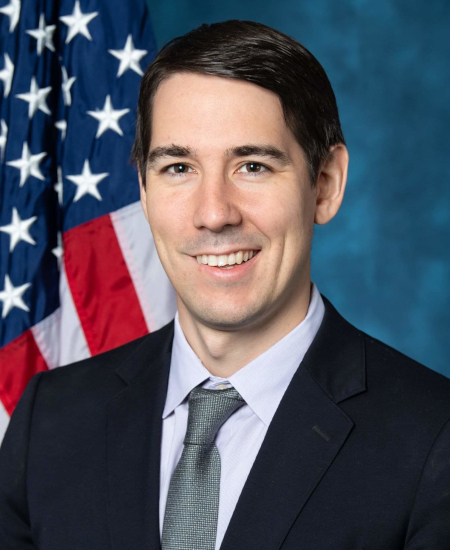
Rep. Josh Harder
Sponsored bills
Maddy summaryThis bill adds a two-year lobbying ban for former state utility regulators. It prohibits individuals who served on a state regulatory authority from lobbying, appearing before, or providing services related to cases before that same authority for two years after their term ends. The law requires all states with ratemaking authority over electric utilities to implement this standard within one year of enactment (for consideration) and two years (for final adoption). It applies broadly to all electric utilities in states with ratemaking authority, not specifically to PG&E. The bill does not target a single company but establishes a uniform rule for former regulators across the utility sector.
Maddy summaryThis bill creates a tax credit for businesses selling products made with U.S.-grown cotton. The credit equals 24% of the cotton's market value if processed only in the U.S. or in countries with U.S. trade deals, or 18% for other processing locations. To qualify, cotton must be digitally traced from U.S. farms to finished products and certified by the USDA as meeting origin requirements. It directly affects clothing and textile manufacturers selling qualifying products in the U.S. market.
Maddy summaryThis bill requires the FBI, Consumer Financial Protection Bureau, and Federal Trade Commission to coordinate a government-wide strategy against scams. Within one year, they must establish a single definition of "scam," collect consistent data on scam types and losses, and report annual complaint numbers and dollar losses. By two years, they must produce a unified estimate of annual scam victims and total losses, including unreported cases. The agencies must also set metrics to evaluate the effectiveness of their anti-scam training programs and publicly share annual scam data. The bill directly affects federal agencies managing scam data, not the public.
Maddy summaryThe Veteran Suicide Prevention Act requires the Department of Veterans Affairs (VA) to conduct a comprehensive review of all veterans who died by suicide during the five years before the bill's enactment. The review must analyze demographics, medication history (including black box warnings and psychotropic drugs), prescribing patterns, combat trauma, and facility-specific suicide rates. The VA must submit a public report to Congress within 30 days of completing the review, detailing findings and recommendations to improve veteran safety. This applies to all veterans who received VA care during the relevant five-year period. The law aims to identify systemic patterns and inform future suicide prevention efforts.
Maddy summaryHR 7173, the Follow the Science Act, restricts political appointees from influencing National Institutes of Health (NIH) operations and grant decisions. It prohibits most political appointees (defined broadly as those in policy-making roles) from being employed by NIH or participating in grant reviews, funding selections, or policy implementation. The bill requires the NIH Director to report on past political appointee involvement in these activities to Congress within 30 days of enactment. These changes aim to ensure NIH decisions are based on scientific merit rather than political influence, with limited exceptions for other federal agencies.
Maddy summaryThis bill establishes two new programs under the National Affordable Housing Act to increase affordable rental housing on property owned by faith-based organizations and institutions of higher education. It provides $25 million annually (2026-2031) for technical assistance to help these groups remove barriers to developing housing for low-income households, including those at risk of homelessness, veterans, and people with disabilities. Additionally, it creates $50 million annually in competitive challenge grants for local governments and states to adopt policies removing barriers and produce housing for households earning below 60% of area median income, with priority for well-resourced neighborhoods. The programs require public planning and reporting to ensure funds directly support affordable housing development on eligible properties.
Maddy summaryThis bill amends Medicare and Medicaid regulations to clarify the conditions under which skilled nursing facilities lose approval for nurse training programs. It updates the criteria to include facilities assessed with a civil penalty of at least $12,924 for quality-of-care deficiencies or subject to specific corrective remedies. The changes refine the existing penalty thresholds and deficiency types that trigger loss of program approval. This is a technical regulatory adjustment affecting nursing facilities' compliance status under federal healthcare programs, not a new policy or funding measure.
Maddy summaryHR 7100 establishes a Department of Justice Task Force on Anti-Sikh Hate and Discrimination to address systemic bias against Sikhs. The Task Force must draft a formal definition of anti-Sikh hate for DOJ use, develop educational programs for law enforcement and schools, and produce annual reports on hate crimes and trends. It requires quarterly collaboration with Sikh organizations and translation of materials into Punjabi. The bill directly affects Sikhs in the U.S. (who face disproportionate targeting as noted in FBI data) and mandates federal agencies to improve hate crime data collection and response. This is a policy-focused measure to standardize definitions, enhance reporting, and support community safety through DOJ action.
Maddy summaryHRES 996 is a resolution introduced by multiple House members to impeach Kristi Lynn Arnold Noem, the Secretary of Homeland Security, for alleged violations of law and the Constitution. It outlines three articles of impeachment: obstructing congressional oversight by denying access to detention facilities and withholding funds, violating public trust through warrantless arrests and excessive force (including tear gas on children), and self-dealing by awarding federal contracts to associates without competitive bidding. If approved by the House, this resolution would formally charge Noem, triggering a Senate trial to determine her removal from office. The resolution itself does not enact new policy but initiates the constitutional impeachment process against a sitting Cabinet official.