

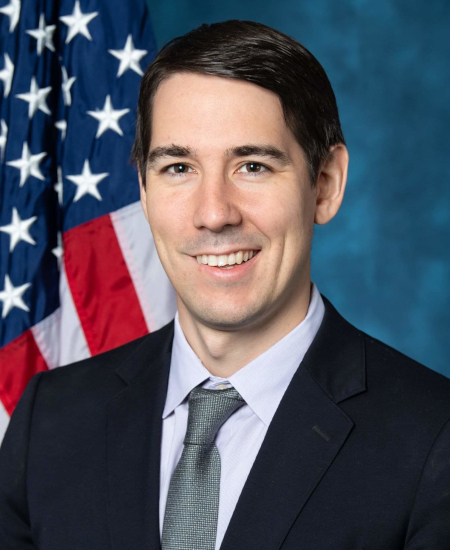
Photo of Josh Harder
D United States House · District 9 · California On the 2026 ballot

Rep. Josh Harder

Compare
Total votes
2,818
all sessions
Attendance
98%
44 missed
Higher than 86% of chamber peers
With party
95%
of cast votes
Lower than 82% of chamber peers
Bipartisan score
3%
crosses aisle rarely
Higher than 81% of chamber peers
Sponsored
1,317
bills & resolutions
Higher than 79% of chamber peers
Committees
3
assignments
1,317 bills and resolutions

Sponsored bills

Total
1,317
Primary
112
Co-sponsor
1,205
This page
1,317
matching current filters
Co-sponsor HRES 1063
In committee · Utah House · Co-sponsor
Supporting the goals and ideals of "Career and Technical Education Month".

Maddy summaryThis resolution (HRES 1063) is a symbolic measure designating February 2026 as "Career and Technical Education Month" to recognize the importance of career and technical education (CTE) programs. It does not create new policies or funding but formally supports CTE's role in preparing students for high-demand jobs by encouraging educators and parents to promote CTE as a valid educational pathway. The resolution references CTE's alignment with workforce needs and cites bipartisan support from past legislation like the 2018 Strengthening Career and Technical Education Act. It affects no specific individuals or programs, serving only as a non-binding statement of support.

In committee Feb 12, 2026 1 co-sponsor
Primary HR 7496
In committee · Utah House · Lead sponsor
Health Investment Zones Act of 2026

Maddy summaryThe Health Investment Zones Act of 2026 establishes a program to designate areas with documented health disparities as "Health Investment Zones" to improve health outcomes and reduce inequities. To qualify, areas must meet specific criteria including low income (below 150% of the federal poverty line), high rates of certain health issues, or designation as a health professional shortage area. The bill provides tax incentives for employers hiring workers in these zones, grants to community organizations for health initiatives, student loan repayment for health care workers, and additional Medicare payments for services provided in designated zones. These zones would be designated for 10 years with requirements for sustainability plans and evaluation of health outcomes.

In committee Feb 11, 2026 0 co-sponsors
Primary HR 4671
In committee · Utah House · Lead sponsor
Ensuring Casualty Assistance for our Firefighters Act

Maddy summaryHR 4671 establishes a Wildland Fire Management Casualty Assistance Program to support families of firefighters and wildland fire support personnel injured or killed in the line of duty. The program requires the Secretary of the Interior to develop procedures for notifying next-of-kin about critical injuries or deaths, reimbursing travel expenses for family visits, and providing centralized case management. It mandates a centralized website offering free, personalized information about federal benefits and complaint mechanisms for survivors. The bill also defines "next-of-kin" priority (spouse, children, parents, etc.) and requires data collection on casualty assistance quality, without affecting existing Line of Duty Death benefits.

In committee Feb 11, 2026 0 co-sponsors
Co-sponsor HR 7438
In committee · Utah House · Co-sponsor
PETSAFE Act of 2026

Maddy summaryThis bill amends disaster preparedness funding rules to better support companion animals during emergencies. It adds a new 90% federal funding option for specific pet-related preparedness activities, alongside the existing 50% option. States, localities, and tribes receiving disaster grants can now use funds for items like collapsible crates, mobile pet trailers, veterinary supplies, emergency generators, and animal response team training. The law directly affects government entities managing disaster response by expanding allowable uses of existing grant money for pet safety.

In committee Feb 10, 2026 1 co-sponsor
Co-sponsor HR 5221
In committee · Utah House · Co-sponsor
PART Act

Maddy summaryThe PART Act requires new vehicles to have catalytic converters marked with a unique identification number that links directly to the vehicle's identification number, stored in a law enforcement-accessible database. It establishes a $7 million grant program to help repair shops, dealers, law enforcement, and fleet owners purchase equipment for marking converters with visible, durable identifiers (using die or pin stamping and high-visibility paint). The bill also mandates that businesses buying catalytic converters keep detailed seller records (including vehicle information) for two years and use traceable payments, banning cash or cryptocurrency transactions. Additionally, it creates new federal criminal penalties for stealing or trafficking in catalytic converters, with potential sentences of up to five years in prison.

In committee Feb 10, 2026 1 co-sponsor
Co-sponsor HR 1566
In committee · Utah House · Co-sponsor
REPAIR Act

Maddy summaryThe REPAIR Act requires motor vehicle manufacturers to provide car owners and independent repair shops with full access to vehicle data and repair information, prohibiting technological or legal barriers that restrict this access. It mandates that manufacturers share vehicle-generated data, critical repair information, and tools on equal terms with dealers and authorized service providers, without requiring consumers to use specific brands of parts or tools. The law establishes an advisory committee to monitor implementation and ensure fair competition in vehicle repair, while giving the Federal Trade Commission authority to enforce these requirements as unfair or deceptive practices. This legislation directly affects car owners, independent repair facilities, aftermarket parts manufacturers, and motor vehicle manufacturers by shifting control of repair information and data from manufacturers to consumers.

In committee Feb 10, 2026 1 co-sponsor
Co-sponsor HR 7398
In committee · Utah House · Co-sponsor
Passports for Purple Hearts and Medals of Honor Act

Maddy summaryThis bill amends the Passport Act of 1920 to exempt Purple Heart and Medal of Honor recipients from standard U.S. passport application and renewal fees. It directly affects veterans who have received these specific military decorations. The key provision adds a new fee exemption category (subparagraph D) for these individuals in the passport fee structure. The bill also requires the State Department to create a verification process with the Defense Department to confirm eligibility using military service records. This is a straightforward administrative change to reduce costs for honored veterans.

In committee Feb 5, 2026 1 co-sponsor
Co-sponsor HR 7322
In committee · Utah House · Co-sponsor
True Shutdown Fairness Act

Maddy summaryHR 7322, the True Shutdown Fairness Act, requires federal agencies to pay regular wages to most employees and contractor workers during government shutdowns in fiscal year 2026, instead of furloughing them. It applies to all standard federal employees (excluding those on emergency duty) and contractor workers whose jobs would normally halt during a funding gap. Agencies must pay covered employees within 7 days of the bill's enactment for ongoing shutdowns, and contractors receive reimbursement for costs incurred keeping workers paid. The bill also prohibits agencies from implementing layoffs or placing employees on administrative leave for more than 10 days during a shutdown.

In committee Feb 2, 2026 1 co-sponsor
Co-sponsor HR 6491
In committee · Utah House · Co-sponsor
Streamline Transit Projects Act

Maddy summaryThe Streamline Transit Projects Act (HR 6491) allows large urban transit agencies (with populations over 200,000) to assume responsibility for environmental reviews of routine transit projects, such as bus lanes or minor station upgrades, that typically qualify as "categorical exclusions" under federal law. This means qualifying agencies - like major city transit authorities - can skip full environmental impact studies for these standard projects, instead conducting their own reviews under federal guidelines. The bill requires agencies to meet capacity standards, enter formal agreements with the federal government, and handle all legal liability for compliance, while still maintaining public access to information. The change directly affects large metropolitan transit agencies by shifting environmental review responsibilities from federal officials to local entities, aiming to accelerate project timelines without altering environmental standards.

In committee Feb 2, 2026 1 co-sponsor
Co-sponsor HR 5764
Passed · Utah House · Co-sponsor
AI for Main Street Act

Maddy summaryHR 5764, the "AI for Main Street Act," amends the Small Business Act to require the Small Business Administration (SBA) to provide guidance and training to small business concerns on using artificial intelligence. It directly affects small businesses by adding new SBA responsibilities to help them evaluate AI for operations, including best practices, cybersecurity, data protection, regulatory compliance, and customer trust. Key provisions mandate the SBA to offer information, training, and outreach on incorporating AI into business processes, such as planning for unexpected circumstances. The bill does not authorize new funding for these activities. It defines "artificial intelligence" using the existing term from the National AI Initiative Act.

Passed Jan 26, 2026 1 co-sponsor
Showing 71 to 80 of 1,317 bills
Previous 1 7 8 9 132 Next