Veterans Healthcare Improvement Act This bill requires the Government Accountability Office to review and report on the budget requests for Department of Veterans Affairs medical care accounts in the President's submitted budgets for FY2022-FY2024. Medical care accounts are the following accounts of the Veterans Health Administration: Medical Services, Medical Support and Compliance, Medical Facilities, and Medical Community Care.
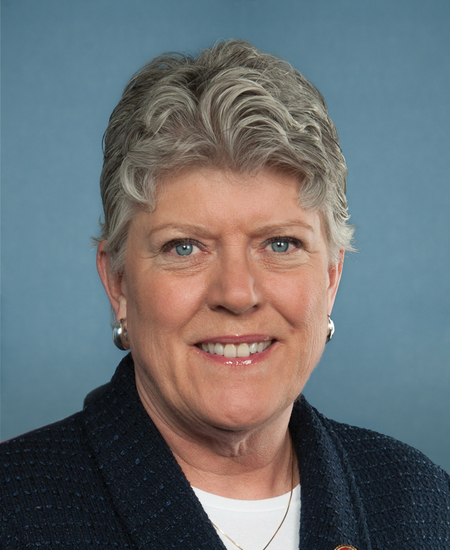
Rep. Julia Brownley
Sponsored bills
Dental Care for Veterans Act This bill expands eligibility for veterans for dental care provided by the Department of Veterans Affairs (VA). Specifically, the bill makes all veterans who are enrolled in the VA health care system eligible for VA-provided dental services. Currently, only veterans who have a service-connected dental issue or meet other narrow criteria are eligible for certain dental services. The bill phases in eligibility over four years based upon existing eligibility, degree of service-connected disability or other disability, prisoner of war status, award of a Purple Heart, financial need, or VA health care eligibility.
Veterans Expedited TSA Screening Safe Travel Act or the VETS Safe Travel Act This bill makes certain veterans eligible for the Transportation Security Administration (TSA) PreCheck Program at no cost if they meet the program's background check and security requirements. Veterans who are eligible for this fee waiver are those who are in the annual patient enrollment system of the Department of Veterans Affairs (VA) and require the use of a wheelchair, prosthetic limb, or other assistive device to aid with mobility due to (1) loss, or loss of use, of a limb; (2) full or partial paralyzation; or (3) permanent blindness. The VA and the TSA must develop and implement a process to provide disabled veterans effective outreach about TSA programs that are designed to improve the screening process for passengers with disabilities.
Ethan's Law This bill establishes a framework to regulate the storage of firearms on residential premises at the federal, state, and tribal levels. At the federal level, the bill establishes statutory requirements for firearms on residential premises to be safely stored if a minor is likely to gain access without permission or if a resident is ineligible to possess a firearm. An individual who violates the requirements is subject to criminal penalties. A firearm stored in violation of the requirements is subject to seizure and forfeiture. At the state and tribal levels, the bill requires the Department of Justice to award grants to implement functionally identical requirements for the safe storage of firearms.
This resolution supports the designation of National Rosie the Riveter Day and acknowledges the important role played by women during World War II.
Student Loan Disclosure Transparency Act of 2021 This bill requires lenders disbursing federal student loans to disclose additional information to borrowers and increase the frequency of such disclosures. Specifically, prior to disbursement, the lender making a loan must disclose (1) the principal amount, interest rate, and number of required monthly payments to be made on the loan; (2) the estimated balance owed by the borrower; and (3) the estimated aggregate amount the borrower will pay. Prior to repayment, the lender must disclose the projected total of interest charges that the borrower will pay on the loan, as well as projections of the borrower's monthly repayment amount. The bill also requires certain disclosures for the life of the loan. In particular, lenders must disclose information about loans on a monthly, rather than periodic, basis. Lenders must also provide borrowers who are not in a repayment status (e.g., a borrower who is in school or in a deferment period) with a monthly statement. The Department of Education must obtain feedback from borrowers and report on the usefulness and effectiveness of such disclosures.

Clean Corridors Act of 2021 This bill directs the Department of Transportation to award grants to certain governmental entities and planning organizations to install electric vehicle charging infrastructure and hydrogen fueling infrastructure along designated alternative fuel corridors.
Huntington's Disease Disability Insurance Access Act of 2021 This bill expedites payment of Social Security Disability Insurance (SSDI) benefits and eligibility for Medicare coverage for those with Huntington's disease. This is an inherited disorder that causes brain cells to die, including in areas of the brain that help to control voluntary movement. Specifically, the bill eliminates the 5-month waiting period for SSDI benefits and the subsequent 24-month waiting period for Medicare coverage for individuals with Huntington's disease. Under current law, individuals generally must wait five months after the onset of disability to begin receiving SSDI benefits and an additional 24 months to become eligible for Medicare.
Reading Early and Addressing Dyslexia Act or the READ Act This bill directs the Department of Education (ED) to establish an early literacy and dyslexia intervention pilot program to award grants to five state educational agencies to address early reading deficiencies and dyslexia. Under the program, ED must identify (1) evidence-based methods of screening students in grades K-3 for early reading deficiencies and dyslexia; (2) intensive interventions for these students, including phonological awareness and phonemic awareness, sound symbol recognition, and decoding skills; and (3) best practices to instruct educators on the science of reading and how to execute screenings and intensive interventions for these students. Each participating state educational agency must select at least two local educational agencies (LEAs) to participate in the program. Participating LEAs must provide intensive interventions identified by ED that develop basic reading skills and incorporate systematic phonics instruction to every student in grades K-3, screen each student in grades K-3 three times during each school year using the screening methods identified by ED, notify parents or guardians of screenings, and conduct diagnostic assessments and provide intensive interventions for each student suspected of having an early reading deficiency or dyslexia. The bill also directs ED to establish an online platform to provide educational agencies with resources, such as methods of targeting instruction for early reading deficiencies and dyslexia.
College Transparency Act This bill requires the National Center for Education Statistics to establish a secure and privacy-protected data system that contains information about postsecondary students. Specifically, the data system must evaluate student enrollment patterns, progression, completion, and postcollegiate outcomes, and higher education costs and financial aid; provide complete and customizable information for students and families making decisions about postsecondary education; reduce the requirements for reporting by institutions of higher education; and periodically match with other federal systems of data. The bill also establishes a postsecondary student data system advisory committee.