Children and Media Research Advancement Act or the CAMRA Act This bill requires the National Institutes of Health to fund research regarding the effects of media on infants, children, and adolescents. Such research must examine the impact of media (e.g., social media, television, video games) on cognitive, physical, and social-emotional development.
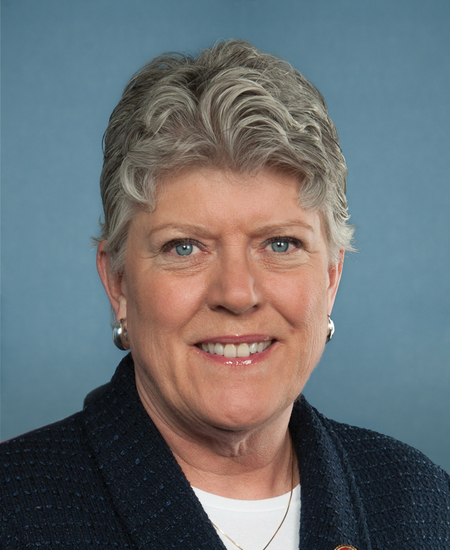
Rep. Julia Brownley
Sponsored bills
This resolution recognizes the disparity between wages paid to men and women, and its impact on women, families, and the nation and reaffirms Congress' commitment to supporting equal pay and to narrowing the gender wage gap.
This joint resolution eliminates the deadline for the ratification of the Equal Rights Amendment, which prohibits discrimination based on sex. The amendment was proposed to the states in House Joint Resolution 208 of the 92nd Congress, as agreed to in the Senate on March 22, 1972. The amendment shall be part of the Constitution whenever ratified by the legislatures of three-fourths of the states.
Neighborhood Homes Investment Act This bill establishes a new business-related tax credit to finance home building and rehabilitation in neighborhoods that meet certain eligibility criteria relating to poverty rates, income, and home values. The credit is limited to 35% of the lesser of the qualified development cost (i.e., the cost of construction, substantial rehabilitation, demolition, and environmental remediation of residential properties) or 80% of the national median sale price for new homes. The credit applies to single family homes containing four or fewer residential units, condominiums, or houses or apartments owned by cooperative housing corporations.
Keeping Our Manufacturers from Being Unfairly taxed while Championing Health Act or KOMBUCHA This bill modifies the definition of brewer for purposes of the alcohol excise tax to exempt kombucha from such tax.
Military Family Violence Prevention Act This bill requires the Department of Defense (DOD) to take various actions and implement programs related to the prevention of and response to domestic violence and child abuse and neglect among military families. Specifically, the bill requires DOD to report on current and recommended staffing levels for the Family Advocacy Programs (FAPs) of the Armed Forces at each installation, ensure that appropriate statistical data on incidents report to the FAPs is shared among and across the Armed Forces, establish a pilot program to assess the feasibility and advisability of various mechanisms to inform families about the FAPs and resiliency training of the Armed Forces during their enrollment in the Defense Enrollment Eligibility Reporting System, report on the results of the study conducted by the Defense Department Advisory Committee on Women in the Services that includes information on initial entry points for use by members of military families seeking support for domestic abuse or child abuse and neglect, and modify internal policy related to FAPs to enhance collaboration among the specified DOD programs (e.g., the Defense Suicide Prevention Office). Each military department must improve the information available to military families on the services available in connection with domestic abuse or child abuse and neglect. Finally, the bill requires the Inspector General of DOD to report on best practices among military installations in prevention and response to domestic abuse and child abuse and neglect among military families.
Safe Step Act This bill requires a group health plan to establish an exception to medication step-therapy protocol in specified cases. A medication step-therapy protocol establishes a specific sequence in which prescription drugs are covered by a group health plan or a health insurance issuer. A request for such an exception to the protocol must be granted if (1) an otherwise required treatment has been ineffective, (2) such treatment is expected to be ineffective and delaying effective treatment would lead to irreversible consequences, (3) such treatment will cause or is likely to cause an adverse reaction to the individual, (4) such treatment is expected to prevent the individual from performing daily activities or occupational responsibilities, (5) the individual is stable based on the prescription drugs already selected, or (6) there are other circumstances as determined by the Employee Benefits Security Administration. The bill requires a group health plan to implement and make readily available a clear process for an individual to request an exception to the protocol, including required information and criteria for granting an exception. The bill further specifies timelines under which plans must respond to such requests.
Housing Supply and Affordability Act This bill allows the Department of Housing and Urban Development to award grants to states, local governments, Indian tribes, and Native Hawaiian organizations for the development and implementation of housing policy plans. These plans must increase the housing supply while avoiding resident displacement, increase housing affordability, and reduce barriers to housing development. The amounts provided by the bill are designated as an emergency requirement pursuant to the Statutory Pay-As-You-Go Act of 2010 (PAYGO) and the Senate PAYGO rule. (This excludes the budget effects from being counted for the purposes of enforcing the PAYGO rules.)
Battleship Iowa National Museum of the Surface Navy Act of 2021 This bill designates the Battleship USS Iowa Museum located in Los Angeles, California, as the National Museum of the Surface Navy.
Farm Workforce Modernization Act of 2021 This bill contains provisions related to alien farmworkers, including provisions establishing a certified agricultural worker (CAW) status and changing the H-2A temporary worker program. The Department of Homeland Security (DHS) may grant CAW status to an applying alien who (1) performed at least 1,035 hours of agricultural labor during the two-year period prior to March 8, 2021; (2) on that date was inadmissible, deportable, or under a grant of deferred enforced departure or temporary protected status; and (3) has been continuously present in the United States from that date until receiving CAW status. The bill imposes additional crime-related inadmissibility grounds on CAW applicants and makes some other grounds inapplicable. CAW status shall be valid for 5.5 years and may be extended. DHS may grant dependent status to the spouse or children of a principal alien. An alien with a pending application may not be detained or removed by DHS and shall be authorized for employment until DHS makes a final decision on the application. A CAW alien (and dependents) may apply for lawful permanent resident status after meeting various requirements, including performing a certain amount of agricultural labor for a number of years. DHS shall create an electronic platform for (1) filing H-2A petitions, (2) facilitating the processing of H-2A cases, and (3) providing agencies a single tool for obtaining H-2A-related case information. The bill makes various changes to the H-2A program, such as (1) modifying the method for calculating and making adjustments to the H-2A worker minimum wage, (2) specifying how an employer may satisfy requirements that it attempted to recruit U.S. workers, (3) requiring H-2A employers to guarantee certain minimum work hours, (4) making the program available for agricultural work that is not temporary or seasonal, and (5) reserving a visa allocation for the dairy industry. DHS shall establish a pilot program allowing certain H-2A workers to apply for portable status, which gives the worker 60 days after leaving a position to secure new employment with a registered H-2A employer. DHS shall establish an electronic system patterned on the E-Verify Program for employers to verify an individual's identity and employment authorization. Employers hiring individuals for agricultural employment must use the system. This bill permanently establishes the Housing Preservation and Revitalization Program, which provides financing assistance for rural rental housing and off-farm labor housing and rental assistance for qualified tenants of such housing. It also authorizes the Department of Agriculture to provide various assistance, including funding for insuring loans and grants for new farmworker housing.