

Maddy summaryThis bill amends the Department of Defense's Transition Assistance Program (TAP) and the Department of Veterans Affairs' Solid Start Program to enhance mental health support during military-to-civilian transitions. It requires TAP to provide specific information on suicide risk factors (including depression, homelessness, and relationship strain), treatment options for conditions like PTSD and substance abuse, and the impact of losing social support systems. The Solid Start Program must now assist veterans in enrolling in VA healthcare and educate them about available mental health resources. The Secretaries of Defense and Veterans Affairs must jointly report to Congress within one year on the materials developed under these changes.
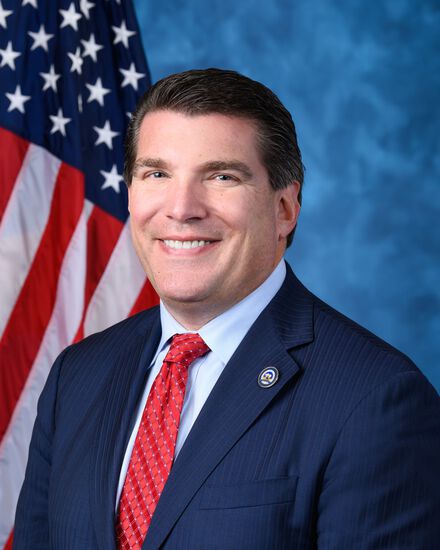
Rep. Jay Obernolte
Sponsored bills
Maddy summaryThis bill directs the Commerce Secretary to create a public education campaign about artificial intelligence within 180 days. It aims to improve consumer understanding of AI's daily uses (like recommendations, voice assistants, and deepfakes), teach best practices for detecting AI-generated content, and provide targeted outreach to vulnerable groups like seniors. The campaign will develop multilingual materials, a mobile-friendly website, and annual updates, while coordinating with small businesses and state/local governments. The effort expires after 5 years with no new federal funding required.
Maddy summaryHR 7074 requires the Secretary of the Interior to join the Committee on Foreign Investment in the United States (CFIUS) when reviewing transactions involving land or resources near federal lands managed by agencies like the Bureau of Land Management, National Park Service, or Bureau of Indian Affairs. It specifically targets acquisitions by foreign entities from China, North Korea, Russia, or Iran, mandating CFIUS to assess whether such transactions - reported by the Interior Secretary - constitute a "covered transaction" requiring review. The bill creates a new process for evaluating these land deals, with the review ending for a specific country once it’s removed from the U.S. list of "foreign adversaries." This directly affects foreign buyers from those four nations seeking to acquire land adjacent to federally protected areas.
Maddy summaryHR 435 ("Direct Hire To Fight Fires") creates a direct hiring authority for wildland firefighting and support positions within the Forest Service and Department of the Interior, allowing agencies to bypass standard federal hiring rules for specific roles like Forestry Technicians (GS-0462) and Aircraft Operations (GS-2181). It requires agencies to streamline hiring processes to reduce time-to-hire, eliminate redundancies, and improve retention, while mandating annual public reports detailing staffing needs, vacancies by state, and progress on hiring goals. The bill directly affects federal wildland firefighters and support staff in both agencies, focusing on accelerating recruitment for critical firefighting roles. Agencies must implement these changes within one year of enactment and publish reports annually.
Maddy summaryHR 179, the Proven Forest Management Act of 2025, requires U.S. Forest Service and Interior Department managers to conduct forest management activities on National Forest System land in ways that achieve multiple ecosystem benefits - including reducing wildfire fuels, maintaining biodiversity, improving water quality, and increasing climate resilience. It simplifies environmental reviews for fuel-reduction projects under 10,000 acres (with no more than 3,000 acres of mechanical thinning) by exempting them from standard National Environmental Policy Act (NEPA) requirements, provided projects are coordinated with local governments and fire departments. The bill also mandates post-activity monitoring of ground conditions and allows cooperative agreements with local entities for activities like erosion control and stream restoration. This directly affects federal forest managers and local stakeholders involved in wildfire risk reduction on public lands.
Maddy summaryThis bill creates two key programs to expand affordable rental housing on property owned by faith-based organizations and institutions of higher education. It provides $25 million in fiscal year 2026 for technical assistance to help these groups understand how to develop or preserve affordable housing (renting at or below 30% of household income), and $50 million annually from 2026-2031 for competitive challenge grants to local governments that remove barriers to such housing. The grants specifically target housing for households at or below 60% of area median income, homeless individuals/families (including veterans), people with disabilities, and intergenerational families. These programs directly affect faith-based groups, schools, and local governments seeking to increase affordable housing supply on their owned properties.
Maddy summaryHR 472, the Restore VA Accountability Act of 2025, creates new disciplinary procedures for VA supervisors and management officials. It requires the VA Secretary to consider specific factors like the seriousness of misconduct and the employee's role when deciding on removal, demotion, or suspension, and limits the entire disciplinary process to 15 business days. The bill prevents courts from reviewing penalty amounts but allows review of whether procedures were followed correctly. It also strengthens whistleblower protections by requiring Special Counsel approval before disciplining employees who report misconduct, affecting VA supervisors and management officials but excluding senior executives and political appointees.
Maddy summaryHR 6849 designates the U.S. Postal Service facility at 2121 Meridian Park Boulevard in Concord, California, as the "Carl Jefferson Post Office Building." This bill updates all official U.S. government references (laws, maps, documents) to the facility to reflect its new name. It directly affects the postal facility itself and any federal records mentioning it. The bill contains no substantive policy changes or funding provisions, solely serving a ceremonial naming purpose.
Maddy summaryHR 3632, the Power Plant Reliability Act of 2025, requires electric utilities to provide at least 5 years' advance notice to federal and state regulators before permanently retiring any generating unit with a capacity of 5 megawatts or more. The bill mandates that the Federal Energy Regulatory Commission (FERC) can order utilities to continue operating specific plants or develop long-term transmission plans if it finds interstate service inadequate, while prohibiting FERC from forcing new plant construction or energy sales that would harm service. Utilities must also cover costs for these changes through adjusted rates, and the bill includes a provision exempting compliance actions from environmental law penalties. This directly affects large power generators, state energy commissions, and transmission operators by creating new notice requirements and FERC oversight for plant retirements.
Essential Caregivers Act of 2025 This bill prohibits certain health care facilities from limiting the access of essential caregivers to residents of those facilities, including during designated emergency periods. Specifically, the bill generally prohibits Medicare skilled nursing facilities, Medicaid nursing facilities, Medicaid intermediate care facilities, and associated inpatient rehabilitation facilities from restricting the access of essential caregivers to residents of the facilities, including during emergency periods in which visitation rights are otherwise restricted. During emergency periods, facilities may restrict access for an initial period of up to seven days and for one additional maximum seven-day period (if the additional period is approved by the state health department). Facilities may restrict access for a total of 7 days (or 14 days with the approval of the state health department) during an emergency period. Essential caregivers must agree to comply with any safety protocols set by the facility, which may be no more stringent for caregivers compared to those for staff. Caregivers who fail to comply with these requirements may be denied access, subject to an appeals process.