

Maddy summaryThe AI Grand Challenges Act of 2026 establishes a National Science Foundation program to award cash prizes for solving specific, measurable AI research challenges across 15 priority areas like national security, health, energy, and cancer breakthroughs. It requires the NSF Director to create prize competitions with minimum $1 million awards per winner (including a mandatory $10 million cancer-focused competition), targeting U.S.-based entities or citizens. Key mechanisms include publishing clear problem statements and success metrics on Challenge.gov, consulting public and federal agencies on challenge selection, and reporting annual results to Congress. The bill directly affects U.S. researchers, companies, and organizations developing AI solutions for federally identified challenges.
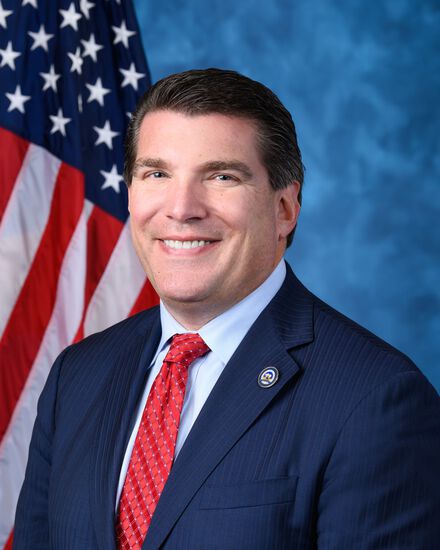
Rep. Jay Obernolte
Sponsored bills
Maddy summaryThis bill, known as the BASICS Act, creates a new $5.5 billion federal funding program over five years to repair and replace bridges in poor condition across the United States. The program prioritizes projects based on the cost of bridge rehabilitation in each state and guarantees a minimum funding allocation of $45 million per state annually. It also expands funding for regional transportation planning in rural areas and increases flexibility for local governments to select and manage transportation projects through enhanced consultation requirements. Additionally, the legislation removes local matching fund requirements for metropolitan planning activities and allows 100 percent federal funding for off-system bridge projects owned by local governments or tribes.
Maddy summaryThis bill amends the Passport Act of 1920 to exempt Purple Heart and Medal of Honor recipients from standard U.S. passport application and renewal fees. It directly affects veterans who have received these specific military decorations. The key provision adds a new fee exemption category (subparagraph D) for these individuals in the passport fee structure. The bill also requires the State Department to create a verification process with the Defense Department to confirm eligibility using military service records. This is a straightforward administrative change to reduce costs for honored veterans.
Maddy summaryThis bill prevents state or local governments from banning or restricting energy connections (like installation, modification, or access) based on the type or source of energy, such as electricity, natural gas, or renewable fuels. It directly affects consumers choosing energy providers and energy companies seeking to offer services. The key provision prohibits local laws, regulations, or policies that limit energy services sold in interstate commerce, covering all energy types listed in the bill’s definitions. It does not create new programs but limits regulatory authority at the state or local level. The law aims to ensure open access to diverse energy sources without source-based restrictions.
Maddy summaryThis bill creates a tax exclusion for certain disaster mitigation payments received by property owners. It allows individuals to exclude from gross income funds paid by state programs (or approved entities) to make improvements that reduce damage from windstorms, earthquakes, or wildfires. The exclusion applies to payments made for specific property upgrades like storm shutters or fire-resistant roofing. The change takes effect for 2021+ tax years and includes a retroactive option for taxpayers to amend prior returns. It directly affects homeowners participating in qualifying state disaster resilience programs.
Maddy summaryHR 7334 establishes the Commission on American Leadership in Robotics to study how robotics development impacts U.S. economic competitiveness and national security. The 18-member Commission, appointed with balanced political representation (3 each from House/Senate leadership and 6 by the President), will review robotics applications in industry, supply chains, workforce needs, and global trends. It must submit an interim report after one year and a final report with recommendations after two years, working with federal agencies but having no authority to enact new laws. The Commission will terminate 18 months after its final report.
Maddy summaryThis bill requires individuals to notify small businesses about website or mobile app accessibility issues before filing lawsuits, giving businesses 180 days to fix problems. If unresolved, complaints go to the Department of Justice (DOJ), which must investigate within 360 days. Failure to act within that period is treated as the business being compliant. It directly affects small businesses operating public-facing websites or apps used for commerce, aiming to prevent lawsuits over ADA accessibility without prior correction opportunities.
Maddy summaryThe Roadway Safety Modernization Act of 2025 requires states to integrate predictive safety tools - like data analytics and telematics - into federal highway safety programs to identify risks, evaluate projects, and improve planning. It directs the Department of Transportation to issue guidelines on data privacy, security, and validating these tools to ensure reliability. The bill also defines "intelligent freight transportation systems" to include technologies that enhance freight safety on highways. These changes apply directly to states administering highway safety funds and federal agencies like the Federal Highway Administration.
Maddy summaryThe AI OVERWATCH Act requires U.S. exporters to obtain a license for sending certain high-performance integrated circuits (defined by specific technical specifications like processing power or bandwidth) to countries designated as "concerns," including China, Russia, Iran, and North Korea. Before approving such licenses, the Commerce Department must submit detailed certifications to Congress, including assurances the export won’t support military/intelligence capabilities of the recipient country and won’t harm U.S. semiconductor availability or AI leadership. The bill also creates an exemption for U.S. companies meeting strict security and ownership standards ("trusted United States persons") to export these chips to non-target countries without a license. Additionally, it mandates a national security strategy assessing how such exports affect U.S. AI competitiveness, particularly regarding China’s semiconductor production and capabilities.
Maddy summaryThe CLEAR Act (HR 4218) amends the Clean Air Act to streamline state compliance with air quality standards. It extends the review cycle for national air quality standards from five to ten years, requires states to consider economic feasibility alongside technical achievability when developing plans, and gives states up to three years (instead of two) to fix deficiencies before federal intervention. The bill also creates a new exception for wildfire mitigation actions like prescribed fires, allowing states to exclude wildfire-related air quality data from violation determinations. These changes primarily affect states responsible for implementing air quality plans under federal oversight.