

Maddy summaryThe Protecting Our Democracy Act is a comprehensive legislative bill designed to prevent abuses of presidential power, restore checks and balances, and defend elections against foreign interference. Key provisions include prohibiting the President from granting self-pardons, requiring congressional oversight for pardons involving the President or their family, and banning the President from accepting payments from individuals who have received clemency. The bill also strengthens enforcement of the Hatch Act and ethics rules for political appointees, mandates greater transparency in presidential tax returns and campaign finances, and restricts the use of federal property for political conventions. Additionally, it expands reporting requirements for foreign contacts in federal campaigns and imposes stricter penalties for violations of election laws.
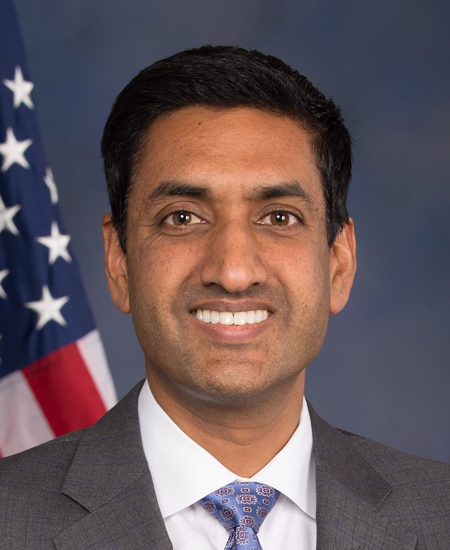
Rep. Ro Khanna
Sponsored bills
Maddy summaryThis resolution designates the week of May 10 through May 16, 2026, as Taiwanese American Heritage Week to honor the contributions of the Taiwanese American community. It recognizes over 700,000 Taiwanese Americans who have made significant impacts in fields such as technology, science, and public service, particularly in the semiconductor industry. The measure also highlights the importance of people-to-people ties between the United States and Taiwan, marking the 47th anniversary of the 1979 Taiwan Relations Act.
Maddy summaryThe Universal School Meals Program Act of 2026 mandates that all public schools provide free breakfast and lunch to every enrolled student, regardless of income. It establishes specific funding rates for these meals, adjusts payments based on the use of locally sourced food, and eliminates the ability of schools to collect debt for unpaid charges. Additionally, the bill expands free meal access to summer programs, afterschool care, and incarcerated juveniles while updating poverty measurement standards across various federal education and nutrition laws.
Maddy summaryThe Multigenerational Caregiving Data Act requires the U.S. government to add a specific question to major national surveys to identify people who provide unpaid care to both children and older adults. This change aims to better track individuals who juggle responsibilities for dependents across different generations, addressing a gap in current data collection. Before the question is fully used, the government will test it to ensure it is clear and not too burdensome for respondents, and all answers will remain voluntary. Within three years of passing, the survey must include this new question, and within two years of its inclusion, the government must report to Congress on how well the data works and suggest any needed adjustments. Ultimately, the bill seeks to improve official statistics on caregiving to help policymakers make more informed decisions about health, work, and family support.
Maddy summaryThis House resolution condemns the ongoing civil war in Sudan and calls for an end to external support provided to the warring parties, the Sudanese Armed Forces and the Rapid Support Forces. It urges the Trump Administration to stop supplying weapons or other assistance to these groups and to negotiate a peaceful settlement that restores democratic governance. The bill also highlights the severe humanitarian crisis affecting millions of people and demands that aid workers be granted safe, unrestricted access to deliver essential supplies. Additionally, it calls on the international community to support post-conflict reconstruction and establish a justice mechanism to hold perpetrators of war crimes accountable.
Maddy summaryThis bill would amend federal law to strengthen penalties for organized retail crime by expanding definitions of theft to include digital goods, gift cards, and setting a $5,000 aggregate value threshold for charges over a 12-month period. It would establish a new "Organized Retail and Supply Chain Crime Coordination Center" under Homeland Security to coordinate Federal, State, local, and Tribal law enforcement efforts against cross-jurisdictional theft groups. The Center would share information with retailers, transportation companies, and law enforcement agencies, track crime trends, and produce annual reports on organized retail crime. This legislation directly affects retailers, supply chain businesses, and law enforcement agencies, while targeting organized crime groups responsible for a 93% increase in larceny incidents and rising safety concerns for retail employees. The bill aims to address significant financial losses and supply chain disruptions noted in the National Retail Federation's 2023 data.
Maddy summaryThis resolution reaffirms the House of Representatives' support for the Taiwan Relations Act and longstanding bipartisan U.S. policy toward Taiwan. It highlights key provisions such as maintaining commercial and cultural ties, emphasizing regional peace, and providing Taiwan with defensive arms. The document also reiterates the Six Assurances, which clarify that the U.S. does not set a date for ending arms sales, will not mediate between Taiwan and China, and will not pressure Taiwan to negotiate with China. By restating these principles, the bill aims to reinforce the current framework without introducing new legal obligations or changing existing policy.
Maddy summaryThe Connected Vehicle Security Act of 2026 restricts the importation, sale, and manufacture of vehicles and related technology from specific countries, including China, Russia, Iran, and North Korea, to address national security concerns. The law defines prohibited items as connected vehicles, their software, and hardware components and sets different effective dates, with vehicle bans starting in 2027 and hardware restrictions beginning in 2030. A government official can grant exceptions for specific items after reviewing security risks and notifying Congress, while the agency must publish annual reports on enforcement actions and compliance.
Maddy summaryThe MISSION Rx Act ensures that military beneficiaries and veterans pay no more for specific negotiated drugs than Medicare Part D beneficiaries do. It achieves this by capping the out-of-pocket costs for TRICARE-covered servicemembers and copayments for veterans at the same levels established under the federal drug price negotiation program. Additionally, the bill requires federal agencies to limit the maximum prices they agree to pay pharmaceutical manufacturers for these same negotiated drugs. These changes apply to existing contracts and new agreements involving drugs selected for federal price negotiation.
Maddy summaryH.R. 1243 is a House resolution that formally recognizes May as Asian American, Native Hawaiian, and Pacific Islander Heritage Month to celebrate the contributions of these communities to U.S. history. The bill highlights the diverse populations, historical milestones, and significant achievements of Asian Americans, Native Hawaiians, and Pacific Islanders in government, the military, and society. It also acknowledges the ongoing challenges faced by these groups, including a rise in hate crimes and historical discrimination. As a commemorative resolution, the measure does not create new laws or funding but serves to express official congressional appreciation and awareness.