

Maddy summaryHR 1321, the "More Homes on the Market Act," increases the tax exclusion for gains from selling a primary residence. It doubles the exclusion amount from $250,000 to $500,000 for single filers and from $500,000 to $1,000,000 for married couples filing jointly. The bill also adds automatic annual inflation adjustments to these amounts starting in 2023, ensuring the exclusion keeps pace with rising costs. This change directly affects homeowners who sell their primary residence and meet the ownership and use requirements under current tax law. The policy modifies the Internal Revenue Code to make selling a home less financially burdensome for qualifying homeowners.
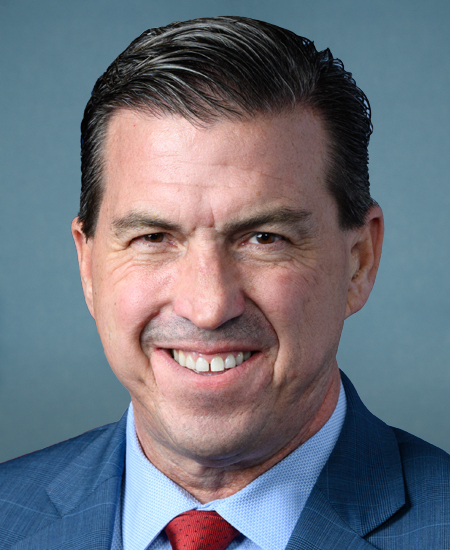
Rep. Kevin Mullin
Sponsored bills
Maddy summaryHR 1247 would award a Congressional Gold Medal to the Freedom Riders collectively, honoring their pivotal role in challenging segregation in interstate travel during the Civil Rights movement. The medal, to be struck by the U.S. Mint and displayed at the Smithsonian Institution, recognizes their nonviolent protests that led to the 1961 federal ban on segregation in interstate public facilities. This is a symbolic tribute with no legal effect, as the bill does not create new policies or alter existing laws.
Maddy summaryHR 1244 authorizes Congress to award a gold medal collectively to Africans and their descendants who were enslaved in the U.S. from 1619 to 1865, recognizing their contributions to America's economic foundation. The bill directs the Treasury Secretary to design and strike the medal, which will be permanently displayed at the Smithsonian's National Museum of African American History & Culture. It also permits the sale of bronze duplicates to cover costs, with proceeds going to the U.S. Mint. This is a commemorative measure, not a policy change, focusing on symbolic recognition of historical contributions.
Maddy summaryThe Richard L. Trumka Protecting the Right to Organize Act of 2023 strengthens workers' rights to organize unions by making it harder for employers to interfere with organizing efforts. Key provisions include changing the definition of "employee" to make it more difficult to classify workers as independent contractors, prohibiting employers from threatening to permanently replace striking workers, and requiring employers to provide voter lists for union elections. The bill also creates a new electronic voting system for union elections, strengthens whistleblower protections for workers reporting labor violations, and increases penalties for unfair labor practices. These changes directly affect workers seeking to form unions, employers who may interfere with organizing, and labor organizations. The bill aims to make it easier for workers to exercise their right to collective bargaining under the National Labor Relations Act.
Maddy summaryHR 1124, the Federal Death Penalty Abolition Act of 2023, would eliminate the federal death penalty by repealing provisions in over 30 sections of U.S. Code that currently allow for capital punishment in various criminal offenses. The bill would affect anyone convicted of a federal crime that currently carries the death penalty, including murder during drug trafficking, terrorism, and other violent crimes. It would remove the death penalty as a sentencing option for these offenses and require resentencing for those already under a death sentence. The bill also makes related changes to military justice procedures that currently permit capital punishment.
Maddy summaryThe RISEE Act of 2023 creates a National Oceans and Coastal Security Fund to support coastal communities and ecosystems. It allocates 37.5% of offshore wind revenue directly to eligible coastal states using a formula based on tidal shoreline length, coastal population density, and distance from offshore wind projects. States must use these funds for coastal protection, habitat restoration, infrastructure, or fisheries research, with strict annual reporting requirements to the Department of the Interior. The bill prohibits using these funds for litigation or creating marine monuments, ensuring resources directly support coastal community needs.
Andrew Jackson Statue Removal Act This bill directs the Department of the Interior to remove the Andrew Jackson statue and marble base from Lafayette Square in the District of Columbia. Interior shall donate the Andrew Jackson statue and marble base to a museum or other similar entity. The recipient of the statue and base may not store, display, or exhibit the statue outside, but if the statue is stored, displayed, or exhibited outside, ownership of the statue and marble base will revert back to the federal government.
Maddy summaryHR 724, the Arctic Refuge Protection Act, repeals the existing oil and gas program for the Arctic National Wildlife Refuge in Alaska and designates approximately 1.56 million acres of the refuge's coastal plain as federal wilderness. This bill directly affects the Arctic Refuge by permanently prohibiting oil and gas leasing and development in that specific area. The key mechanism is adding the designated land to the National Wilderness Preservation System under the Wilderness Act, requiring it to be managed for its natural conditions. This change legally protects the area from future fossil fuel extraction activities.
Maddy summaryThis bill provides financial assistance to help low-income renters cover security deposits and moving costs. It directly affects families using housing choice vouchers (Section 8) and those receiving housing assistance through the HOME program. The law requires public housing agencies to use federal funds to pay for reasonable security deposits and moving expenses, and mandates that unused funds be returned to the agency for future use. It also directs the Department of Housing and Urban Development to study alternatives to traditional security deposits and report findings to Congress within 180 days.
Maddy summaryHR 1088, the Shirley Chisholm Congressional Gold Medal Act, authorizes a posthumous Congressional Gold Medal to honor Congresswoman Shirley Chisholm, the first African-American woman elected to Congress (1968) and the first Black candidate for a major party's presidential nomination (1972). The bill directs the Treasury Secretary to design and strike a gold medal featuring Chisholm's image, which will be presented by Congress and then permanently displayed at the Smithsonian Institution. Duplicate bronze medals may be sold to the public to cover production costs, with proceeds deposited into the U.S. Mint fund. This bill commemorates Chisholm's legacy and achievements without creating new laws or affecting any current policies.