

Campus Accountability and Safety Act This bill addresses sexual harassment, sexual assault, and other violence and harassment on the campuses of institutions of higher education (IHEs). Among other provisions, the bill (1) requires additional information to be included in the annual campus security report provided to current and prospective students and employees, (2) requires each IHE to establish a campus security policy that meets certain requirements, and (3) authorizes grants to address these issues.
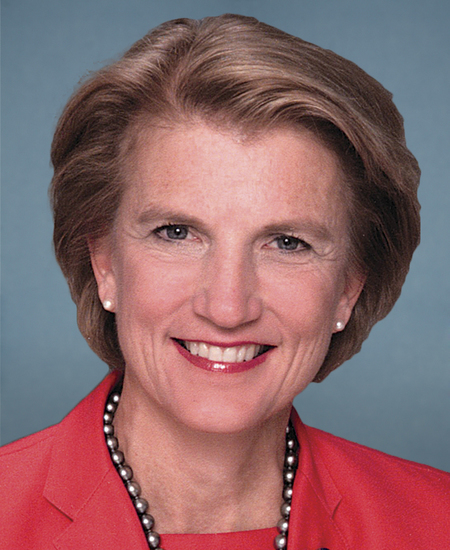
Sen. Shelley Moore Capito
Sponsored bills
One Stop Shop for Small Business Licensing Act of 2022 This bill requires the Office of Entrepreneurship Education of the Small Business Administration to establish a website that provides licensing and business permit information for small businesses.
Broadband Grant Tax Treatment Act This bill excludes from gross income, for income tax purposes, certain broadband grants made for broadband deployment.
Maddy summaryThis Senate resolution (SRES 804) designates September 2022 as "National Childhood Cancer Awareness Month" to highlight childhood cancer in the U.S. It requests federal, state, local governments, and nonprofits to observe the month with awareness programs, encourages ongoing care for childhood cancer survivors, and recognizes the human impact of childhood cancer. The resolution does not create new laws or funding but aims to increase public awareness and support for this cause.
This resolution condemns the death and detention of Mahsa Amini (an Iranian woman who died in the custody of the Morality Policy of Iran after being detained for purportedly wearing her hijab improperly). It also calls on Iran to end its systemic persecution of women.
Enhancing Mental Health and Suicide Prevention Through Campus Planning Act This bill requires the Department of Education to encourage institutions of higher education to develop and implement comprehensive campus mental health and suicide prevention plans.
Maddy summaryThis Senate resolution (SRES 794) officially designates the week of September 26-30, 2022, as "National Clean Energy Week." It does not create new laws or affect specific people or groups; instead, it symbolically recognizes the importance of clean energy. The resolution encourages Americans, businesses, and governments to support clean energy solutions and invest in affordable, low-emission technologies. It highlights clean energy’s role in job creation and economic growth but contains no binding requirements or policy changes.
Protecting Access for Hunters and Anglers Act of 2022 This bill bars the Department of the Interior and the Department of Agriculture from prohibiting or regulating the use of lead ammunition or tackle on federal land or water that is under the jurisdiction of such departments and made available for hunting or fishing. The bill makes exceptions for specified existing regulations and where the applicable department determines that a decline in wildlife population at the specific unit of federal land or water is primarily caused by the use of lead in ammunition or tackle, based on the field data from such unit, and the state approves the regulations.
This joint resolution nullifies the final rule issued by the Council on Environmental Quality titled National Environmental Policy Act Implementing Regulations Revisions and published on April 20, 2022. The rule restores regulatory provisions issued under the National Environmental Policy Act of 1969 (NEPA) that were in effect before being modified in 2020 by the Update to the Regulations Implementing the Procedural Provisions of the National Environmental Policy Act rule.
Maddy summaryThis Senate resolution designates September 2022 as National Prostate Cancer Awareness Month to highlight prostate cancer's impact, which affects millions of men in the U.S. as the most commonly diagnosed non-skin cancer and second-leading cause of cancer-related deaths among men. It calls on the public, health organizations, and communities to promote awareness, support research for better screening and treatment, and improve access to care. As a symbolic resolution, it does not create new laws, change funding, or mandate actions, but aims to encourage education and community engagement around prostate cancer prevention and early detection.