

Maddy summaryThe Think Differently Transportation Act (S 4107) requires Amtrak to report annually to Congress on its compliance with the Americans with Disabilities Act (ADA) for trains and stations. This bill directly affects Amtrak, which must provide detailed action plans for stations not meeting ADA standards and status reports on all stations, including those where Amtrak shares responsibility or isn't responsible at all. The report must include specific timelines for compliance, based on a 2020 settlement agreement between Amtrak and the Department of Justice. Amtrak must submit these reports annually while the settlement is in effect and every five years after it ends. This legislation focuses on ensuring transparency and accountability in making Amtrak's transportation infrastructure accessible to people with disabilities.
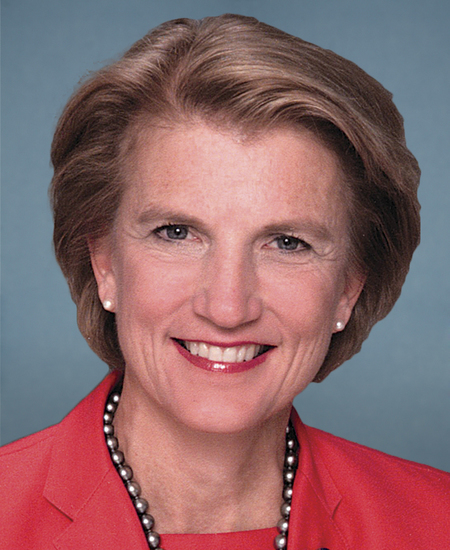
Sen. Shelley Moore Capito
Sponsored bills
Maddy summaryThis bill reauthorizes key conservation programs under the America's Conservation Enhancement Act through 2030, extending provisions that were set to expire in 2025. It specifically extends the Black Vulture Livestock Protection Program, allowing public entities or Farm Bureau organizations in each state to obtain permits to manage black vulture populations threatening livestock. The bill also extends funding for Chesapeake Bay restoration efforts, Chronic Wasting Disease Task Force activities, and National Fish Habitat Conservation Partnerships through 2030. It modifies the National Fish Habitat Board to include additional tribal representatives and clarifies reporting requirements for conservation programs. The bill does not create new programs but extends existing conservation efforts and their funding mechanisms.
Maddy summaryThe Stop Institutional Child Abuse Act (S. 1351) directs the Department of Health and Human Services to contract with the National Academies of Sciences, Engineering, and Medicine to study child abuse in youth residential programs. The study, to be completed within three years and updated every two years for a decade, will examine the prevalence of abuse, funding sources, regulations, and barriers to community-based alternatives for youth. It will identify risk assessment tools, recommend improved oversight and training for staff, and provide best practices for care including reducing the use of seclusion and restraints. The bill directly affects youth in residential programs, child welfare systems, and the agencies that oversee them, with recommendations aimed at improving safety and care. The study will involve consultation with child advocates, health professionals, individuals with lived experience, and government agencies to ensure comprehensive recommendations.
Maddy summaryThis concurrent resolution corrects minor technical errors in the official enrollment (record) of S. 4367, a bill focused on water resources development. It specifically amends five references within the Water Resources Development Act of 1986, such as changing "food" to "flood" and "maximum Federal cost" to "Federal share of the cost," to ensure accurate legal documentation. The resolution does not alter the bill's policy substance but fixes typographical inconsistencies in its written form.
Maddy summaryThis bill increases tax credits for rehabilitating historic buildings in rural areas. It provides a 30% credit for non-affordable projects and a 40% credit for projects meeting the bill's affordable housing criteria (requiring at least half of housing square footage to be affordable), with a $5 million cap on eligible expenses per project. Property owners can transfer the credit to another business through a certified process, requiring specific documentation and reporting. Affordable housing projects must maintain affordability standards, with penalties for violations. These changes apply to projects completed after 2024.
Maddy summaryThis bill designates approximately 2,693 acres of land within the Monongahela National Forest (specifically the Blackwater Canyon area) as the "Patsye Crites Forest" upon U.S. acquisition. It requires all federal references in laws, maps, or documents to be updated to reflect this new name. The bill is purely procedural, changing the land's official designation without altering management policies, funding, or affecting any individuals or groups.
Maddy summaryThe VET Artificial Intelligence Act directs the National Institute of Standards and Technology (NIST) to develop voluntary guidelines for testing, validating, and verifying AI systems. It establishes standards for both "internal" (self-conducted) and "external" (independent third-party) assurance processes to assess AI safety, privacy, and reliability. The guidelines will help AI developers and deployers (entities building or operating AI systems) evaluate risks and ensure systems meet intended purposes without prescribing specific solutions. NIST must create these guidelines through public input, including workshops and 30-day comment periods, and will establish an advisory committee to recommend qualifications for assurance providers. The law aims to support existing frameworks like NIST's AI Risk Management Framework while allowing industry flexibility.
Maddy summaryThe Homebuyers Privacy Protection Act (S 3502) limits how consumer credit reports can be shared during mortgage applications. It prevents credit reporting agencies from sending these reports to third parties solely based on a mortgage-related request, unless the third party has the homebuyer's explicit authorization or is directly involved in the loan (like the mortgage lender, loan servicer, or their bank holding the homebuyer's account). This directly affects homebuyers applying for residential mortgages by restricting unauthorized sharing of their credit data. The bill amends the Fair Credit Reporting Act to add these privacy protections without creating new government programs or altering existing mortgage processes.
Maddy summaryThis bill establishes transparency and accountability requirements for high-impact artificial intelligence systems that affect access to housing, employment, credit, education, healthcare, or insurance. It requires deployers of such systems to submit annual transparency reports detailing their systems' design, data usage, safety measures, and risk management processes. The bill creates a certification process for critical-impact AI systems (defined as systems posing significant risk to constitutional rights or safety) and establishes enforcement mechanisms including civil penalties for noncompliance. It also mandates research into content provenance standards to verify AI-generated media and creates a working group to develop consumer education initiatives about AI systems.
Maddy summaryThis bill (SJRES 122) seeks to block an Environmental Protection Agency (EPA) rule that established procedures for calculating emissions charges on petroleum and natural gas operations, including how companies can net emissions or claim exemptions. It directly affects oil and gas companies that would have been subject to the EPA's new compliance framework. If passed, the resolution would nullify the EPA rule under a specific legal process (chapter 8 of title 5, U.S. Code), preventing it from taking effect. The rule, published November 18, 2024, aimed to streamline how the industry reports and manages emissions-related charges. The resolution does not change the underlying emissions requirements but stops this specific procedural rule from being implemented.