

Maddy summaryThe Protecting American Agriculture from Foreign Adversaries Act of 2024 requires the Secretary of Agriculture to join the Committee on Foreign Investment in the United States (CFIUS) when reviewing transactions involving U.S. agricultural land, biotechnology, or agricultural industry sectors (including transportation, storage, and processing) with foreign entities from China, North Korea, Russia, or Iran. It mandates that the Secretary of Agriculture notify CFIUS about transactions where a foreign person from one of these "covered countries" is acquiring agricultural land, and CFIUS must then determine whether to initiate a review. This applies only to transactions already reportable under the 1978 Agricultural Foreign Investment Disclosure Act and expires for any covered country once it is removed from the official list of foreign adversaries. The law directly affects foreign investors from specified countries seeking to purchase U.S. agricultural assets and the federal review process for such transactions.
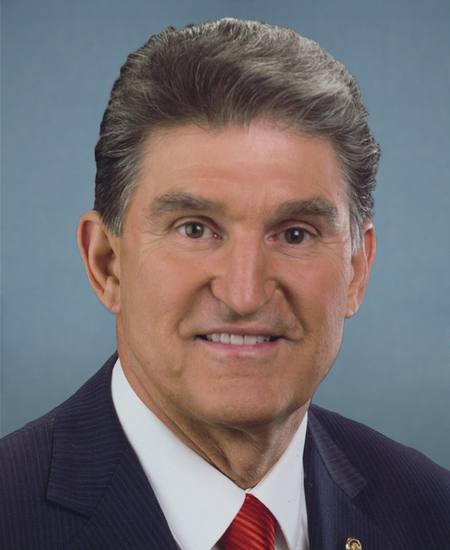
Sen. Joe Manchin, III
Sponsored bills
Maddy summaryThis bill establishes a temporary 30-member Joint Select Committee on Regulatory Reform to review how federal agencies issue regulations. The committee would examine current regulatory processes, identify rules that could be repealed, and recommend ways for Congress to review proposed regulations with significant economic impact ($50 million or more annually) before they take effect. Composed of 15 Senate members and 15 House members appointed by party leadership, the committee would operate for one year and hold hearings on regulatory burdens across different economic sectors. It would also analyze the feasibility of creating a permanent committee to review major regulations, with recommendations submitted to Congress within 90 days of its termination.
Maddy summarySRES 795 is a Senate resolution expressing strong disapproval of the Department of Education's delayed implementation of the FAFSA Simplification Act for the 2024-2025 academic year. The resolution cites specific issues, including the FAFSA application launching on December 31 (instead of the usual October 1), delayed data transmission to colleges until March, and resulting financial aid delays past National College Decision Day on May 1. This directly affected students - particularly those in foster care or experiencing homelessness - by reducing their time to compare college financial options. The resolution calls on the Department to address rollout problems for future cycles and testify to Congress, but it does not create new policy or funding changes.
Maddy summarySRES 797 designates August 16, 2024, as National Airborne Day to honor the history and contributions of U.S. airborne forces, commemorating the first official U.S. Army parachute jump on August 16, 1940. The resolution calls on the American public to observe the day with ceremonies and activities recognizing airborne forces' legacy in military operations from World War II through modern conflicts. This is a symbolic, non-binding designation with no direct legal or financial impact on specific groups.
Maddy summarySRES 800 is a symbolic Senate resolution introduced on August 1, 2024, by a bipartisan group of senators. It condemns the July 13, 2024, attempted assassination of Donald J. Trump at a Butler, Pennsylvania, rally and honors three individuals affected: Corey D. Comperatore (who died shielding his family), David Dutch (critically injured), and James Copenhaver (critically injured). The resolution calls for national unity and civility following the violent incident. As a non-binding resolution, it does not create new laws or policies but expresses the Senate's stance on the event.
Maddy summaryS 4948 establishes a $10 million grant program through the Commerce Department to reduce harmful interactions between ocean users (like ships, fishermen, and tourism operators) and North Atlantic right whales and other large whales. The program, managed by the National Fish and Wildlife Foundation, funds research on new technologies, awareness campaigns, and infrastructure to help ocean users avoid whale collisions and injuries. Grants prioritize projects that directly reduce harm, involve collaboration among ocean users, and support small U.S. businesses in fishing and tourism. The program runs through 2030, with annual funding and reporting requirements to Congress on its effectiveness.
Maddy summaryThis Senate resolution designates August 1, 2024, as "Gold Star Children’s Day" to honor children who lost a parent while serving in the U.S. Armed Forces. It specifically recognizes these children’s sacrifices, building on existing observances for Gold Star Mothers (since 1936) and Gold Star Spouses (since 2010). The resolution has no policy or funding changes - it simply designates a date for national recognition and encourages public observance. It does not create new laws or alter existing programs.
Maddy summaryThis bill designates a U.S. Border Patrol checkpoint on Highway 90 West in Uvalde County, Texas, as the "James R. Dominguez Border Patrol Checkpoint." It directly affects federal records and references to this specific checkpoint by requiring all official documents, maps, and regulations to use the new name. The bill honors Border Patrol Agent James R. Dominguez, who died in 2012 while clearing roadway debris near Cline, Texas, and was survived by his wife and four children. It has no policy or funding provisions - only a naming change for commemorative purposes.
Maddy summaryThis bill requires all U.S. federal agencies to purchase flags made entirely in the United States (with materials grown or produced domestically) for official use, effective 180 days after enactment. It directly affects federal departments and agencies that buy U.S. flags for displays or ceremonies, such as the Department of Defense or National Parks Service. Key provisions mandate 100% domestic manufacturing but include limited exceptions for quality/quantity shortages, small purchases, military commissaries, and presidential waivers under trade agreements. The law aims to prioritize U.S. manufacturing for government flag procurement without altering existing flag display practices for citizens or businesses.
Maddy summaryThe Mining Schools Act of 2023 creates a Department of Energy grant program to strengthen domestic mining education at eligible colleges and universities. It authorizes up to 10 annual grants for institutions with accredited mining programs or specific geology/engineering departments in states with significant mining economies, focusing on recruiting students and advancing education in critical minerals, sustainable extraction, and environmental reclamation. Grant funds must support concrete educational initiatives like improving mineral processing technology, reducing environmental impacts, and developing domestic supply chains for critical minerals. An advisory board of industry and academic experts will help select grantees and ensure funds are used as intended, with $10 million annually allocated for fiscal years 2024-2031. The bill repeals a 1984 law related to mining research but centers on building U.S. workforce capacity for domestic mineral production.