

Maddy summarySRES 120 is a ceremonial Senate resolution designating March 23, 2023, as "National Women in Agriculture Day." It recognizes the significant contributions of women in U.S. agriculture, citing that they represent over one-third of agricultural producers and generated $148 billion in sales in 2017. The resolution encourages citizens to acknowledge women in the field and supports their roles as producers, educators, mentors, and leaders. As a symbolic gesture, it does not create new laws or funding but aims to highlight their impact on the agricultural workforce and food systems.
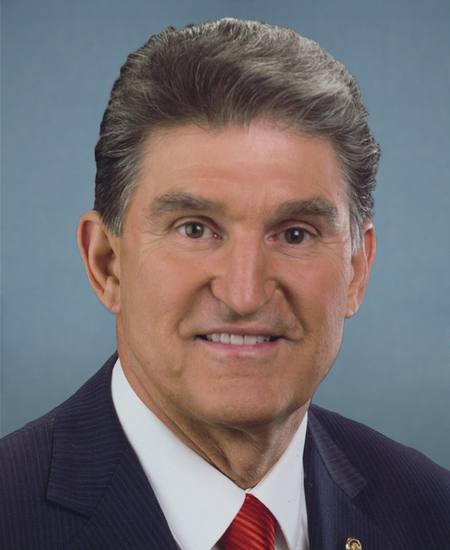
Sen. Joe Manchin, III
Sponsored bills
Maddy summaryThis bill (S 1159) extends compliance timelines for small lenders under the Equal Credit Opportunity Act. It requires the Bureau to grant a 3-year period for lenders to meet new data reporting rules, followed by a 2-year safe harbor where lenders aren't penalized for non-compliance during that time. The bill defines "small business" as entities with under $1 million in annual revenue and "financial institution" as lenders originating at least 500 small business loans annually over the prior two years. It directly affects small lenders (those meeting the 500-loan threshold) and small businesses (under $1M revenue), reducing immediate regulatory pressure through phased implementation.
Maddy summaryThis bill repeals two specific legal authorizations for U.S. military force against Iraq: the 1991 authorization (Public Law 102-1) and the 2002 authorization (Public Law 107-243). If enacted, it would end the legal basis for military operations in Iraq under these two resolutions. The repeal directly affects the executive branch’s authority to use military force against Iraq under these specific laws. It does not create new policy but removes existing legal permissions.
Maddy summaryThis Senate resolution (SRES 133) honors the 30th anniversary of the National Guard Youth Challenge Program. It recognizes the program’s work providing free alternative education and structured discipline to at-risk youth aged 16-18, commends over 200,000 graduates, and reaffirms Senate support for the program’s mission. The resolution does not create new policies or funding but formally acknowledges the program’s role in helping youth develop skills through residential and mentoring phases. It was introduced by Senators Baldwin, Capito, Cassidy, and others in March 2023.
Maddy summarySRES 136 is a Senate resolution recognizing the contributions of AmeriCorps members, alumni, and AmeriCorps Seniors volunteers to communities across the United States. It highlights their service in areas like education support, disaster response, environmental protection, and assisting vulnerable populations, while encouraging the public to honor their work and consider joining national service programs. The resolution does not create new policies or allocate funds but serves as a symbolic acknowledgment of their impact.
Maddy summaryS 1048 designates nine specific Mexican drug cartels - including the Sinaloa Cartel, Jalisco New Generation Cartel, and Gulf Cartel - as foreign terrorist organizations under existing law (Section 219 of the Immigration and Nationality Act). This designation would enable federal authorities to use new legal tools, such as prosecuting drug traffickers who fund these groups, freezing cartel assets, and imposing penalties on financial institutions that fail to block their funds. The bill also creates an interagency task force led by the Director of National Intelligence to coordinate intelligence, strategy, and enforcement across agencies like Homeland Security and the Treasury. This directly targets the cartels’ operations and funding streams, aiming to disrupt the flow of fentanyl and other drugs into the U.S.
Maddy summaryThis bill requires federal agencies to offset any new direct spending caused by their administrative actions (like rule changes or guidance). Agencies must propose equivalent spending reductions before implementing rules that increase costs, and the Office of Management and Budget (OMB) reviews these proposals. It applies to all executive agencies (e.g., EPA, Social Security Administration) and military departments, but excludes the Government Accountability Office. The law aims to prevent uncontrolled spending increases from agency actions by mandating budget neutrality for new rules.
Maddy summaryThis bill establishes a federal "National Parkinson’s Project" under the Department of Health and Human Services to coordinate efforts across agencies in preventing, treating, and curing Parkinson’s disease and related conditions. It requires an integrated national plan, annual progress assessments, and a public Advisory Council - including patient advocates, researchers, and healthcare providers - to guide strategy and recommend actions. The project mandates data sharing among federal agencies and biannual reports to Congress evaluating federally funded Parkinson’s programs, aiming to improve care coordination, reduce financial burdens on Medicare and families, and advance research on environmental triggers. The law directly affects people living with Parkinson’s, their caregivers, and federal health agencies involved in research and patient services. The initiative is scheduled to sunset in 2035.
Maddy summaryS 976, the After Hours Child Care Act, creates a new federal grant program to improve child care access for parents working nontraditional hours (evenings, nights, weekends). It directly affects working parents with young children and eligible child care providers who serve them. The bill authorizes $10 million over five years to fund competitive grants (ranging from $25,000 to $500,000) for providers or partnerships to expand existing care, establish workplace programs, or support quality improvements. Grantees must cover 25% of costs, and the Secretary must report biennially on children served and program impacts.
Maddy summaryThis concurrent resolution (SCONRES 8) expresses Congress's formal opinion that tax-exempt fraternal benefit societies - mutual aid organizations operating under IRS Section 501(c)(8) - have long provided essential community benefits. It highlights that these societies, with approximately 7 million members nationwide, contribute over $3.8 billion annually through charitable work, volunteerism, and financial security programs. The resolution affirms that their tax-exempt status continues to support their mission and relieve pressure on government safety net programs. As a non-binding statement of congressional sentiment, it does not change tax law or create new obligations.