

Maddy summaryThe Building American Energy Security Act of 2023 aims to accelerate permitting for energy projects by streamlining environmental reviews and setting strict timelines for federal agencies. It requires agencies to complete environmental impact statements within 2 years and environmental assessments within 1 year for major energy projects. The bill establishes a system to designate 25 "designated projects" of strategic national importance (including renewable energy, fossil fuel infrastructure, critical mineral mining, and carbon capture projects) that will receive priority review. It also includes specific provisions requiring agencies to issue necessary approvals for the Mountain Valley Pipeline within 30 days of enactment.
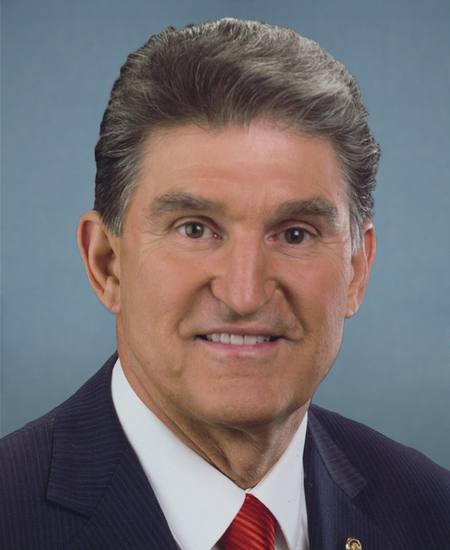
Sen. Joe Manchin, III
Sponsored bills
Maddy summaryThe Federal Prison Oversight Act creates new oversight mechanisms for federal prisons operated by the Bureau of Prisons. It requires regular inspections by the Justice Department's Inspector General to assess conditions of confinement, medical care, staffing levels, and other key areas, with reports made public. The bill also establishes an Ombudsman position to receive and address complaints from incarcerated people, their families, and staff about health, safety, and rights issues. Facilities must develop and publicly share corrective action plans for identified problems, with protections against retaliation for those filing complaints. This law directly affects federal prison facilities, incarcerated individuals, staff, and their families by increasing transparency and accountability in correctional operations.
Maddy summarySJRES 4 is a joint resolution that removes the 1972 deadline for states to ratify the Equal Rights Amendment (ERA), which was originally proposed in House Joint Resolution 208. It declares that the ERA is valid as part of the U.S. Constitution if ratified by three-fourths of states (38), regardless of the expired deadline. The resolution directly affects the ERA ratification process, making it possible for states to complete ratification without time constraints. As of 2023, 38 states had already ratified the ERA, and this resolution would finalize its inclusion in the Constitution if enacted.
Maddy summaryThis resolution (SRES 183) is a ceremonial Senate measure celebrating the 151st anniversary of Arbor Day on April 28, 2023. It recognizes April 28, 2023, as National Arbor Day and encourages all Americans to participate in tree-planting activities. The resolution highlights Arbor Day’s history since 1872 and emphasizes community efforts in urban forestry, but it does not create new laws or policies. It directly affects the public by promoting awareness of tree planting and environmental stewardship. As a symbolic gesture, it has no binding effect on government actions or funding.
Maddy summaryThis bill requires the U.S. Department of Defense to develop a strategy for building an integrated maritime security capability in the Middle East, focusing on protecting allies from Iranian naval threats, piracy, and extremist groups. It mandates a 60-day strategy report to Congress detailing threat assessments, existing partnerships (like Combined Maritime Forces), efforts to integrate Israel, and intelligence coordination gaps. The bill also directs a 90-day feasibility study on funding this capability through contributions from Middle Eastern allies. The strategy and study directly affect U.S. military operations in the region and partner nations' security cooperation with the U.S. Navy.
Maddy summaryThis bill strengthens penalties for individuals or organizations charging veterans unauthorized fees when assisting with VA benefit claims. It directly affects veterans who might be targeted by unscrupulous representatives and the representatives themselves who attempt to charge such fees. The key provision adds a new subsection (b) to Section 5905, making it illegal to solicit, charge, or receive any fee for preparing or submitting VA claims - except as allowed under specific other sections. Violations can result in fines, up to one year in prison, or both.
Maddy summaryThis bill (SJRES 10) seeks to block a specific rule issued by the Department of Veterans Affairs (VA) regarding reproductive health services for veterans. It requests Congress disapprove the rule (published September 2022) under a process in federal law that allows Congress to halt agency regulations. If approved, the VA rule would be nullified and could not take effect, meaning the VA could not enforce its provisions on reproductive health services for veterans. The bill directly affects the implementation of this VA policy for veterans receiving care at VA facilities.
Maddy summarySRES 162 designates April 17-23, 2023, as "National Osteopathic Medicine Week" in recognition of osteopathic physicians and medical students. The resolution formally acknowledges their contributions to U.S. healthcare, including their whole-person approach, role in the COVID-19 response, and training in rural communities. It directly affects osteopathic physicians (over 141,500 in the U.S.) and medical students (36,500), celebrating their work and the colleges training future physicians. As a ceremonial resolution, it has no binding legal effect and does not create new policy or funding.
Maddy summarySRES 161 is a symbolic Senate resolution designating April 22-30, 2023, as "National Park Week." It does not create new laws or affect specific groups, but formally recognizes the National Park System's significance. The resolution highlights the parks' historical value, visitor impact (312 million visits in 2022), and economic contributions ($42.5 billion in 2021). It encourages public engagement with national parks but contains no funding, regulatory changes, or policy mechanisms. As a procedural resolution, it serves purely to honor the parks' legacy.
Maddy summaryThis bill prohibits federal agencies from banning lead ammunition or tackle for hunting and fishing on federal lands and waters managed by the Interior Department or Agriculture Department. It directly affects hunters and anglers using these public areas by preventing federal restrictions on lead products, except in limited cases. The exception allows restrictions only on specific federal sites where state wildlife data shows lead use is harming wildlife, and only if approved by the state's fish and wildlife agency. The bill requires federal agencies to explain in public notices how any exception meets these state approval and wildlife harm criteria.