

Maddy summaryThe Save Our Gas Stoves Act (S 1859) prevents the U.S. Department of Energy from implementing new energy efficiency standards for gas stoves that could make them unavailable in the U.S. market. It amends energy law to require the Secretary to confirm that any new standard won't eliminate gas stove options before proceeding. The bill also directly prohibits the Department from finalizing, implementing, or enforcing the specific 2023 proposed rule on gas stove energy standards (titled "Energy Conservation Program: Energy Conservation Standards for Consumer Conventional Cooking Products"). This bill primarily affects gas stove manufacturers and consumers who rely on gas stoves as their primary cooking option.
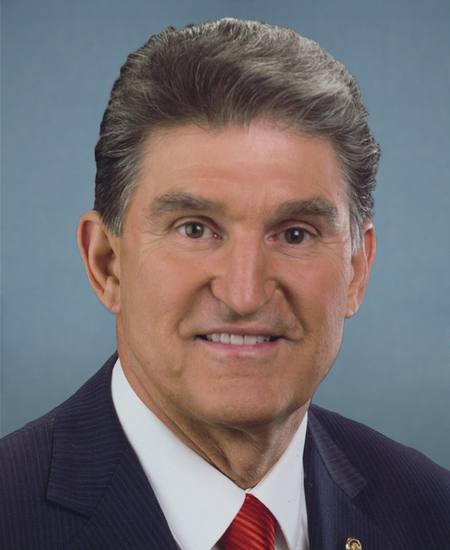
Sen. Joe Manchin, III
Sponsored bills
Maddy summaryLeveling the Playing Field 2.0 Act makes significant changes to U.S. antidumping and countervailing duty investigations. It establishes special rules for successive investigations (follow-up investigations on the same merchandise), addresses cross-border subsidies and foreign market distortions that affect pricing, and requires importers to provide certifications to prevent duty evasion. The bill also includes provisions for investigating currency undervaluation as a countervailable subsidy. These changes primarily affect U.S. manufacturers competing with foreign imports and importers of goods from countries with potentially distorted markets. The bill aims to improve the accuracy and effectiveness of trade remedy investigations to better protect U.S. industries.
Maddy summaryThis bill delays any changes to the North Atlantic Right Whale vessel strike reduction rule (currently in 50 CFR §224.105) until two conditions are met: (1) new safety measures from the 2022 Coast Guard Act are fully developed and deployed, and (2) the Secretary submits a report to specific congressional committees detailing how these measures will shape future rule changes. It directly affects the National Oceanic and Atmospheric Administration (NOAA), which manages the rule, and vessel operators in whale habitat areas. The bill does not alter the existing rule but requires NOAA to wait for specific protocols and congressional review before modifying it. This is a procedural delay focused on ensuring safety protocols are in place before rule changes occur.
Maddy summaryThe China Defense Spending Transparency Act (S 1791) requires the Defense Intelligence Agency to produce a public comparative study of U.S. and Chinese defense budgets within 180 days of enactment. The study must break down spending across categories like weapons procurement, research, and military personnel costs, while accounting for purchasing power differences and estimating hidden spending not reflected in official Chinese budget data. It specifically avoids relying on Chinese government statements and considers how China’s military-civil fusion policy affects defense spending. The report will be made publicly available online, providing Congress and the public with a detailed, non-classified comparison of defense resource allocation between the two nations.
Maddy summaryThis bill modifies tax reporting rules for third-party settlement organizations (like payment processors) by raising the threshold for mandatory reporting. It exempts transactions where either the amount per transaction is under $10,000 or the total number of transactions in a year is under 50. This directly affects payment processors handling numerous small-value transactions, reducing their administrative burden. The change applies to transactions settled after December 31, 2022, and aims to simplify compliance with IRS reporting requirements.
Maddy summarySRES 220 is a Senate resolution recognizing the 30th anniversary of the Department of Defense State Partnership Program. The resolution acknowledges the program's 30-year history of building security partnerships with 100 nations and expresses gratitude to National Guard members for their service in fostering these international relationships. It does not create new policy but formally honors the program's role in strengthening global security cooperation.
Maddy summarySRES 215 is a Senate resolution designating May 9, 2023, as National Fentanyl Awareness Day. It supports raising public awareness about the dangers of fake or counterfeit fentanyl pills, which are often disguised as legitimate medications and contribute to overdose deaths. The resolution encourages existing law enforcement efforts to combat counterfeit pill distribution and acknowledges the severe impact of fentanyl on young people, citing statistics on rising overdose deaths. It does not create new laws or funding but formally recognizes the issue through congressional support.
Maddy summaryThis resolution designates the week of May 14-20, 2023, as "National Police Week" to honor law enforcement officers who have died in the line of duty. It recognizes 444 officers killed in 2022 (including specific names listed in the resolution) and acknowledges 32 officers killed in 2023, while expressing support for law enforcement personnel. The resolution encourages the public to observe this week by honoring law enforcement officers and promoting awareness of their essential service. As a ceremonial resolution, it does not create new policy or alter existing laws.
Maddy summaryS 1654, the Credit Access and Inclusion Act of 2023, allows credit bureaus to include positive payment history for utility and telecommunications services in consumer credit reports. It directly affects consumers who pay utility bills (electric, gas) or telecom services on time, as well as utility and telecom companies that may now report these payments to credit bureaus. The bill permits reporting of payment performance under lease agreements for housing, utility payments, and telecom contracts, but only includes payment-related details - not usage data - and prohibits reporting late payments if a consumer is on a valid payment plan. A GAO study on the bill's impact is required within two years of enactment.
Maddy summaryThis bill removes key restrictions on Medicare telehealth services for rural patients. It eliminates geographic limits on where telehealth can originate (allowing services from patients' homes starting January 2025), expands access to audio-only telehealth for specific services like behavioral health, and creates new payment rules for critical access hospitals and rural health clinics providing telehealth. These changes directly affect rural Medicare beneficiaries and healthcare providers in underserved areas by making telehealth more accessible and flexible. The policy changes take effect January 1, 2025, and apply to Medicare Part B services.