

Maddy summaryS 2173, the Trademark Licensing Protection Act of 2023, clarifies that trademark licensing relationships between franchisors (or trademark owners) and related companies do not create employment relationships under labor laws. It specifically states that franchisors or trademark owners cannot be deemed employers simply because they license a mark or exercise limited control over its use to maintain quality, reputation, or uniformity. The bill explicitly excludes personnel-related policies (like hiring, pay, or work schedules) from being considered "control over the mark" under this provision. This protects franchisors and trademark owners from unintended labor law obligations tied to standard licensing practices.
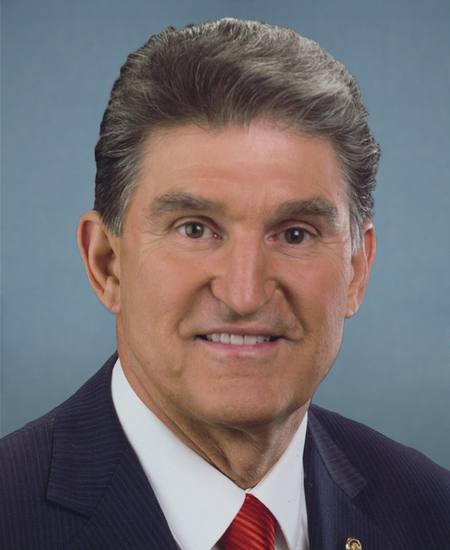
Sen. Joe Manchin, III
Sponsored bills
Maddy summaryS 2040, the Pentagon Management Oversight Act of 2023, reinstates the position of Chief Management Officer (CMO) within the Department of Defense (DoD), a role previously abolished. The CMO, appointed by the President with Senate approval, directly affects DoD leadership and agencies by overseeing shared business operations like finance, procurement, logistics, and IT across the department. Key provisions require the CMO to review all DoD agency budgets for enterprise business operations by January 31 each year, certify whether they meet efficiency standards, and report non-compliant budgets to the Secretary of Defense and Congress by March 31. This creates a formal mechanism to standardize management practices, reduce duplication, and hold agencies accountable for resource efficiency in cross-cutting functions.
Maddy summaryThis bill allows volunteer pilots operating charitable flights for 501(c)(3) organizations to be reimbursed for actual operational costs (like fuel, rental fees, or lodging) without triggering commercial aviation regulations. It defines "covered flights" as those conducted by volunteer pilots meeting specific safety certifications (e.g., private pilot license, 500+ hours) and ensures reimbursement does not constitute "compensation" under federal law. The bill exempts compliant pilots and organizations from certain FAA operating rules (e.g., air carrier requirements) and prohibits enforcement actions against good-faith compliance until regulations are finalized. It directly affects volunteer pilot organizations and individual pilots arranging flights for charitable purposes under IRS 501(c)(3) status.
Maddy summaryS 305 authorizes the U.S. Mint to produce and sell commemorative coins (gold, silver, and half-dollar denominations) to mark the U.S. Marine Corps' 250th anniversary in 2025. Each coin sale includes a surcharge ($5 to $35 per coin) that will fund the Marine Corps Heritage Center's educational programs, with proceeds paid directly to the Marine Corps Heritage Foundation. The coins will be sold from January 1 to December 31, 2025, and the surcharge structure ensures no net cost to taxpayers by covering production expenses through sales. This bill directly affects the U.S. Mint (in coin production), the Marine Corps Heritage Foundation (as recipient of funds), and the public (as potential buyers).
This resolution designates June 2023 as Great Outdoors Month. The resolution encourages all individuals in the United States to responsibly participate in recreation activities in the great outdoors.
Maddy summaryThis bill modifies the Export-Import Bank's operations to facilitate nuclear energy exports. It expands the "Program on China and Transformational Exports" to include civil nuclear facilities, materials, and technologies, and allows such financing to count toward the Bank's lending cap (up to $50 billion). The bill also adds nuclear liability coverage, requiring the Treasury to pay claims from nuclear incidents involving Bank-supported projects, up to a statutory limit, with presidential authority for larger claims. These changes directly affect the Export-Import Bank, nuclear exporters, and U.S. government liability for nuclear-related export financing.
Maddy summaryThe BUMP Act of 2023 (S 1909) prohibits the sale, possession, and transfer of devices that increase the rate of fire on semiautomatic firearms, including "bump stocks" and similar modifications. It directly affects owners of semiautomatic firearms modified to speed up firing or mimic machineguns, requiring them to register such weapons within 120 days of enactment. Key provisions ban devices designed to eliminate the need for separate trigger pulls per shot and define "semiautomatic firearm" to exclude machinegun-like modifications. The bill exempts government entities and pre-existing legal modifications from the ban, provided they are registered.
Maddy summaryS 1906, the Promising Pathway Act, creates a faster FDA approval pathway for new drugs treating serious or life-threatening conditions, allowing provisional approval within 90 days of application. It requires drug sponsors to establish patient registries tracking usage and outcomes (with 90% participation minimum), mandates insurers to cover these drugs identically to fully approved drugs, and sets 2-year provisional approval periods renewable up to three times (max 8 years total). The bill includes safety monitoring, with withdrawal if serious side effects outweigh benefits or if full approval isn’t sought within 180 days. This directly affects drug manufacturers, patients with serious conditions, and health insurers by altering approval timelines, coverage rules, and post-approval monitoring.
Maddy summaryThis bill directs the U.S. Treasury to instruct American representatives at the International Monetary Fund (IMF) to oppose any increase in the Chinese renminbi's weight within the IMF's currency basket (used to value Special Drawing Rights), unless China meets four specific conditions. These conditions require China to comply with IMF rules, not have recently manipulated its currency (per U.S. trade laws), implement policies for the renminbi to be "freely usable," and adhere to international debt and export credit standards. The U.S. position on this issue would remain in effect for 10 years from enactment. The bill directly affects U.S. voting at the IMF and China's potential inclusion in the IMF's currency basket.
Maddy summaryThis bill expands the use of assets seized from individuals or entities subject to U.S. sanctions related to Russia’s aggression in Ukraine. It broadens the definition of eligible assets to include property owned by sanctioned parties, involved in violations of export restrictions (e.g., illegal exports to Russia/Belarus), or tied to schemes supporting Russian aggression in Ukraine (including Crimea and the Donbas regions). The bill requires the Attorney General, Treasury, and State Department to submit semiannual reports on asset transfers and their impact on remedying harms to Ukraine, plus a 30-day implementation plan. It directly affects U.S. federal agencies managing asset forfeitures and aims to redirect existing seized assets to support Ukraine.