

Maddy summaryThe SHORT Act redefines firearm classifications under federal law to remove certain restrictions on short-barreled rifles and shotguns. It eliminates special prohibitions for these weapons when used lawfully, preempts state taxes or registration requirements for them, and requires federal destruction of historical records related to these firearms. The bill directly affects owners of short-barreled rifles and shotguns, as well as state governments that previously imposed separate regulations. Key provisions include revising IRS definitions to exclude shotgun shells from "destructive devices," mandating record destruction within one year of enactment, and blocking state laws targeting these weapons in interstate commerce. These changes aim to standardize federal treatment while removing duplicative state-level barriers.
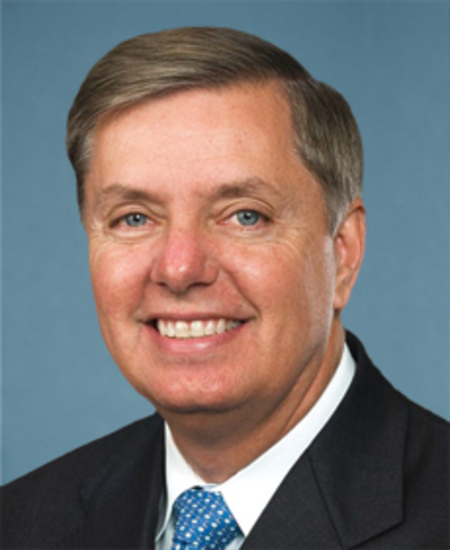
Sen. Lindsey Graham
Sponsored bills
Maddy summaryThis bill allows state and federal correctional facilities (like jails and prisons) to operate cellphone jamming systems to block wireless signals used for contraband devices or by incarcerated individuals. It restricts the FCC from preventing this use, but requires jamming systems to be limited to housing areas within the facility. Facilities must fund the systems entirely themselves (if state-run), consult local law enforcement before implementation, and notify the Bureau of Prisons about operations. The law specifically targets blocking signals to/from contraband devices or inmates, not general cellphone use.
Maddy summaryThis bill (S 1099) would restrict federal district courts from issuing nationwide injunctions that block laws across the entire country. It requires any court order providing injunctive relief to apply only to the specific parties in the case or within the court’s local judicial district. The law directly affects federal courts, plaintiffs seeking injunctions, and government agencies enforcing laws nationwide. This change would prevent courts from halting federal policies for all states or citizens, limiting injunctions to more localized scope.
Maddy summarySRES 72 is a non-binding Senate resolution affirming that Hamas must not retain political or military control in the Gaza Strip. It calls on the President to use economic and diplomatic measures to halt all funding for Hamas from Iran and other sources, while supporting Israel's defense against Hamas and Iranian proxies. The resolution cites Hamas's 2023 attack on Israel, its designation as a foreign terrorist organization, and Iran's annual support to Hamas as context for its stance. It does not create new laws but expresses congressional position on Gaza governance and counterterrorism efforts.
Maddy summaryThis bill expands the Work Opportunity Tax Credit to include military spouses. It adds "qualified military spouse" as a new category eligible for the credit, meaning employers who hire spouses of active-duty service members can claim the tax benefit. To qualify, a spouse must be certified by a local agency as married to an Armed Forces member at the time of hire. The change applies to hires occurring after the law's effective date, directly affecting military spouses seeking employment and employers who hire them.
Maddy summaryThis bill, the Major Richard Star Act (S 1032), allows veterans with combat-related disabilities to receive both their military retired pay and Veterans Affairs disability compensation simultaneously. It amends U.S. Code sections to remove the automatic reduction in retired pay that previously forced these veterans to choose between the two payments. The key change ensures veterans with combat-related disabilities qualify for full retired pay without offset against their VA disability benefits, effective for payments starting after the bill's enactment date. This directly affects veterans receiving military retired pay under Chapter 61 who also qualify for VA disability compensation for combat-related injuries.
Maddy summaryS 1043 extends the federal tax credit for qualified fuel cell property by changing the expiration date in the tax code from January 1, 2025, to January 1, 2033. This extension directly affects businesses and individuals investing in eligible fuel cell technology by allowing them to claim the credit for projects starting after December 31, 2024. The bill modifies Section 48(c)(1)(E) of the Internal Revenue Code to maintain this incentive for a longer period. It does not create new requirements but prolongs an existing tax benefit for clean energy investments.
Maddy summaryThe FOCA Act (S 1064) requires federal agencies to ensure open competition on construction projects by prohibiting them from mandating or banning contractors from entering into labor agreements (like union contracts) or discriminating against contractors based on such agreements. It directly affects federal contractors, subcontractors, and agencies awarding construction contracts or grants for projects involving federal funds. Key provisions ban specific bid specifications or project documents from requiring labor affiliations, apply to all contracts after enactment, and mandate updates to federal procurement rules within 60 days. The bill aims to reduce taxpayer costs, expand opportunities for small businesses, and maintain federal neutrality in labor relations for construction projects.
Maddy summaryThis bill prohibits federal funds from covering gender transition procedures in any federal health program, including Medicaid, military health care, and federal employee benefits. It broadly defines "gender transition procedures" to include hormone treatments, surgeries (like hysterectomies or breast implants), and cosmetic procedures, while excluding treatment for disorders of sex development, medical emergencies, or precocious puberty. The bill also modifies the Affordable Care Act to block federal premium tax credits and cost-sharing subsidies for health plans covering these procedures, though it allows states or individuals to pay for separate coverage using non-federal funds. It directly affects federal health programs, Medicaid, and ACA marketplace plans by restricting federal funding for gender transition care.
Maddy summaryS 596, the Critical Materials Future Act of 2025, establishes a 5-year pilot program under the Department of Energy to support domestic processing of critical materials (like those used in clean energy and defense tech). The program provides financial support - using tools such as price guarantees and contracts - to attract private investment for 3+ eligible projects that refine or recycle raw materials into usable forms, prioritizing those using domestic or reliable sources (e.g., U.S. partners or allies with free trade agreements). It requires annual reports to Congress and a final study to evaluate the effectiveness of these financial tools in building secure supply chains and reducing reliance on imports from countries of concern. The pilot is funded with $750 million and aims to enhance energy and national security through market stability.