

Maddy summaryThe Combating Organized Retail Crime Act amends federal law to strengthen legal tools for addressing organized retail crime, including theft from stores, online, and supply chains. It establishes a new Organized Retail and Supply Chain Crime Coordination Center within the Department of Homeland Security to coordinate Federal, State, local, and tribal law enforcement efforts. The Center will share information, assist with investigations, track crime trends, and provide training to combat these crimes. The bill expands legal definitions to include organized retail crime as a specific category and requires annual reports on the Center's activities. The Center will operate for 7 years before sunset.
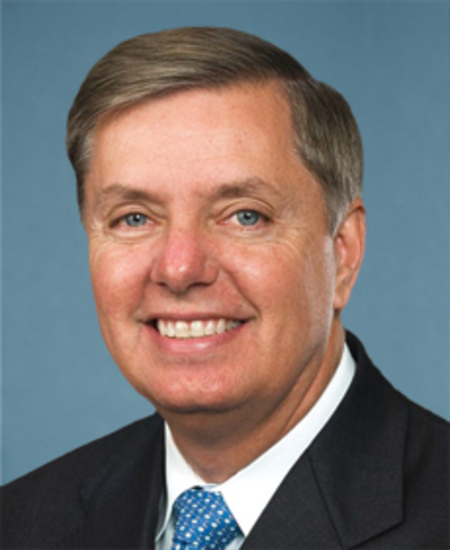
Sen. Lindsey Graham
Sponsored bills
Maddy summaryThe Foreign Pollution Fee Act of 2025 would impose a variable fee on imported goods from countries with higher pollution intensity than equivalent US-made products. The fee rate (ranging from 0% to 200%) would be determined by the difference in pollution intensity between the country of origin and the US baseline. It targets specific products including aluminum, cement, steel, fertilizers, glass, hydrogen, solar products, and battery inputs. The bill includes mechanisms for countries to reduce or eliminate the fee through international partnership agreements that meet certain environmental standards. The fee is intended to address what the bill describes as an unfair cost advantage for foreign producers with weaker environmental regulations.
Maddy summaryThis resolution (SRES 159) is a ceremonial Senate measure honoring the late Senator John Bennett Johnston, Jr. (1932-2024), who represented Louisiana in the U.S. Senate from 1972 to 1997. It commemorates his career, including his work on energy policy, flood control, and Louisiana conservation efforts, and requests the Senate adjourn in his memory while sending condolences to his family. As a non-binding resolution, it has no policy impact or direct effect on any individuals or laws.
Maddy summaryThis bill extends temporary work visas for religious workers (like pastors or missionaries) who face long delays in obtaining permanent residency due to annual visa caps. It allows them to keep their temporary status while waiting for a final decision on their permanent residency application, rather than having to leave the U.S. after five years. The bill also permits these workers to change employers under certain conditions and exempts them from a mandatory one-year foreign residence requirement if they were forced to leave due to the five-year visa limit. These changes directly affect religious workers with pending permanent residency applications stuck in visa backlogs.
Maddy summaryThe CONNECT for Health Act of 2025 expands Medicare coverage for telehealth services by removing geographic restrictions that previously limited where patients could receive telehealth care. It allows more healthcare providers to offer telehealth services, including expanding eligibility for practitioners and removing the six-month in-person visit requirement for telemental health. The bill also includes specific provisions for Federally Qualified Health Centers, rural health clinics, and Native American health facilities to better integrate telehealth into their services. Additionally, it establishes program integrity measures to address billing patterns and requires the posting of telehealth service data to improve transparency and quality measurement. These changes aim to make telehealth more accessible for Medicare beneficiaries, particularly in rural areas and for underserved populations.
Maddy summaryThis bill protects students in single-sex social organizations (like fraternities or sororities) at colleges receiving federal funds. It prohibits institutions from punishing students or these groups solely because they limit membership to one sex - such as denying financial aid, housing, or leadership roles, or forcing students to renounce membership rights. The law clarifies that colleges may still enforce rules for academic misconduct or safety risks unrelated to membership policies and are not required to recognize such organizations. It specifically aims to prevent retaliation while respecting existing Title IX protections and institutional authority.
Maddy summaryThe Sanctioning Russia Act of 2025 establishes a framework for imposing comprehensive sanctions on Russia if the President determines Russia is engaging in actions that undermine peace with Ukraine, such as refusing to negotiate a peace agreement, violating peace agreements, or planning another military invasion. If such a determination is made, the bill mandates blocking property of Russian officials and entities, prohibiting transactions with Russian financial institutions, increasing tariffs on Russian goods to at least 500% ad valorem, banning energy exports to Russia, and prohibiting purchases of Russian sovereign debt. It also imposes sanctions on countries that purchase Russian oil, uranium, or petroleum products, with duties of at least 500% on such goods. The bill requires the President to make determinations every 90 days and allows for termination of sanctions if Russia ceases harmful actions and enters a peace agreement with Ukraine, with immediate reimposition if Russia resumes those actions.
Maddy summarySRES 148 is a ceremonial resolution passed by the U.S. Senate to honor the late Senator Alan K. Simpson of Wyoming, who died in 2022. The resolution expresses the Senate's "profound sorrow and deep regret" over his passing and formally requests the Secretary of the Senate to transmit an enrolled copy to his family. It also directs the Senate to adjourn as a mark of respect during its final session following the resolution's adoption. This resolution has no policy impact or direct effect on constituents - it solely serves as a formal tribute to Simpson's legacy.
Maddy summaryThis bill prevents U.S. federal courts from issuing orders (such as injunctions, stays, or declarations) that stop enforcement of laws against people or entities not directly involved in a lawsuit (non-parties). It requires that such orders only apply if a non-party is represented through a party acting under standard legal rules. The law applies to all federal courts, including those in U.S. territories, and modifies related procedures for temporary restraining orders and declaratory judgments to enforce this restriction. Its core change limits court authority to affect non-parties regarding statutes, regulations, or government actions.
Maddy summaryS 1169, the "Freedom from Unfair Gun Taxes Act," prohibits states and local governments from imposing excise taxes on the sale of firearms, ammunition, or firearm parts during interstate or foreign commerce. This directly affects firearm manufacturers and dealers who sell across state lines, preventing them from facing state-level taxes on those transactions. The bill explicitly states it does not change the Pittman-Robertson Wildlife Restoration Act, which allows separate federal excise taxes on firearms for conservation funding. The key provision is a blanket ban on state taxes for interstate firearm sales, aiming to standardize tax treatment across state lines.