

Maddy summaryThis resolution designates June as "Life Month" each year, recognizing the inherent dignity of all human life. It urges Congress to acknowledge that every life is a sacred gift and to commend organizations and individuals supporting pregnant mothers and families. The resolution does not create new laws or policies but serves as a symbolic statement affirming life as a fundamental right.
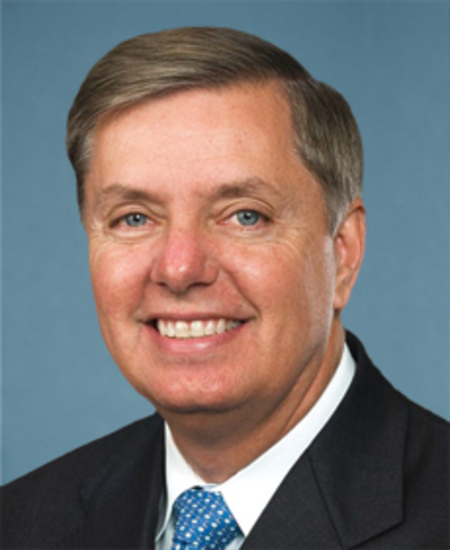
Sen. Lindsey Graham
Sponsored bills
Maddy summaryThis resolution (SRES 255) is a ceremonial Senate measure honoring former U.S. Senator Christopher "Kit" Bond of Missouri, who died on May 13, 2025. It recognizes his 40+ years of public service, including his roles as Missouri Governor (1973-1977, 1981-1985) and U.S. Senator (1987-2011). The resolution directs the Senate to adjourn briefly as a mark of respect and transmit a copy to his family. It has no policy impact or direct effect on constituents, as it is purely commemorative.
Maddy summaryThis resolution recognizes May as Jewish American Heritage Month to celebrate Jewish Americans' contributions to U.S. society, culture, and history. It calls on elected officials, civil society leaders, and educational institutions to condemn antisemitism, educate the public about Jewish heritage, and ensure the safety of Jewish communities. The resolution cites rising antisemitic incidents - documented by the ADL as a 344% increase over five years - and emphasizes countering hate through awareness and inclusion. It does not create new laws but urges proactive measures to protect Jewish Americans, particularly following the post-October 7, 2023, surge in antisemitism.
Maddy summaryThe United States Foundation for International Food Security Act of 2025 establishes a private, nonprofit foundation to improve global food security through agricultural investments, operating separately from the U.S. government. The foundation will fund locally-led projects that increase agricultural productivity, build resilient food systems, and reduce hunger, requiring cost matching from non-U.S. sources and conducting impact evaluations to measure results. It cannot fund countries that support terrorism or violate human rights, and must coordinate with existing U.S. food security programs while advancing national security interests. Governed by a board of directors (max 15 members with political balance), the foundation must report annually to Congress on its activities, results, and use of taxpayer funds. This approach aims to improve efficiency, accountability, and impact in U.S. international food security efforts.
Maddy summaryThis bill eliminates a duty-free exemption for small shipments under $800, ending the "de minimis" loophole that previously allowed duty-free entry for certain low-value goods. It immediately applies to shipments from China (with a 3-day transition for goods already in transit) and to shipments from other countries 120 days after enactment. The bill requires importers to provide detailed product codes (HTS numbers) for informal entries and mandates new rules to improve duty collection and enforcement. The Treasury Secretary must issue implementing regulations within 120 days to enforce these changes.
Maddy summaryThis bill creates a new tax credit for businesses that sell products containing U.S.-grown cotton. Manufacturers can claim a credit equal to 18-24% of the value of certified U.S. cotton used in products sold to consumers, depending on whether the cotton was processed only in the U.S. or in countries with U.S. trade agreements. The credit requires digital tracing of cotton from U.S. origin through the supply chain to the final product, with higher rates (24%) for cotton processed entirely in the U.S. or in designated trade agreement countries. It directly affects textile manufacturers and retailers selling cotton-based products like clothing or fabric, reducing their tax liability when using domestically sourced cotton. The credit applies to the first sale to an unrelated consumer and takes effect January 20, 2025.
Maddy summaryThe Black Vulture Relief Act of 2025 allows livestock producers and their employees to remove or kill black vultures that are harming or likely to harm livestock, but prohibits using poison for this purpose. It requires these individuals to submit an annual report to the U.S. Fish and Wildlife Service about vultures taken, using a simple form developed by the agency within 180 days of the bill’s enactment. The reporting form must be no more complicated than similar forms under the Migratory Bird Treaty Act. This bill directly affects livestock operations facing vulture-related losses while maintaining federal bird protections outside these specific circumstances.
Maddy summaryThis bill expands benefits for public safety officers (like police and firefighters) who develop certain cancers linked to their work. It creates a presumption that specific cancers - such as lung, bladder, or mesothelioma - were caused by job-related exposure to carcinogens, if the officer served at least 5 years, was diagnosed within 15 years of leaving active duty, and the cancer caused death or permanent disability. The list of covered cancers will be updated every 3 years based on medical evidence from agencies like the National Institute for Occupational Safety and Health. Claims must be filed within 3 years of the bill’s enactment, applying to cases involving deaths or disabilities occurring after January 1, 2020.
Maddy summaryThe Motorsports Fairness and Permanency Act of 2025 makes permanent a 7-year recovery period for motorsports entertainment complexes, which was previously temporary. This change directly affects businesses that own or operate motorsports facilities, such as race tracks and related entertainment venues. The bill amends the Internal Revenue Code by removing a temporary provision (subparagraph (D) of Section 168(i)(15)), ensuring these businesses can use the 7-year recovery period indefinitely. This provides long-term tax certainty for the motorsports industry without altering other tax rules.
Maddy summarySRES 220 designates the week of May 11-17, 2025, as "National Police Week" to honor law enforcement officers across the United States. The resolution recognizes officers who have been killed, disabled, or injured in the line of duty, including 234 officers honored for 2024 fatalities and 18 officers killed in 2025. It expresses the Senate’s support for law enforcement, acknowledges the need for adequate resources for officer safety, and encourages public observance to celebrate their service and sacrifices. This is a ceremonial resolution with no new policy or funding changes.