Maddy summaryThis bill prohibits the Small Business Administration (SBA) from denying financial assistance - such as loans or guarantees - to firearm-related businesses solely based on their industry. It directly affects firearm entities (manufacturers, sellers, and distributors), firearm entity affiliates (like shooting ranges), and firearm trade associations by requiring the SBA to treat them equally under existing programs. The key provision bans SBA policies that discriminate against these applicants, ensuring they can access standard SBA support without industry-based barriers. The bill does not create new funding but mandates equal treatment for eligible applicants already covered by SBA law.
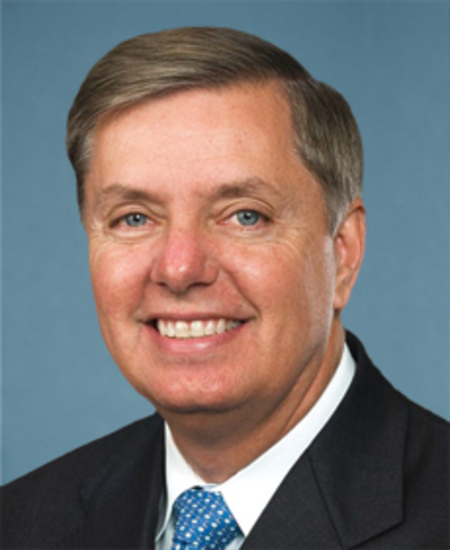
Sen. Lindsey Graham
Sponsored bills
Maddy summaryThis bill prohibits noncitizens from voting in all District of Columbia elections, including local elections for public office and ballot initiatives. It directly affects noncitizen residents of Washington D.C. who previously could vote under the repealed 2022 law. The bill repeals the Local Resident Voting Rights Amendment Act of 2022, restoring the prior rule that limited voting in D.C. elections to U.S. citizens. This change would require noncitizen D.C. residents to obtain citizenship to vote in local elections.
Maddy summaryThis resolution (SRES 342) is a symbolic gesture honoring small firearm manufacturers in the U.S., recognizing their economic contributions and role in recreational shooting traditions. It specifically designates August 2025 as "National Shooting Sports Month" and commends these businesses for supporting 380,000 jobs and $91 billion in annual economic output. The resolution does not create new laws or funding but formally acknowledges small manufacturers’ role in preserving Second Amendment-related activities and outdoor culture. It is a commemorative statement with no binding policy impact.
Halt All Lethal Trafficking of Fentanyl Act or the HALT Fentanyl Act This act permanently places fentanyl-related substances as a class into schedule I of the Controlled Substances Act. A schedule I controlled substance is a drug, substance, or chemical that has a high potential for abuse; has no currently accepted medical value; and is subject to regulatory controls and administrative, civil, and criminal penalties under the Controlled Substances Act. Under the act, offenses involving fentanyl-related substances are triggered by the same quantity thresholds and subject to the same penalties as offenses involving fentanyl analogues (e.g., offenses involving 100 grams or more trigger a 10-year mandatory minimum prison term). Additionally, the act establishes a new, alternative registration process for certain schedule I research. The act also makes several other changes to registration requirements for conducting research with controlled substances, including permitting a single registration for related research sites in certain circumstances, waiving the requirement for a new inspection in certain situations, and allowing a registered researcher to perform certain manufacturing activities with small quantities of a substance without obtaining a manufacturing registration. Finally, the act expresses the sense that Congress agrees with the interpretation of the Controlled Substances Act in United States v. McCray , a 2018 case decided by the U.S. District Court for the Western District of New York. In that case, the court held that butyryl fentanyl, a controlled substance, can be considered an analogue of fentanyl even though, under the Controlled Substances Act, the term controlled substance analogue specifically excludes a controlled substance.

Maddy summaryS 278, the Kids Off Social Media Act, prohibits social media platforms from allowing children under 13 to create or maintain accounts and requires platforms to delete accounts of children under 13. It also bans the use of personalized recommendation systems for children under 13 and teens aged 13-16, with limited exceptions for basic device information. The bill requires schools receiving certain broadband subsidies to certify they prevent student access to social media on school devices through technology protection measures. Platforms would face enforcement by the Federal Trade Commission for violations, and the bill excludes certain educational platforms from the definition of "social media platform" to allow for educational use. The bill would take effect one year after enactment.
Maddy summarySRES 307 is a non-binding Senate resolution expressing support for U.S. and Israeli military strikes targeting Iran's nuclear facilities on June 21, 2025 (Operation Midnight Hammer). It states the Senate opposes Iran acquiring nuclear weapons and commends the military actions taken to degrade Iran's nuclear program. The resolution does not create new laws, impose requirements, or directly affect any individuals or entities. It serves solely as a symbolic expression of congressional backing for the strikes, referencing specific operations and Iran's nuclear activities as context.
Maddy summaryThis Senate resolution (SRES 285) designates July 16, 2025, as "Glioblastoma Awareness Day." It aims to raise public awareness about glioblastoma, a highly aggressive and deadly brain cancer affecting thousands annually, and honors those impacted by the disease. The resolution encourages greater public understanding of glioblastoma's challenges and supports ongoing research efforts like the Glioblastoma Therapeutics Network.
Maddy summaryThis Senate resolution (SRES 282) commemorates June 17, 2025, as the tenth anniversary of the 2015 shooting at Mother Emanuel AME Church in Charleston, South Carolina, which killed nine people. It honors the victims' legacy and the church community's resilience, referencing biblical teachings on faith and forgiveness. The resolution is purely commemorative with no policy changes or direct effects on individuals or legislation. It serves as a symbolic gesture to remember the tragedy and its victims.
Maddy summaryThis bill creates a tax credit for U.S. manufacturers producing rare earth magnets. It provides $20 per kilogram for magnets made in the U.S., increasing to $30 per kilogram if at least 90% of component rare earth materials (like neodymium or cobalt) are also sourced domestically. The credit phases out after 2034 (70% in 2035, 35% in 2036-37, and 0% after 2037) and restricts credits if materials come from "non-allied foreign nations" (with limited exceptions until 2027). The credit applies to taxable years beginning after December 31, 2024, and requires magnets to be produced in regular business operations.
Maddy summaryThis bill, the Protecting Law Enforcement from Doxxing Act (S 1952), makes it a federal crime to publicly release a federal law enforcement officer's name with the intent to obstruct criminal investigations or immigration enforcement operations. It defines "federal law enforcement officer" broadly to include anyone authorized to prevent, detect, investigate, or prosecute federal criminal or immigration violations. Violators face penalties including fines, up to five years in prison, or both. The law directly affects federal officers and individuals who disclose their names with obstructive intent, while updating related sections of federal law to include this new prohibition.