Maddy summarySRES 449 designates November 2021 as "National College Application Month" through a Senate resolution. It encourages U.S. citizens to evaluate college options, submit financial aid applications (like the FAFSA), and support students in navigating college applications. The resolution specifically urges communities to host activities promoting college access, with emphasis on assisting low-income, first-generation, and minority students. It does not create new laws or funding but symbolically highlights efforts to address enrollment declines and barriers in higher education, particularly following pandemic-related disruptions. This is a procedural designation with no binding policy changes.
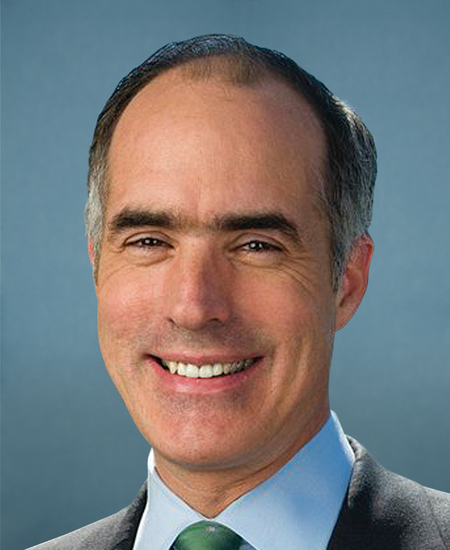
Sen. Robert P. Casey, Jr.
Sponsored bills
IDEA Full Funding Act This bill provides permanent, mandatory funding for the grant program that assists states and outlying areas in providing special education and related services to children with disabilities.
CAPTA Reauthorization Act of 20 21 This bill revises and reauthorizes through FY2027 state and community-based child abuse and prevention grants programs, supports for adoption and foster care, and other programs addressing child abuse and neglect.
Protection of Social Security Benefits Restoration Act This bill prohibits the application of, and repeals authority for, administrative offsets to Social Security, railroad retirement, and black lung benefits. (An administrative offset is the withholding of funds payable by or held by the United States to satisfy a debt.)
Private Prison Information Act of 2021 This bill specifies that a record related to a nonfederal prison, correctional, or detention facility must be considered a federal agency record for purposes of the Freedom of Information Act (FOIA). A nonfederal prison, correctional, or detention facility must disclose information under FOIA unless the information is exempt from disclosure or the disclosure is prohibited by law. The term nonfederal prison, correctional, or detention facility means (1) a private prison, correctional, or detention facility; or (2) a state or local prison, jail, or other correctional or detention facility.
John R. Lewis Voting Rights Advancement Act of 2021 This bill establishes new criteria for determining which states and political subdivisions must obtain preclearance before changes to voting practices may take effect. Preclearance is the process of receiving preapproval from the Department of Justice (DOJ) or the U.S. District Court for the District of Columbia before making legal changes that would affect voting rights. The bill also includes provisions related to federally protected activities at polling places and voting access on tribal lands. A state and all of its political subdivisions shall be subject to preclearance of voting practice changes for a 10-year period if 15 or more voting rights violations occurred in the state during the previous 25 years; or 10 or more violations occurred during the previous 25 years, at least 1 of which was committed by the state itself. A political subdivision as a separate unit shall also be subject to preclearance for a 10-year period if three or more voting rights violations occurred there during the previous 25 years. States and political subdivisions that meet certain thresholds regarding minority groups must preclear covered practices before implementation, such as changes to methods of election and redistricting. Further, states and political subdivisions must notify the public of changes to voting practices. Next, the bill authorizes DOJ to require states or political subdivisions to provide certain documents or answers to questions for enforcing voting rights. The bill also outlines factors courts must consider when hearing challenges to voting practices, such as the history of official voting discrimination in the state or political subdivision. In addition, the bill (1) includes certain protections for election workers, polling places, and election infrastructure; and (2) expands voting access on tribal lands.

Honest Census Communications Act This bill prohibits certain deceptive practices in relation to a census. Specifically, the bill prohibits communicating census-related information, or producing census-related information for communication, knowing the information to be materially false and with the intent to impede or prevent another person from participating in any census. The bill sets criminal and civil penalties for violations.
Five Freedoms for America's Children Act This bill establishes and modifies programs concerning children's health, financial security, education, nutrition, and welfare. Among other changes, the bill (1) provides for the automatic enrollment of all children under the age of 19 in Medicaid; (2) establishes savings accounts, and provides for annual deposits of federal funds into these accounts, for children of income-eligible parents; (3) provides mandatory funding for the Head Start Program; (4) facilitates the participation of income-eligible children in school-based nutrition programs through certain automatic certifications; and (5) establishes grant programs to address institutional and systemic child abuse.
Ending Passenger Rail Forced Arbitration Act This bill prohibits all pre-dispute arbitration agreements and pre-dispute joint-action waivers with respect to consumer and civil rights disputes between Amtrak and its customers.
Vaccine Access Improvement Act of 2021 This bill adds vaccines recommended by the Centers for Disease Control and Prevention (CDC) for routine administration to children or in pregnant women to the list of taxable vaccines for purposes of the vaccine excise tax. The CDC must notify the Department of the Treasury and specified congressional committees of the designation of such vaccines as taxable vaccines.