

Maddy summaryThis bill provides $16 billion in federal funding over five years (2024-2028) to stabilize the child care sector. It directly affects child care providers by offering grants to offset operating costs, support higher wages for early childhood educators without increasing fees for families, and expand access to high-quality care. Key provisions include funding for providers in underserved areas (like rural communities, infant/toddler care, and inclusive services for children with disabilities) and a requirement that 99% of funds go directly to providers. The funds are administered through the existing framework of the American Rescue Plan Act's child care program.
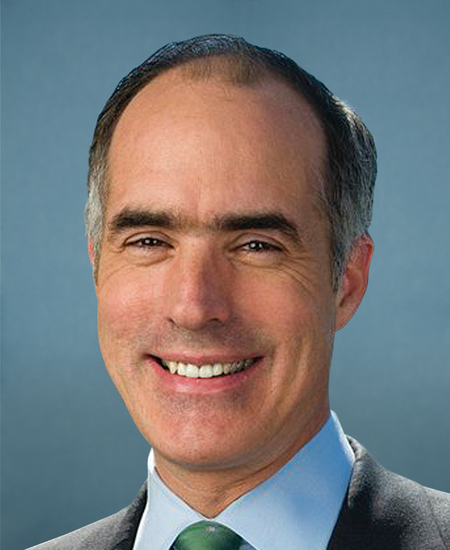
Sen. Robert P. Casey, Jr.
Sponsored bills
Maddy summarySRES 337 designates the week beginning September 10, 2023, as "National Direct Support Professionals Recognition Week" to honor workers who provide essential in-home and community-based support to people with disabilities. The resolution recognizes these professionals - including personal assistants and in-home support workers - who help individuals live independently, avoid institutional care, and access community activities, while also urging the Bureau of Labor Statistics to collect specific data about this workforce.
Maddy summaryThe School MEALS Act of 2023 aims to increase access to free school meals by improving how schools automatically enroll eligible students. It creates $28 million in federal grants for states and tribal organizations to boost "direct certification" rates - where schools enroll children in free meals based on existing government benefit data - prioritizing areas with the lowest current rates. The bill expands eligibility criteria (increasing the timeframe for implementation from 10 to 20 years) and funds technology upgrades, technical assistance, and coordination with other benefit programs. This directly affects schools, state education agencies, tribal organizations, and children in households receiving public benefits like SNAP or TANF.
Maddy summaryThe SSI Savings Penalty Elimination Act raises the asset limits for Supplemental Security Income (SSI) eligibility, allowing more savings without reducing benefits. It increases the individual resource limit from $2,250 to $20,000 (and couples from $1,500 to $10,000) in 2023, with future increases tied to inflation. The bill automatically adjusts these limits annually using the Consumer Price Index to maintain purchasing power. This directly affects low-income elderly, disabled, and blind individuals who rely on SSI by reducing the financial penalty for saving modest amounts.
Maddy summaryThe Wage Theft Prevention and Wage Recovery Act requires employers to provide detailed paystubs showing wage calculations, timely final payments within 14 days of termination, and strengthens workers' ability to recover stolen wages. It increases civil penalties for wage theft violations from $10,000 to $22,030 per employee affected for initial violations, and extends the statute of limitations for wage theft claims from 2-3 years to 4-5 years. The bill creates a $50 million grant program to fund community partnerships that prevent wage theft and assist workers in recovering unpaid wages. These provisions target widespread wage theft that disproportionately affects low-wage workers, women, immigrants, and racial and ethnic minorities.
Maddy summaryThis bill requires car manufacturers to include AM radio receivers as standard equipment in all new vehicles sold in the U.S., without additional cost to buyers. It mandates that AM radio controls be clearly visible on the dashboard for drivers. For vehicles sold before the rule takes effect, manufacturers must label them to disclose the absence of AM radio. The bill aims to maintain access to AM radio broadcasts, which are used for emergency alerts, but does not mandate new emergency systems.
Maddy summaryS 638, the Disclosure of Tax Havens and Offshoring Act, requires large multinational corporations (with annual revenue above a set threshold) to disclose financial data broken down by country or tax jurisdiction. Covered companies must report aggregated revenue, profit, taxes paid, employees, and assets for each tax jurisdiction where they operate, including subsidiaries without a tax residence. The reports, to be submitted in machine-readable format and made publicly available online, must align with U.S. or international standards. This applies to U.S. public companies that are part of multinational enterprise groups meeting the revenue threshold. The bill does not change tax laws but mandates transparency about corporate financial activity across jurisdictions.
Maddy summaryThis bill renames a United States Postal Service facility at 101 South 8th Street in Lebanon, Pennsylvania, as the "Lieutenant William D. Lebo Post Office Building." It directly affects the postal facility and all official government references to it. The key provision updates all federal documents, maps, and records to use the new name instead of the previous designation. The bill has no policy changes beyond this naming action.
Maddy summaryThe SWIFT Act (S 2741) amends Social Security benefits for widows, widowers, and surviving divorced spouses with disabilities. It eliminates age restrictions for disability benefits (previously requiring age 50-60), removes reductions for benefits claimed before retirement age, and increases the age limit for child-in-care benefits from 16 to 18 (or 19 for full-time students). The bill creates new provisions to increase survivor benefits for those who delay claiming benefits, with effective dates starting January 1, 2025. It also requires the Social Security Administration to provide a booklet explaining survivors' benefits and mail it to survivors following a death on or after January 1, 2025. This legislation directly affects individuals qualifying for survivor benefits under Social Security, particularly those with disabilities or caring for children.
Maddy summarySRES 330 is a symbolic Senate resolution expressing support for National Child Abuse Prevention Month. It recognizes child abuse and neglect as preventable, emphasizes the importance of building protective factors for families, and supports public awareness efforts, healing for survivors, and justice for victims. The resolution does not create new laws, allocate funding, or impose requirements on any entity. It serves solely as a formal statement of congressional backing for prevention and support initiatives during this observance.