

Maddy summaryThis bill amends a provision in the Elementary and Secondary Education Act to explicitly allow schools using federal funds to offer hunter safety education and similar activities like archery or culinary arts as part of approved educational programs. It directly affects schools and educational programs receiving funds under the Elementary and Secondary Education Act by removing a previous restriction on using those funds for such activities. The key mechanism is a new exception inserted into Section 8526(7), clarifying that these educational programs remain permissible. The bill does not change funding levels or create new programs, but specifically permits existing funds to be used for these instructional activities. This is a technical amendment to clarify funding eligibility for certain educational offerings.
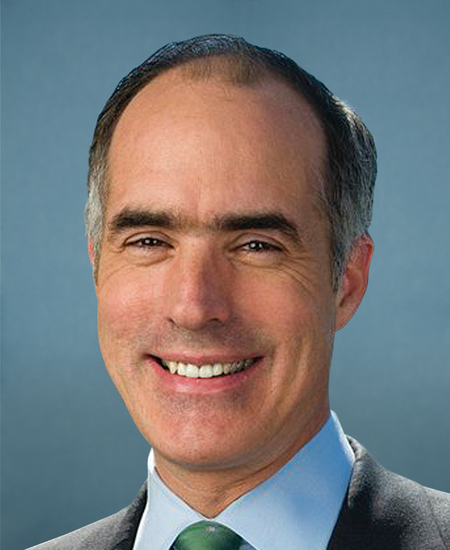
Sen. Robert P. Casey, Jr.
Sponsored bills
Maddy summaryThis bill increases the tax deduction available to eligible educators for out-of-pocket classroom expenses from $250 to $1,000 annually. It directly affects elementary and secondary school teachers who itemize deductions on their federal tax returns. The key change modifies Internal Revenue Code sections to raise the deduction limit and update reference years to align with current tax filing periods. The updated deduction applies to tax returns filed for 2023 and subsequent years.
Maddy summaryThis bill establishes a comprehensive framework for pandemic and public health emergency preparedness and response across federal, state, and local levels. It authorizes new programs for medical stockpiles, wastewater surveillance for disease detection, and improved coordination of emergency response systems, while reauthorizing existing public health emergency response programs through 2028. The legislation includes provisions to prevent drug shortages through improved notification procedures, strengthen biosecurity measures for research involving biological agents, and support compensation for individuals injured by pandemic countermeasures. It also enhances data collection and sharing capabilities for more effective public health monitoring and response. The bill aims to improve the nation's ability to prepare for, respond to, and recover from public health emergencies of all types.
Maddy summaryThis bill requires the Supreme Court to establish a code of conduct for justices within 180 days of enactment, with public access to these rules on the Court's website. It sets minimum disclosure standards for gifts, income, and reimbursements received by justices and their law clerks, and strengthens recusal requirements when justices have financial ties to parties in cases. The bill creates procedures for filing complaints about justices' conduct and establishes a judicial investigation panel to review such complaints, while also requiring parties and amicus curiae to disclose gifts to justices and lobbying activities related to the nomination of justices. These provisions aim to increase transparency and accountability in Supreme Court operations.
Maddy summarySRES 326 is a procedural Senate resolution (not a law) designating August 23, 2023, as "National Poll Worker Recruitment Day." It formally recognizes the importance of poll workers in elections and encourages eligible citizens to volunteer for this role in the 2023 elections. The resolution has no binding effect but aims to raise awareness about the need for poll workers. It directly affects the public by inviting them to participate in election administration.
Maddy summaryThe Farmers Feeding America Act of 2023 increases funding and improves access to food assistance for low-income individuals through the Emergency Food Assistance Program (EFAP). It raises annual storage and distribution funding from $100 million to $200 million and allocates $500 million yearly for food commodities from 2024 through 2028. The bill specifically helps geographically isolated states (Hawaii, Alaska, Puerto Rico, and U.S. territories) by allowing alternative delivery methods for food shipments and permitting up to 20% of allocated commodities to be used as cash for locally grown food purchases. Additionally, it requires the program to prioritize nutritious food by considering factors like product variety and transportation distance when buying fresh produce.
Maddy summaryThe Break the Cycle of Violence Act creates federal grant programs to fund community-based violence intervention initiatives that aim to reduce gun violence in high-risk communities. It authorizes $300 million in 2024, increasing to $700 million annually from 2026-2031, for grants to community organizations and local governments to implement evidence-based strategies that provide trauma-informed services, job training, and wraparound support to individuals at high risk of violence. The bill establishes a National Community Violence Response Center to coordinate efforts, collect data, and share best practices, while also creating IMPACT grants for job training programs targeting opportunity youth in communities disproportionately affected by gun violence. The legislation specifically addresses racial disparities in violence exposure, with findings showing Black children and teens are over 12 times more likely to be shot to death than White peers. The program requires grantees to use strategies that reduce violence without contributing to mass incarceration, and to partner with community organizations reflecting the populations impacted by violence.
Maddy summaryThis bill clarifies that equipment used to test for fentanyl or xylazine in substances is not subject to restrictions under the Controlled Substances Act. It directly affects people who use drugs and harm reduction organizations providing testing supplies. The key provision amends Section 422 of the Act to explicitly state that testing equipment for these substances is exempt from legal restrictions on possession, sale, or transportation. This allows safer access to testing tools without legal penalties. The bill does not create new programs or funding, only adjusting existing legal language.
Maddy summaryThis bill creates an Office of Urban Agriculture within the USDA to provide technical assistance for urban farmers on zoning, business operations, and conservation techniques. It authorizes $50 million annually (2024-2028) for competitive grants to support urban farms, community gardens, rooftop farms, hydroponics, and other innovative production methods in areas with limited fresh food access. The bill also requires the USDA to collect and report biennially on data about urban agriculture facilities, including their locations and operator demographics. These provisions directly benefit urban farmers, community organizations, and local governments in underserved areas seeking to expand access to fresh food through innovative farming methods.
Maddy summaryThis bill defines "ghost guns" as firearms (including frames and receivers) without a unique serial number from a licensed manufacturer or importer. It requires all new firearms to have a serial number engraved by a licensed maker and prohibits unlicensed individuals from manufacturing, selling, transferring, or possessing ghost guns after a one-year transition period (starting one year after enactment). The bill also bans unlicensed engraving of serial numbers on firearms and updates rules to ban undetectable firearms, with penalties including fines and up to 5 years in prison for repeat violations. These changes directly affect unlicensed gun builders, sellers, and possessors of ghost guns, while allowing licensed dealers a grace period for compliance.