

Maddy summarySRES 568 is a symbolic Senate resolution designating the week of February 26 through March 1, 2024, as "Public Schools Week." It does not create new laws, allocate funds, or directly affect any individuals or institutions. The resolution expresses support for public education by highlighting its role in democracy, student development, and community engagement, but it has no binding effect. This is a procedural resolution with no policy changes or implementation mechanisms.
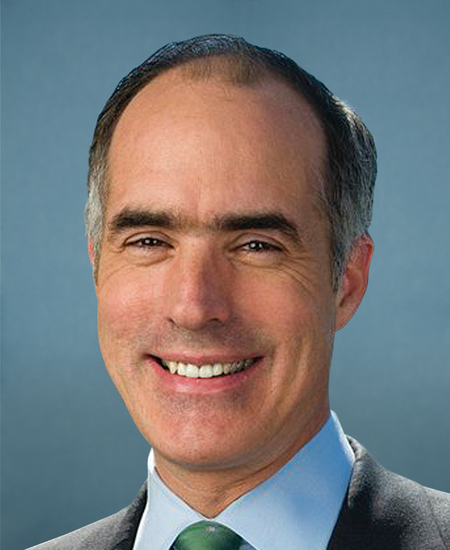
Sen. Robert P. Casey, Jr.
Sponsored bills
Maddy summaryS 3827, the Strategic Plan for Aging Act, requires states, tribes, and tribal organizations to develop coordinated 10-year plans ("Multisector Plans for Aging") to address aging needs. These plans must be created with input from older adults, caregivers, disability advocates, and community groups, and cover key areas like housing stability, healthcare access, social connection, and equity. The bill provides competitive grants (up to $500,000 per entity) to support the planning process, with at least 10 grants reserved for tribal entities. The plans must guide long-term policy and service coordination for older adults - especially those with disabilities, caregivers, and underserved groups - across health, housing, economic security, and disaster response.
Maddy summaryThis bill (S 3804) designates a specific street segment in Washington, D.C. (Sumner Row between 16th and L Streets NW) as "Alexei Navalny Way" to honor the late Russian anti-corruption activist and dissident. It includes findings recognizing Navalny's work exposing Russian corruption, his imprisonment and death under the Putin regime, and his international awards for promoting democratic freedoms. The bill requires the District of Columbia to install two street signs bearing the new name at designated locations. As a commemorative resolution, it does not create new laws or affect policies - it serves as a symbolic gesture of solidarity with Russian opposition figures.
Maddy summarySRES 553 is a ceremonial Senate resolution honoring Jean A. Carnahan, who served as Missouri’s first female U.S. Senator from 2001 to 2002 after her husband’s passing. The resolution expresses the Senate’s sorrow over her death, recognizes her service as First Lady of Missouri and U.S. Senator, and her advocacy for families and veterans. It directs the Senate Secretary to share the resolution with the House and Carnahan’s family, with no substantive policy changes or affected parties. This is a standard commemorative measure with no legislative impact.
Maddy summarySRES 547 is a symbolic Senate resolution commemorating the two-year anniversary of Russia's full-scale invasion of Ukraine (launched February 24, 2022). It expresses U.S. support for Ukraine's territorial integrity and sovereignty, condemns Russian actions including war crimes (like the Bucha massacre), and reaffirms congressional backing for Ukraine's defense against aggression. The resolution has no binding effect or policy changes - it serves as a formal statement of solidarity with Ukraine, acknowledging the humanitarian crisis and international aid efforts. It was introduced by 31 Senators and does not alter laws, funding, or military commitments.
Maddy summarySRES 550 is a symbolic Senate resolution designating February 2024 as "Career and Technical Education (CTE) Month" to recognize the value of CTE programs. It does not create new laws or funding but formally supports CTE's role in preparing students for high-demand careers through secondary and postsecondary training. The resolution encourages educators and parents to promote CTE as a respected educational pathway, aligning with the Senate's recognition of CTE's importance for workforce development and economic competitiveness. As a procedural resolution, it has no binding effect but expresses bipartisan support for CTE initiatives.
Maddy summarySRES 551 is a symbolic Senate resolution (not a law) introduced by multiple senators on February 8, 2024, to formally celebrate Black History Month. It acknowledges the historical contributions of African Americans to U.S. society and encourages the public to reflect on their legacy during February. The resolution contains no new policies or requirements - it simply expresses the Senate's recognition of Black History Month as an opportunity to honor these contributions and learn from history. It does not affect any individuals, groups, or government programs. This is a standard annual commemorative resolution, consistent with similar resolutions passed each February.
Maddy summaryThis bill adjusts pay rates for Bureau of Prisons correctional officers currently assigned to the "Rest of U.S." pay locality. It requires these employees to be paid according to the nearest other pay locality within 200 miles (choosing the one with the highest wage rate), rather than the standard "Rest of U.S." rate. For officers in areas with multiple nearby wage areas, it directs payment based on the closest facility or the most similar area in population and industry. The changes apply to pay periods starting 180 days after the bill's enactment.
Maddy summaryS 3774, the Family Strengthening Infrastructure Act of 2024, increases federal funding for child protective services and prevention programs under the Child Abuse Prevention and Treatment Act (CAPTA). It authorizes $250 million annually (2025-2034) for state grants to improve child protective services (Section 2(a)) and an additional $250 million for community-based prevention grants (Section 2(b)). To receive funds, states must commit to maintaining or increasing their own funding for these programs compared to the previous fiscal year. The bill directly affects eligible states and territories applying for these grants, with funding distributed based on child population.
Maddy summaryThis bill removes a barrier for people with disabilities seeking elected office by ensuring campaign work they perform doesn't affect their eligibility for federal or state benefits. Specifically, it requires that any campaign work done by a candidate with a disability - and any compensation received for that work - be disregarded when calculating benefits under programs like Social Security Disability Insurance (Title II) or Supplemental Security Income (Title XVI). This means individuals receiving disability benefits could run for office without risking loss of support due to campaign earnings. The law directly affects disabled candidates for federal, state, or local office who rely on these benefits.