

Maddy summaryThe Social Security Expansion Act (S 770) increases benefits for Social Security recipients by raising the first bend point percentage from 90% to 95% and adding an 18% increase for those eligible after 2025. It establishes a new Consumer Price Index for Elderly Consumers (CPI-E) to calculate cost-of-living adjustments and increases minimum benefits for lifetime low earners based on years worked, with benefits ranging from 16.25% to 125% of poverty guidelines. The bill also extends benefit eligibility for children who are full-time students until age 22 (instead of 19) and introduces new taxes on high earners, including a payroll tax on income between the contribution base and $250,000, a tax on self-employment income above $250,000, and raises the investment gains tax from 3.8% to 16.2%. The legislation consolidates Social Security's trust funds into a single Social Security Trust Fund.
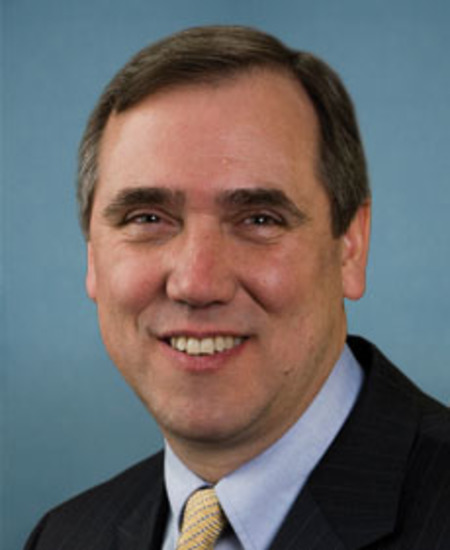
Sen. Jeff Merkley
Sponsored bills
Maddy summaryThis bill prohibits the slaughter of horses, ponies, and other equines for human consumption by amending existing federal law. It directly affects businesses or individuals currently involved in slaughtering equines for food, making such activity illegal under the Agriculture Improvement Act of 2018. The key change updates a provision that previously banned slaughtering dogs and cats to now include equines, expanding the existing prohibition. This is a concrete policy change that bans a specific practice under federal law.
Maddy summaryThe SAFE Lending Act of 2025 aims to protect consumers from abusive lending practices in small-dollar credit transactions. It prohibits unauthorized remotely created checks (checks not created by the consumer's bank and without their signature), requires written consumer consent for such checks (which can be revoked anytime), and bans fees for overdrafts on prepaid accounts. The bill also establishes a registration requirement for small-dollar lenders (those offering credit under $5,000 with specific repayment terms) and restricts lead generation activities that collect sensitive financial information without directly providing credit. Additionally, it mandates a study on small-dollar credit availability and impact on Native American Tribal members.
Maddy summaryS 788, the HOPE for Homeownership Act, targets hedge funds with $50 million or more in assets under management that own single-family residences. It imposes two taxes: a 15% or $10,000 tax on acquiring new homes, and an annual tax of $5,000 per excess home held beyond a phased ownership limit (starting at 90% of prior holdings and declining to 0% after 9 years). The bill also disallows mortgage interest and depreciation deductions for properties owned by these funds when they owe the tax. This directly affects large hedge funds owning multiple single-family homes, requiring them to reduce holdings over time or pay ongoing taxes.
Maddy summaryS 797, the Family Building FEHB Fairness Act, adds fertility treatment benefits to the Federal Employees Health Benefits (FEHB) program. This bill directly affects federal employees and their families enrolled in FEHB plans by requiring these plans to cover specified fertility treatments, including in vitro fertilization, embryo preservation, genetic testing, and related medications. Key provisions define "fertility treatment" to include procedures like artificial insemination, assisted reproductive technology, and gamete donation, as determined by the Office of Personnel Management and Health and Human Services. The change takes effect one year after the bill is enacted, making these services a standard covered benefit under FEHB.
Maddy summaryS 803, the Keep Americans Safe Act, prohibits the import, sale, manufacture, transfer, or possession of large capacity ammunition feeding devices (devices holding more than 10 rounds, excluding specific .22 caliber tubular devices) in interstate or foreign commerce. It directly affects the general public, while exempting law enforcement officers (including campus police), retired officers with agency-issued devices, nuclear security personnel, and manufacturers testing under federal authorization. Key provisions include requiring serial numbers on new devices, expanding forfeiture for violations, and allowing federal Byrne grants to fund buy-back programs for surrendered devices. The bill takes effect upon enactment, with existing devices lawfully owned before enactment remaining legal.
Maddy summaryThe RTP Full Funding Act of 2025 would require the Federal Highway Administration to annually estimate and report the total tax revenue collected from nonhighway recreation fuel (currently about $281 million yearly) to Congress. It aims to increase funding for the Recreational Trails Program (RTP) from its current $84 million annual level to match the tax revenue collected. The program, which supports trail development and maintenance nationwide, directly benefits states and local communities managing recreational trails used by hikers, cyclists, equestrians, and motorized vehicle users. The bill mandates this reporting requirement at least one year before highway program funding expires, ensuring the RTP receives funds commensurate with tax contributions.
Maddy summarySJRES 10, introduced by Senators Kaine and Heinrich, would terminate the national emergency related to energy declared by the President on January 20, 2025, under Executive Order 14156. This resolution ends the emergency as authorized by the National Emergencies Act, removing the special legal authorities granted during the emergency period. Upon passage, federal agencies would no longer operate under the emergency framework for energy-related policies, reverting to standard regulatory processes.
Maddy summaryThis resolution expresses the Senate's disapproval of the U.S. delegation's February 24, 2025, vote at the United Nations General Assembly against a Ukraine peace resolution (A/ES-11/L.10). It condemns the vote as the first U.S. alignment with Russia on Ukraine since 2014, criticizing the refusal to identify Russia as an aggressor or demand its withdrawal from Ukraine. The resolution has no binding effect but formally urges future UN cooperation with Ukraine and allies while reaffirming support for Ukraine's sovereignty.
Maddy summaryThis bill creates a streamlined process for out-of-state healthcare providers to enroll in Medicaid or CHIP (Children's Health Insurance Program) in a state. It directly affects children under 21 enrolled in these programs and healthcare providers located in other states who already meet low fraud risk standards. The key provision requires states to adopt a simplified enrollment process using only basic provider information (like name and National Provider Identifier), granting eligible providers a 5-year enrollment period without repeated screening. This reduces administrative barriers for providers serving out-of-state children under 21 who qualify for Medicaid or CHIP coverage.