

Maddy summaryThis bill extends a Medicaid payment floor ensuring primary care services (like check-ups and vaccinations) are paid at no less than 100% of Medicare rates for children. It directly affects Medicaid-eligible children by expanding access to care from a broader range of providers, including pediatricians, family doctors, nurse practitioners, certified nurse-midwives, and rural health clinics. Key provisions require managed care plans to meet these payment standards and mandate a study tracking enrollment changes, provider participation, and payment rates across states. The study will compare Medicaid payment rates to Medicare benchmarks and analyze state-level variations over time.
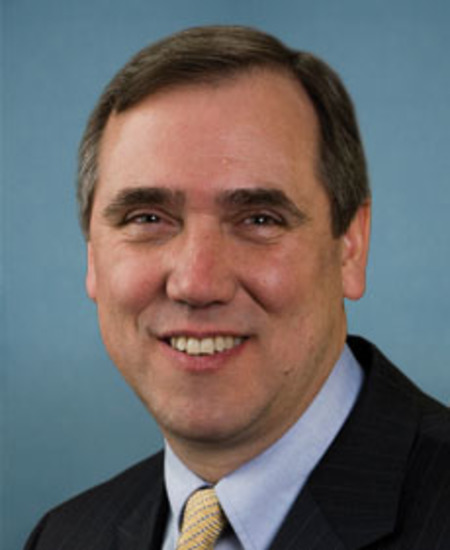
Sen. Jeff Merkley
Sponsored bills
Maddy summaryThis resolution (SRES 93) expresses the Senate's view that the National Institutes of Health (NIH) should not face funding disruptions or operational delays that violate existing law. It specifically highlights the importance of uninterrupted NIH work on research for diseases like cancer, Alzheimer’s, diabetes, and heart disease. The resolution emphasizes that NIH scientists and researchers are essential to medical progress and public health efforts. As a symbolic resolution, it does not change funding laws or create new policies - it solely states the Senate’s position on protecting NIH operations.
Maddy summaryS 710, the Crypto ATM Fraud Prevention Act of 2025, requires crypto kiosk operators (machines exchanging cash for digital currency) to register locations with the Treasury, provide clear transaction disclosures, and implement anti-fraud measures. Key provisions include mandatory physical receipts with detailed transaction info, $2,000 daily and $10,000 total limits for new customers, blockchain analytics to block fraudulent wallet transactions, and a 30-day refund window for victims of fraud with law enforcement reports. Operators must also appoint compliance officers, maintain anti-fraud policies, and provide 24/7 customer service helplines. The law applies to all U.S. and territory kiosks and preempts conflicting state laws while allowing stricter state protections.
Maddy summaryThe Empowering and Enforcing Environmental Justice Act of 2025 establishes a new Office of Environmental Justice within the Department of Justice to address environmental disparities in low-income, Tribal, and Indigenous communities. It creates a grant program to fund State, local, and Tribal governments for training staff, hiring personnel, and developing community engagement initiatives related to environmental enforcement. The Office will develop a 5-year strategy, coordinate federal and local enforcement efforts, and define "environmental justice" as ensuring equitable protection from environmental harms and access to a healthy environment for affected communities.
Maddy summaryS 726, titled "Ethan's Law," requires gun owners to store firearms securely in homes where minors (under 18) or individuals ineligible to own guns (per federal/state law) reside. It makes unsecured storage unlawful if a person "knows or reasonably should know" access is possible, with exceptions for gun safes, secure locations, or carrying firearms on one's person. Violations incur $500 fines per offense, and enhanced penalties apply if injury or death occurs. The bill also creates a federal grant program to support states with similar secure-storage laws and states that non-compliance constitutes negligence. This law directly affects households with minors or prohibited individuals, aiming to reduce accidental shootings, youth access, and firearm thefts.
Maddy summaryThis Senate resolution (SRES 88) designates March 7, 2025, as "National Speech and Debate Education Day" to recognize the value of speech and debate programs in schools. It directly affects educational institutions, teachers, and students by encouraging schools and communities to celebrate this day. The resolution does not create new laws or funding but formally acknowledges speech and debate education as vital for developing communication, critical thinking, and civic skills. It urges educational institutions, businesses, and the public to promote awareness of these programs. (Note: As a commemorative resolution, it has no binding policy impact.)
Maddy summarySRES 89 is a symbolic Senate resolution designating February 15-22, 2025, as "National FFA Week." It recognizes the National FFA Organization’s role in developing student leadership through agricultural education and celebrates two milestones: the 90th anniversary of New Farmers of America (a historically Black agricultural youth group) and the 75th anniversary of the Federal charter for Future Farmers of America (signed by President Truman in 1950). The resolution does not create new laws or obligations but formally expresses congressional support for these observances. It affects no specific group or policy, serving solely as a ceremonial acknowledgment.
Maddy summaryThis bill amends the Grand Ronde Reservation Act to clarify and protect the hunting, fishing, trapping, and animal gathering rights of the Confederated Tribes of the Grand Ronde Community. It ensures the existing Grand Ronde Hunting and Fishing Agreement remains in effect until replaced by new government-to-government agreements between the tribe and Oregon, while prohibiting any new agreement from limiting tribal rights, treaty obligations, or affecting other tribes' rights. All rights under new agreements must derive solely from Oregon's authority, and courts must review challenges to the 1987 Consent Decree on their merits without using legal doctrines that prevent re-litigation. The bill directly affects tribal members and the State of Oregon by preserving tribal sovereignty over these rights.
Maddy summaryThis bill prohibits federal funding for Executive Order 14160 (and any successor policies), which attempted to deny U.S. citizenship to children born in the U.S. to non-citizen parents. It directly affects the executive branch by blocking financial support for the controversial order, which contradicted the 14th Amendment and established court precedent like *United States v. Wong Kim Ark*. The bill’s key mechanism is a funding ban, ensuring no government resources can be used to implement policies that undermine birthright citizenship guaranteed by the Constitution and immigration law. It does not alter citizenship rules but prevents enforcement of the challenged executive order.
Maddy summaryThis bill, S 641 (Safe and Affordable Drugs from Canada Act of 2025), would allow U.S. individuals to import certain prescription drugs from Canada under specific conditions. It requires drugs to come from FDA-certified Canadian pharmacies, match U.S.-approved drugs in active ingredients and form, be for personal use (not resale) in 90-day quantities, and include a U.S. physician's prescription. The bill excludes controlled substances, biologics, infused drugs, and other high-risk medications. It directly affects U.S. patients seeking lower-cost prescriptions who meet these criteria. The FDA would establish the certification process for Canadian pharmacies within 180 days of enactment.