

Maddy summaryThe SEER Act 2025 targets conflicts of interest among special government employees (SGEs) - temporary or part-time workers who may have outside business interests while serving in government roles. The bill requires SGEs not serving on advisory committees to publicly disclose financial conflicts, restricts their communications with agencies regarding companies they own or lead, and creates a searchable public database tracking SGE service duration and roles. It modifies financial disclosure requirements so that most SGEs must now file public reports, unlike current practice where many were exempt. The legislation affects all SGEs who aren't on advisory committees, particularly those in roles with significant decision-making authority. The bill aims to increase transparency and reduce conflicts for temporary government workers with substantial outside business interests.
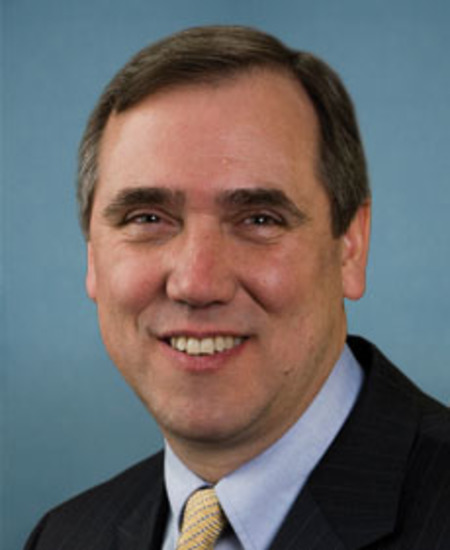
Sen. Jeff Merkley
Sponsored bills
Maddy summaryThis resolution (SRES 168) expresses the U.S. Senate's support for the "Rise Up for LGBTQI+ Youth in Schools Initiative," which calls on communities to demand equal educational opportunities, civil rights protections, and inclusion for LGBTQI+ students in K-12 schools. It specifically highlights the need to address anti-LGBTQI+ policies in states - including restrictions on sports participation, bathroom access, and classroom curricula - and cites research showing these policies harm students' mental health, academic performance, and sense of safety. The resolution urges states and localities to adopt inclusive policies like anti-bullying protections and gender-neutral dress codes to create affirming school environments. It does not create new laws but serves as a symbolic endorsement of efforts to combat discrimination against LGBTQI+ youth, particularly transgender, nonbinary, and students of color.
Maddy summaryThe GOSAFE Act prohibits the import, sale, manufacture, transfer, or possession of gas-operated semi-automatic firearms and large capacity ammunition feeding devices (those holding more than 10 rounds). It defines gas-operated firearms as those using gas pressure to cycle the action and requires the Attorney General to publish a list of prohibited firearms within 180 days. The bill includes exemptions for single-shot weapons, muzzle-loaders, firearms with permanently fixed magazines under 10 rounds, and certain other specific types. Manufacturers must now seek approval for new semi-automatic firearms through a process requiring detailed documentation, and the bill establishes a Firearm Safety Trust Fund to cover administrative costs. Violations of these provisions can result in fines up to $5,000 or up to 12 months in prison.
Maddy summaryThis bill, the Tax Cut for Workers Act of 2025, expands the Earned Income Credit (EIC) to make it more accessible and generous for low-income workers without children. It lowers the minimum age for the credit from 25 to 19 (with exceptions for students, former foster youth, and homeless youth), removes the maximum age limit, and increases the credit amount and income thresholds. The bill also adjusts these amounts for inflation and allows taxpayers to use their prior year’s earned income if it was higher, applying to taxable years starting after 2025. These changes extend the credit to U.S. territories like Puerto Rico and American Samoa without prior time limits.
Maddy summaryThe Organic Science and Research Investment Act of 2025 establishes a new USDA initiative to coordinate and expand research on organic agriculture across multiple agencies, including the Agricultural Research Service and National Institute of Food and Agriculture. The bill requires the initiative to review existing research, develop strategic plans, and submit reports every 5 years with recommendations to improve organic farming practices, climate resilience, and ecosystem services. It increases annual funding for organic research from $60 million to $100 million by 2030, with specific provisions for traditional ecological knowledge and research on transitioning to organic production. The bill directly affects USDA research agencies, organic farmers, and researchers conducting organic agriculture studies. It also mandates an economic impact analysis of organic farming's effects on rural communities and the environment.
Maddy summaryThis bill establishes 7 regional "Ocean Innovation Clusters" across U.S. coastal areas to grow the sustainable ocean-based economy (Blue Economy), directly benefiting coastal communities, Tribal nations, small businesses, and diverse populations. It requires the Commerce Secretary to designate these clusters - led by nonprofits and including partners like universities, tribes, and governments - prioritizing underserved regions and economic diversity. The bill authorizes $10 million annually (2026-2030) for grants to support cluster operations, with each cluster managing a local "Ocean Innovation Center" providing shared workspaces, training, and collaboration hubs. These centers will focus on expanding job opportunities in sustainable sectors like seafood processing, ocean energy, and coastal resilience while improving cross-sector partnerships.
Maddy summaryThe American Family Act creates a new monthly child tax credit that would provide $300 per month for each child under age 6 and $300 per month for each child age 6 and older, with income-based eligibility limits. The credit would be refundable, meaning it could be paid even if a family owes no income tax, and would replace the current annual child tax credit. The bill establishes income thresholds ($150,000 for joint filers) above which the credit begins to phase out, with full phase-out at $400,000 for joint filers. It also includes provisions for "presumptive eligibility" to allow for advance payments based on previous tax returns or government program data. The bill would terminate the existing annual child tax credit after 2024, replacing it with this monthly payment system.
Maddy summaryS 1394, the Expanding Access to Family Planning Act, provides federal funding to support clinics offering family planning services under Title X of the Public Health Service Act. It allocates $512 million annually (2026-2035) for grants to clinics and $50 million for clinic infrastructure like construction and equipment. The bill requires clinics receiving this funding to provide nondirective pregnancy counseling, ensuring patients receive neutral information about all options - including prenatal care, adoption, and pregnancy termination - with referrals upon request. This directly affects Title X clinics and their patients by increasing financial support and mandating specific counseling standards.
Maddy summaryThe Raise the Wage Act of 2025 gradually increases the federal minimum wage from $9.50 to $17.00 per hour over six years, with future annual increases tied to median wage growth. It eliminates the separate lower minimum wage for tipped workers (currently $2.13/hour base), requiring employers to pay the full minimum wage to all tipped employees starting in 2031. The bill also ends the special $4.25/hour starting wage for workers under 20, phasing it out by 2030. Additionally, it prohibits new special wage certificates for disabled workers under Section 14(c) and requires their phaseout by 2030, while providing transition support for affected employers and workers.
Maddy summaryS 1336, the "Jobs in the Woods Act," creates a federal grant program to support forestry workforce training in underserved rural communities. It provides funding for eligible entities (like nonprofits, tribes, local governments, and colleges) to develop training programs in areas meeting specific criteria: nonmetropolitan, low-income, small-population communities with reliable broadband access. Grants range from $500,000 to $2 million per award for up to 4 years, with priority given to programs addressing aging forestry workforces and youth migration, and partnerships with schools. The program is authorized to receive $10 million annually from 2025 through 2029.