

Maddy summaryThis bill requires U.S. federal agencies to assess Hong Kong's role in potential money laundering and sanctions violations. Within 180 days, the Treasury Secretary must determine if Hong Kong qualifies as a "jurisdiction of primary money laundering concern," and within 360 days, State, Treasury, and Commerce must report on Hong Kong's role in facilitating exports to sanctioned countries like Russia and Iran, and whether China's security laws hinder Hong Kong financial institutions from following U.S. anti-money laundering standards. The bill directly affects U.S. agencies responsible for implementing financial regulations and Hong Kong's financial institutions operating under U.S. sanctions regimes. It mandates specific reviews but does not impose new penalties or alter existing laws.
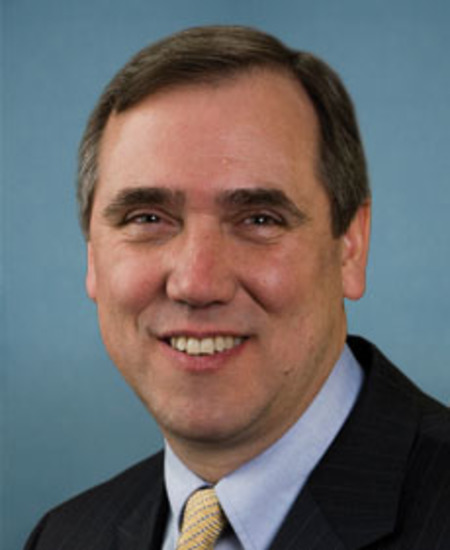
Sen. Jeff Merkley
Sponsored bills
Maddy summaryThe Public Service Freedom to Negotiate Act of 2025 establishes federal minimum standards for collective bargaining rights for public employees and supervisory employees. The Federal Labor Relations Authority will determine if states' laws "substantially provide" these rights, and if not, the federal standards will apply to affected workers. The bill guarantees rights like forming labor organizations, negotiating wages and working conditions, and resolving disputes through mediation or arbitration, while prohibiting strikes that would disrupt emergency services. Existing collective bargaining agreements and units are protected from the bill's implementation.
Maddy summaryThis resolution (SRES 159) is a ceremonial Senate measure honoring the late Senator John Bennett Johnston, Jr. (1932-2024), who represented Louisiana in the U.S. Senate from 1972 to 1997. It commemorates his career, including his work on energy policy, flood control, and Louisiana conservation efforts, and requests the Senate adjourn in his memory while sending condolences to his family. As a non-binding resolution, it has no policy impact or direct effect on any individuals or laws.
Maddy summarySRES 158 is a non-binding Senate resolution expressing the chamber's view that paraprofessionals (like paraeducators) and education support staff (including clerical, custodial, and food service workers in schools) deserve fair treatment. It outlines specific expectations for their workplaces, such as livable wages, affordable healthcare, job security, paid leave, and meaningful input in school policies - directly affecting over 3 million frontline workers supporting 49 million students. The resolution does not create new laws but urges federal and state action to address current gaps, including ending seasonal layoffs and ensuring access to benefits. It emphasizes these staff’s critical role in school environments while clarifying that it does not override existing collective bargaining agreements.
Maddy summaryS 1310, the No Tax Breaks for Union Busting (NTBUB) Act, denies tax deductions for employer spending aimed at influencing workers' decisions about union organizing or collective bargaining. It amends the tax code to block deductions for expenses like anti-union consultant fees, captive audience meetings, and other tactics that interfere with labor rights under the National Labor Relations Act. Employers must report such spending on tax returns with specific details, including dates, amounts, and whether activities relate to unfair labor practice charges. This directly affects businesses that engage in anti-union organizing tactics, removing a tax incentive for these activities while preserving deductions for standard union negotiations.
Maddy summaryS 1274 prohibits U.S. exports of liquefied natural gas and petroleum products to entities operating in China, Russia, North Korea, or Iran, or to entities controlled by those countries. It requires exporters to comply with existing sanctions and allows limited waivers only for imminent national security emergencies, with mandatory congressional notice. Violations face civil penalties up to $250 million per incident or double the transaction value, plus potential criminal fines of up to $100 million. The bill does not address domestic energy costs for American households, as its focus is solely on restricting specific international energy exports.
Maddy summaryThe IDEA Full Funding Act (S 1277) mandates specific annual funding levels for the Individuals with Disabilities Education Act (IDEA) starting in fiscal year 2026. It sets fixed dollar amounts or percentage-based funding (ranging from 11.6% to 40% of a calculated base) for states providing special education services to children with disabilities aged 3-21. Funding becomes available on July 1 each year and remains accessible through September 30 of the following year, with amounts increasing annually through 2035. This directly affects all states receiving IDEA grants by guaranteeing minimum federal funding tied to the number of eligible students and national per-pupil spending averages.
Maddy summaryThe Building Child Care for a Better Future Act authorizes $20 billion annually for child care programs starting in 2026, with automatic annual increases based on inflation, and creates a new $5 billion annual grant program to improve child care workforce, supply, quality, and access in underserved communities. It requires states, territories, and tribes to identify areas with particular child care needs and prioritize services for low-income families, children with disabilities, rural areas, dual-language learners, and providers serving high proportions of eligible children. The bill mandates detailed reporting on how funds are used, including annual assessments of child care supply and quality improvements, and ensures federal funds supplement rather than replace existing state child care funding. This legislation directly affects states, tribes, child care providers, and families seeking affordable, high-quality child care in communities with limited access.
Maddy summaryThis bill would allow workers to deduct union dues directly from their taxable income (an "above-the-line" deduction) and restore deductions for other work-related expenses like uniforms or tools that were disallowed after 2017. It affects employees who pay union dues or incur job-specific costs, particularly those in unionized workplaces or professions requiring specialized equipment. The key mechanism creates a new deduction for union dues under existing tax code sections and revives the ability to itemize other work expenses, excluding them from the 2% floor on miscellaneous deductions. These changes would apply to tax returns filed for years beginning after December 31, 2024.
Maddy summaryThe Federal Firearm Licensee Act (S 1294) requires federally licensed firearm dealers to implement stronger security measures for their premises and firearms inventory. The bill mandates annual security certifications, physical inventory checks, and electronic recordkeeping for all firearms transactions, while repealing restrictions that previously limited the ATF's ability to share crime gun trace data with law enforcement. It also increases licensing fees for dealers and establishes new requirements for online marketplaces facilitating firearm sales. These changes aim to improve accountability and reduce firearms diversion to criminals.