

Maddy summaryThe TRACK Act of 2023 requires federal agencies (including HHS, NIH, and Defense) to create a searchable public database compiling detailed information about all federal funding for biomedical research and development. The database must include specific details for each contract, grant, or tax benefit - such as funding amounts, patent ownership, product pricing, manufacturing capacity, and clinical trial data - directly affecting pharmaceutical companies, research institutions, and medical device manufacturers receiving federal support. Agencies must make the database publicly available within one month of enactment and update it every two weeks, with penalties of up to $10,000 per day for non-disclosure. This policy change mandates transparency on taxpayer-funded biomedical projects, enabling public access to previously fragmented data about drug development and costs.
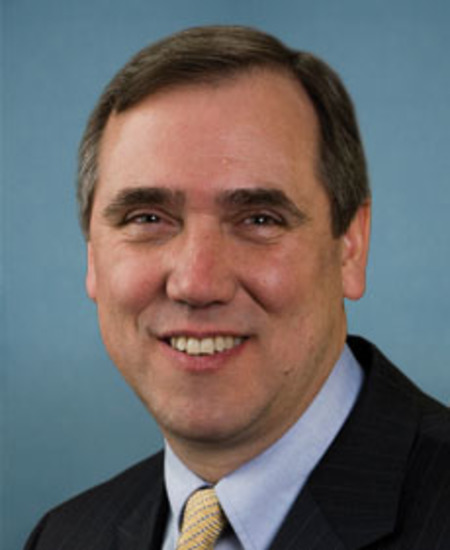
Sen. Jeff Merkley
Sponsored bills
Maddy summaryThis bill allows veterans with combat-related disabilities and less than 20 years of service to receive both military retired pay and VA disability compensation simultaneously. Previously, such veterans had their retired pay reduced to avoid "concurrent receipt" of both benefits. The bill removes the 20-year service requirement for this group, applying specifically to those retired under Chapter 61 of Title 10 with a combat-related disability as defined in existing law. It does not change eligibility for veterans with non-combat disabilities or those with 20+ years of service.
Maddy summaryThis bill expands legal protections for domestic violence and stalking survivors by broadening the definition of "intimate partner" to include current and former dating partners, ensuring more survivors qualify for federal protections. It creates a new federal definition for "misdemeanor crime of stalking," requiring that the offense involves repeated harassment causing reasonable fear for the victim or specific people they care about (like family, cohabiting partners, or pets). The law also adds a new firearm restriction: people convicted of such stalking offenses cannot possess firearms, with limited exceptions for expunged convictions. These changes directly affect survivors seeking legal protection and individuals convicted of stalking under federal or state law.
Maddy summaryThe Child Care for Every Community Act establishes a comprehensive federal program to provide universal, affordable child care and early learning services to all children under school age. The bill authorizes $500 million annually for fiscal years 2024-2034 to fund prime sponsors (including States, localities, and tribal organizations) that operate programs meeting national quality standards. It requires programs to be accessible to all children with fees based on family income (capping at 7% of income for non-low-income families), prioritizing vulnerable groups like children with disabilities, dual language learners, and low-income families. The legislation mandates comprehensive services including health, nutrition, family support, staff training, fair compensation, and community involvement in program design and operation.
Maddy summaryThe Keep Americans Safe Act bans the import, sale, manufacture, transfer, or possession of large capacity ammunition magazines (defined as holding more than 10 rounds) for most civilians, while exempting law enforcement officers, retired officers, and certain security personnel. It requires new magazines to have serial numbers and manufacturing dates, and allows federal funding for buy-back programs to remove these magazines from circulation. The law grandfathered existing magazines owned before enactment and excludes specific uses like campus law enforcement or nuclear facility security. This directly affects civilians owning high-capacity magazines but not police, military, or authorized security personnel.
Maddy summaryS 282, the Arctic Refuge Protection Act of 2023, designates approximately 1,559,538 acres of the Arctic National Wildlife Refuge in Alaska as wilderness under federal law. This provision directly affects the Coastal Plain area of the refuge by restricting activities like oil drilling, mining, and development, as wilderness designation prohibits such uses. The bill amends the National Wildlife Refuge System Administration Act to formally add this specific area to the National Wilderness Preservation System, using a map dated October 20, 2015, for precise boundaries. The change would protect the land from most human alteration while maintaining its ecological integrity.
Maddy summaryS. RES. 32 is a non-binding Senate resolution condemning the January 8, 2023, violent insurrection in Brazil, where supporters of former President Jair Bolsonaro stormed government buildings including the presidential palace, Congress, and Supreme Court. It expresses U.S. solidarity with Brazil's people and support for safeguarding Brazil's democratic institutions following the attack. The resolution urges social media companies to address disinformation that fueled the violence and encourages U.S. officials to assist Brazilian authorities in their investigations. As a diplomatic statement - not a law - it does not impose legal requirements but formally aligns U.S. policy with Brazil's democratic defense.
Maddy summaryThis bill creates a federal grant program to help states and tribes implement Extreme Risk Protection Orders (ERPOs), which allow courts to temporarily remove firearms from individuals who may pose a danger to themselves or others. To qualify for funding, states must have laws including due process protections like hearings before orders are issued. The bill also amends federal law to include ERPOs in background checks and requires states to notify federal databases about these orders. It ensures ERPOs issued in one state will be recognized by courts in other states. This would directly affect individuals subject to ERPOs, law enforcement officers, and courts that implement these orders.
Maddy summaryS 268 establishes federal grants to help states and Tribal entities address child care shortages in underserved areas, known as "child care deserts." The bill provides two types of grants: (1) workforce grants to fund training, credentials, and outreach for child care providers, and (2) facility grants to support construction, renovation, or expansion of child care centers and homes. Funds must supplement, not replace, existing programs like the Perkins Career and Technical Education Act, and states must coordinate with workforce development initiatives. The legislation authorizes $100 million annually from 2024 to 2030 to increase access to affordable, quality child care in targeted communities.
Maddy summaryThe Protecting America's Meatpacking Workers Act of 2023 aims to improve safety and working conditions for meat and poultry processing workers, who face high injury rates, including double the amputation rate of other workers and widespread musculoskeletal disorders. The bill prohibits "no fault attendance policies" that penalize workers for taking legally protected leave, requires employers to provide adequate toilet facilities without punishment, and establishes new OSHA standards for ergonomic programs and protection from airborne illnesses like COVID-19. It also increases OSHA inspector funding by $60 million annually, expands workplace inspections focusing on line speeds and safety hazards, and strengthens protections for workers who report safety concerns without fear of retaliation. The bill directly affects meatpacking facilities and their workers nationwide, particularly those who experienced heightened risks during the pandemic.