

Maddy summaryThe American Opportunity Accounts Act creates tax-free savings accounts for children to build financial assets. It establishes American Opportunity Accounts (AO accounts) for individuals born after December 31, 2007, who are under 18 and have a valid IRS-recognized ID. The government makes an initial $1,000 contribution for those born after 2023, plus annual contributions from age 0 to 18 that decrease based on household income (ranging from $2,000 to $0 for households earning 500% or more of the poverty line). Account funds can be used for education, home ownership, or other approved expenses after age 18, with the accounts exempt from counting toward eligibility for federal benefits.
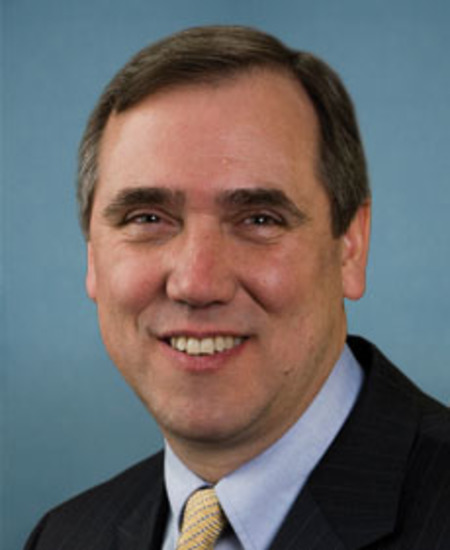
Sen. Jeff Merkley
Sponsored bills
Maddy summaryThis resolution (SRES 63) is a symbolic Senate measure formally celebrating Black History Month. It acknowledges the contributions of African Americans to U.S. history and society, recognizes the origins of Black History Month (beginning as Negro History Week in 1926), and encourages nationwide reflection on this history. The resolution does not create new laws or policies but serves as a formal Senate acknowledgment of the significance of Black History Month in February. It aims to honor the legacy of African American pioneers and promote learning about their impact on the nation.
Maddy summaryThis symbolic Senate resolution designates March 3, 2023, as "National Speech and Debate Education Day" to honor the value of speech and debate programs in schools. It does not create new laws or affect specific groups, but encourages educational institutions, businesses, and communities to recognize these programs. The resolution highlights how speech and debate education develops communication, critical thinking, and civic skills in students. It formally affirms the importance of these programs without imposing any requirements or funding changes.
Maddy summaryThis bill imposes a new tax on major U.S. oil companies with annual crude oil production or import volumes exceeding 300,000 barrels per day. The tax rate equals 50% of the excess of the quarterly Brent crude oil price over the 2015-2019 average, adjusted for inflation. Revenue from this tax funds the "Protect Consumers from Gas Hikes Fund," which then provides refundable tax credits to eligible individuals (with income limits up to $150,000 for joint filers) to offset gasoline costs. The policy directly affects large oil producers and provides direct financial relief to qualifying consumers through quarterly tax refunds.
Maddy summaryThe Social Security Expansion Act increases benefits for many recipients by raising the first bend point percentage from 90% to 95% and adding a 22% increase for those eligible after 2023. It establishes a new minimum benefit for low earners based on years worked, with benefits reaching up to 125% of the poverty guideline for individuals with 30+ years of work. The bill extends eligibility for children of beneficiaries until age 22 if they're full-time students and changes the cost-of-living adjustment index to the Consumer Price Index for Elderly Consumers. Additionally, it introduces new taxes on high earners, including a payroll tax on wages between the Social Security contribution base and $250,000, and increases the tax rate on investment gains from 3.8% to 16.2%, while consolidating the two existing Social Security trust funds into a single Social Security Trust Fund.
Maddy summaryThe SWAT Act of 2023 establishes a $6.5 million fund within the U.S. Department of Agriculture to support research and mitigation efforts targeting the spotted wing drosophila, an invasive insect pest causing significant damage to fruit crops. This bill directly affects fruit farmers growing berries, cherries, and stone fruits (like raspberries, blueberries, strawberries, peaches, and plums), which have experienced up to 20% revenue losses due to the pest. The fund, administered by the Animal and Plant Health Inspection Service, will provide grants for research and control activities over five fiscal years. The legislation authorizes $6.5 million annually for the first five years following enactment.
Maddy summaryS 325, the Supreme Court Ethics Act, establishes new ethics rules for Supreme Court justices and creates an enforcement mechanism. It requires the Judicial Conference to issue a binding code of conduct for justices within one year, followed by the appointment of an Ethics Investigations Counsel to handle public complaints about potential violations and conduct harming the Court's administration. The Counsel must investigate allegations, report annually on complaints, and disclose reasons for recusal or denial of recusal motions in public court records. This directly affects Supreme Court justices and the public's ability to monitor judicial conduct.
Maddy summaryThis bill provides targeted support for smaller and very small poultry and meat processing facilities to comply with federal food safety regulations. It requires the USDA to create a free database of validation studies and publish model HACCP plans tailored to different facility types (slaughter-only, processing-only, and both), while increasing federal funding for state inspection programs from 50% to 65%. The bill also establishes a $20 million annual grant program to help small processors improve safety, capacity, and resilience, with priority given to facilities serving farmers within 200 miles. Additionally, it creates training programs for meat processing workers at community colleges and through simplified grant applications for small facilities. These provisions aim to make compliance with food safety standards more accessible for small local processors.
Maddy summaryThe No Tax Breaks for Outsourcing Act modifies corporate tax rules to prevent companies from avoiding U.S. taxes on income generated through foreign operations. It requires country-by-country reporting of income for multinational corporations, closes loopholes related to "inverted corporations" (foreign companies acquiring U.S. firms to benefit from lower tax rates), and limits interest deductions for certain multinational financial reporting groups. The bill also treats foreign corporations managed and controlled in the U.S. as domestic for tax purposes. These changes primarily affect large multinational corporations with significant foreign operations, with provisions applying to taxable years beginning after December 31, 2022.
Maddy summaryThis bill amends the Communications Act to clarify that "franchise fees" paid by community television providers must be monetary (not in-kind). It specifically changes the definition in Section 622(g)(1) to require that fees be "other monetary assessment," preventing non-monetary payments. The change directly affects community television stations that pay these fees to local governments. It is a technical adjustment to fee requirements, not a new program or funding change.