

Maddy summaryS 681, the Facial Recognition and Biometric Technology Moratorium Act of 2023, prohibits U.S. federal agencies and officials from acquiring, possessing, or using facial recognition or similar biometric surveillance systems (like voice analysis or gait tracking) within the United States, except for specific congressional authorizations meeting strict criteria. It bans federal funding for such systems, makes illegally obtained data inadmissible in court, and allows affected individuals to sue the government for violations. The bill also ties federal law enforcement funding (via Byrne grants) to state/local governments adopting similar bans on biometric surveillance. It explicitly excludes NIST research and does not override stricter state/local laws.
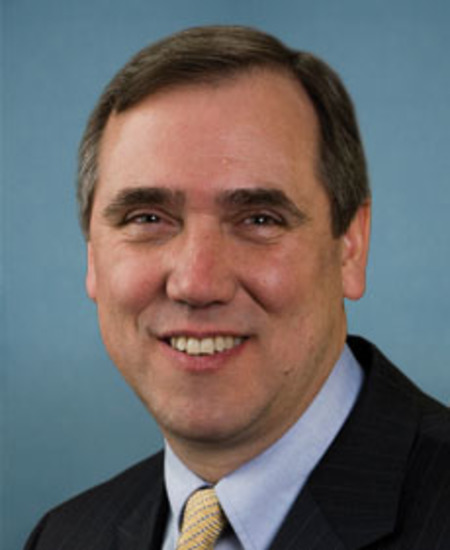
Sen. Jeff Merkley
Sponsored bills
Maddy summaryThe American Dream Employment Act of 2023 (S 672) amends a federal appropriations law to allow House and Senate employees with specific immigration protections to receive pay for their work. It explicitly includes individuals holding deferred action (like DACA), deferred enforced departure, or temporary protected status (TPS) who have a current work authorization document. This change removes a prior exclusion that may have prevented these employees from being compensated while working for Congress. The bill directly affects federal workers in Congress who are in these immigration status categories and possess valid work permits under the referenced programs.
Maddy summaryThis bill reauthorizes the Conrad State 30 program, which allows U.S. states to request waivers enabling foreign medical graduates (J-1 visa holders) to work in medically underserved areas without having to return to their home countries. It extends the program's expiration date, creates new mechanisms for physicians to maintain legal status after completing service requirements, and adds protections against non-compete clauses in employment contracts. The bill modifies requirements for foreign medical graduates to work in underserved areas, including clarifying the 3-year service requirement and establishing a process for states to recapture waiver slots when physicians move between states. It also requires annual reporting on program usage by state and includes provisions for academic medical centers to request waivers without geographic constraints. The bill directly affects foreign-trained physicians, U.S. states, and health care facilities in underserved areas.
Maddy summaryThis bill requires the Environmental Protection Agency (EPA) to create new reporting rules for large cryptocurrency mining operations, defined as those using at least 5 megawatts of power (either as a single facility or multiple facilities owned by the same company with combined power use). It mandates these operations to report both direct greenhouse gas emissions from their own energy use and indirect emissions from purchased electricity under the Clean Air Act. Additionally, the EPA must conduct a comprehensive study on crypto mining's environmental impacts - including emissions, energy consumption patterns, effects on communities near mining sites, and potential grid strain - and submit a report to Congress within 18 months. The study will cover locations, emissions data, public health risks, and energy sources, with $5 million in funding allocated for both the reporting rule development and the study.
Maddy summaryThis bill eliminates waiting periods for disability benefits and Medicare coverage for people diagnosed with metastatic breast cancer. It amends two sections of the Social Security Act to add "metastatic breast cancer" to the list of conditions (alongside ALS) that qualify for immediate access to disability insurance benefits and Medicare coverage, bypassing the standard 24-month waiting period. Specifically, it modifies eligibility under Section 223(a) for disability benefits and Section 226(h) for Medicare coverage. The changes apply to applications or benefits filed/beginning after the bill's enactment date.
Maddy summarySRES 57 is a Senate resolution honoring David Ferdinand Durenberger, a former U.S. Senator from Minnesota (served 1978-1989). It commemorates his life and career, highlighting his role as the lead Republican sponsor of the Americans with Disabilities Act and his work protecting Minnesota's natural resources like the Boundary Waters Canoe Area Wilderness. The resolution directs the Senate to formally recognize his passing and transmit a copy to his family. This is a ceremonial resolution with no policy changes or direct impact on constituents.
Maddy summaryThe Sustaining Our Democracy Act creates a federal program that provides states with funding for election administration improvements and increased voter access. It allocates $2 billion annually from a trust fund to support specific activities like upgrading voting equipment, expanding early and mail voting, recruiting election workers, and protecting election officials from threats. States must submit detailed plans describing how they'll use the funds for approved activities, and the program prohibits using funds for restrictions on voting access or improper audits. The Office of Democracy Advancement and Innovation will oversee the program and ensure funds are used appropriately. This legislation directly affects all states participating in federal elections by providing resources to strengthen election systems and increase access for underserved communities.
Maddy summaryThe Safe Step Act requires health insurance plans and employer-sponsored health coverage to create a transparent process for patients or their doctors to request exceptions to medication step therapy protocols. These protocols typically mandate trying a lower-cost drug first before covering a more expensive alternative. Exceptions must be approved if previous treatments failed, delaying coverage would cause severe harm, the required drug is unsafe, or the patient is stable on the requested drug. Health plans must respond to requests within 72 hours (or 24 hours in emergencies) and make the process details available online.
Maddy summaryThis bill provides temporary civil protections for federal workers during government shutdowns. It allows workers who are furloughed or working without pay to seek court-ordered stays on rent, mortgage payments, student loans, taxes, and insurance premiums during the shutdown and for 30 days afterward. Key provisions include halting evictions, foreclosures, and student loan collections without court approval, while preventing penalties or negative credit reporting during the covered period. These protections apply to all federal employees and contractor staff, excluding criminal matters and child support.
Maddy summaryThis bill amends the tax code to allow employers to claim a work opportunity tax credit for hiring spouses of active-duty military members. It adds "qualified military spouse" as a new category for the credit, defined as an individual certified by a local agency as married to a military service member at the time of hire. Employers who hire such individuals after the bill's enactment date can claim this credit for their wages. The change directly affects employers seeking tax incentives and military spouses seeking employment opportunities. The provision applies to hiring that occurs after the bill becomes law.