

Maddy summaryThe Stop Forced Organ Harvesting Act of 2023 requires the U.S. government to address forced organ harvesting by mandating annual reports on the issue in foreign countries and allowing passport denial or revocation for individuals convicted of organ trafficking. It directs the President to impose sanctions - including asset blocking and visa bans - on individuals or entities involved in forced organ harvesting, with exceptions for humanitarian aid. The bill defines "forced organ harvesting" as organ removal by coercion, deception, or abuse of power, and "trafficking" as recruiting or transporting people for organ removal through similar means. These provisions aim to hold accountable those exploiting vulnerable individuals for organ removal.
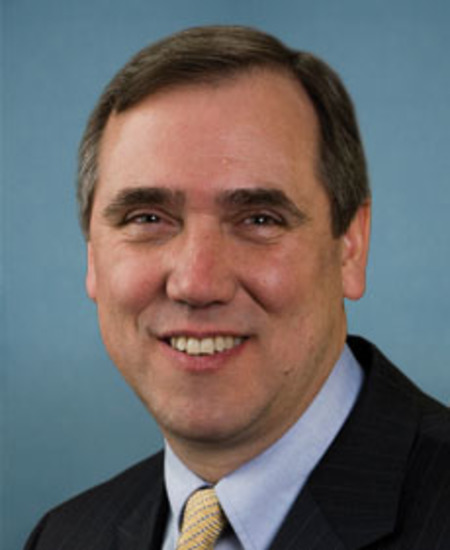
Sen. Jeff Merkley
Sponsored bills
Maddy summaryThe HCBS Access Act (S 762) requires states to provide Medicaid coverage for home and community-based services (HCBS) to eligible individuals with disabilities and older adults, aiming to eliminate waiting lists and ensure access to community-based care. The bill establishes a comprehensive definition of HCBS that includes personal assistance, transportation, respite care, housing support, and other services necessary for community living. It mandates states to develop implementation plans to expand access, improve compensation and working conditions for direct care workers, and report on quality measures and demographic data related to HCBS access. The bill also creates a national technical assistance center to support workforce development and ensures services are provided in settings meeting specific quality standards.
Maddy summaryThis bill establishes a $500 million USDA grant program to assist farmers and communities affected by PFAS ("forever chemicals") contamination in soil or water. Eligible states, tribes, or local governments can receive funding if they have agricultural land or water with unsafe PFAS levels, as determined by the USDA and EPA. Grants can cover costs like compensating farmers for contaminated crops, funding health monitoring, helping farms transition to new production systems, researching remediation, and developing educational programs about PFAS risks. The program requires annual reports to Congress and prioritizes direct financial assistance for farmers facing income loss due to contamination.
Maddy summaryS 753, the "Good Jobs for Good Airports Act," requires airports receiving federal funding to pay covered airport service workers a minimum wage of $15 per hour or higher (based on local standards, the Service Contract Act, or state/local laws), plus minimum fringe benefits. It directly affects workers in roles like baggage handling, security, concessions, cleaning, and ticketing at airports classified as "small," "medium," or "large hub" airports. Key mechanisms include annual certification by airport operators that all covered workers meet these standards, with compliance tied to eligibility for federal airport grants. The law does not override stricter state or local wage laws but sets a baseline for federally funded airport projects.
Maddy summaryThe Tax Fairness for Workers Act (S 738) allows employees to deduct certain work-related expenses from their taxable income. It creates an above-the-line deduction for union dues and adds a new exception permitting miscellaneous itemized deductions for other employee expenses, such as uniforms or tools, that were previously limited. This directly affects wage-earning workers who pay union dues or have unreimbursed job costs. The changes apply to taxable years beginning after December 31, 2022, and remove prior restrictions on these deductions.
Maddy summaryS 701, the Women’s Health Protection Act of 2023, prohibits states from imposing restrictions on abortion that are more burdensome than those for comparable medical procedures. It protects access to abortion before fetal viability (when a fetus could survive outside the womb) by banning requirements like unnecessary in-person visits, medically inaccurate counseling, or facility restrictions not applied to similar care. Post-viability abortions remain protected when medically necessary to safeguard a patient’s life or health. The bill preempts conflicting state laws and ensures enforcement through federal courts to uphold these access protections for patients and health care providers.
Maddy summaryThis bill authorizes the U.S. Mint to produce commemorative coins honoring working dogs, including $5 gold, $1 silver, and half-dollar coins, to be sold starting January 1, 2025. A surcharge of $35 per gold coin, $10 per silver coin, and $5 per half-dollar coin will be added to the sale price, with all surcharge funds directed to America’s VetDogs to support its service dog programs for veterans and people with disabilities. The coins are legal tender but will only be issued for one year (2025), with production limited to specified quantities (50,000 gold, 500,000 silver, 750,000 half-dollars). The bill does not create new government programs but uses commemorative coin sales to fund existing service dog initiatives.
Maddy summaryThe Vote at Home Act of 2023 would require states to mail ballots to all registered voters for federal elections at least two weeks before election day, eliminate unnecessary barriers to voting by mail (like notary requirements), and provide free postage for mailed ballots. It also establishes automatic voter registration through state motor vehicle departments, where individuals applying for driver's licenses would be automatically registered to vote unless they opt out within 21 days. These provisions aim to increase voting accessibility for all voters, particularly people with disabilities, rural voters, and those with scheduling conflicts. The bill would take effect for federal elections beginning in 2024, with automatic voter registration taking effect 180 days after enactment. The legislation focuses on expanding voting options through mail-in voting and simplified registration processes.
Maddy summaryThe AFTER Act of 2023 requires U.S. federal research facilities to develop adoption programs for animals no longer needed for research and deemed suitable for retirement (excluding rats and mice). It mandates these facilities to create regulations within 90 days of enactment, prioritizing placement with animal rescue organizations, sanctuaries, or shelters that meet specific non-commercial, non-breeding standards. The bill explicitly preserves stricter state animal welfare laws and ensures chimpanzees used in federal research can still access existing sanctuary programs. This directly affects federally funded research institutions and the animals they have used in studies, shifting policy toward adoption over euthanasia or indefinite holding.
Maddy summaryThe REDI Act (S 704) amends the Higher Education Act to create a loan deferment option for medical and dental residents. It directly affects borrowers with federal student loans who are enrolled in medical or dental internship or residency programs. The key provision allows these borrowers to temporarily pause both principal payments and interest accrual on their loans during their residency training. This change applies to loans made under the Higher Education Act and is designed to ease financial pressure during these critical training years.