

Maddy summaryThe Digital Equity Foundation Act of 2023 establishes a nonprofit Foundation for Digital Equity to promote digital inclusion, broadband adoption, and digital literacy, particularly for underserved communities including rural populations, Tribal communities, and older individuals. The Foundation will operate through a Board of Directors with government agency representatives and community stakeholders, and can award grants, establish for-profit subsidiaries to attract investment, and collaborate with federal agencies like the FCC and NTIA. It must submit strategic plans and annual reports detailing its activities, funding sources, and progress toward increasing access to affordable broadband, digital literacy training, and technology resources. The bill authorizes funding for the Foundation's establishment and operations beginning in fiscal year 2024.
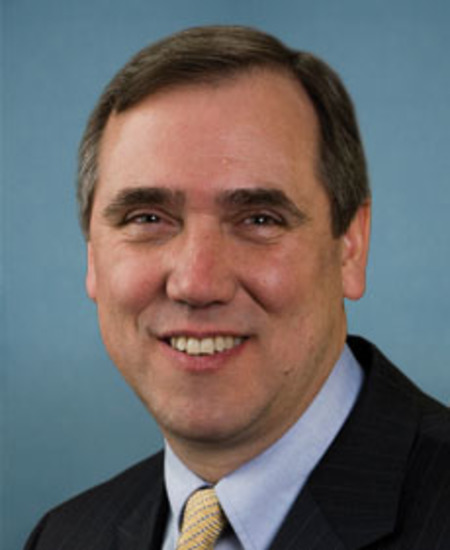
Sen. Jeff Merkley
Sponsored bills
Maddy summaryS 617, the COAST Anti-Drilling Act, prohibits the federal government from issuing oil and gas leases in four specific offshore areas: the Mid-Atlantic, South Atlantic, North Atlantic, and Straits of Florida planning areas. The bill amends federal law to require the Secretary of the Interior to deny all permits for exploration, development, or production of oil, natural gas, or minerals in these regions. This directly affects oil and gas companies seeking to operate in those federal waters and aims to prevent offshore drilling activities in these coastal zones.
Maddy summaryThis bill repeals two provisions that reduce Social Security benefits for certain public-sector retirees. It eliminates the government pension offset (GPO), which currently cuts Social Security checks for people with government pensions, and removes the windfall elimination provision (WEP), which reduces benefits for those with pensions from jobs not covered by Social Security. The changes directly affect public employees (like teachers, firefighters, and state/local government workers) who have pensions from jobs that didn't pay into Social Security. The bill takes effect for Social Security benefits paid after December 2023, restoring full benefits for eligible retirees.
Maddy summaryThe Gun Records Restoration and Preservation Act (S 598) would repeal the Tiahrt Amendments, which currently require background check records to be destroyed within 24 hours and prohibit federal requirements for annual inventory audits of gun shops. By removing these restrictions, the bill would allow law enforcement to retain background check records, conduct regular inventory checks of firearms dealers, and make ATF firearm trace data more accessible for research on gun trafficking. This change directly affects federal agencies (like ATF), state/local law enforcement, gun dealers, and researchers studying gun violence patterns. The bill aims to improve tracking of illegal firearms and inform evidence-based policy decisions, without altering gun laws or ownership rights.
Maddy summaryThis bill changes how often federal credit unions must hold board meetings based on their performance ratings. For all federal credit unions, boards must meet at least monthly for the first 5 years after their charter is approved. After that, credit unions rated 1 or 2 (highest performance) must meet at least 6 times yearly (with one per quarter), while those rated 3-5 must meet monthly. The bill directly affects all federal credit unions by adjusting their board meeting requirements according to their Uniform Financial Institutions Rating System score. These changes aim to align meeting frequency with credit union performance and oversight needs.
Maddy summaryThis is a ceremonial Senate resolution (SRES 85), not a law. It formally congratulates the National Treasury Employees Union (NTEU) on its 85th anniversary and commends the union and its members for their service. The resolution highlights NTEU's history of advocating for federal employees, including securing civil service protections and promoting workplace policies like telework. It does not create new laws, affect any policies, or change government operations - it is solely a symbolic gesture of recognition.
Maddy summaryThis resolution designates February 6-10, 2023, as "National School Counseling Week" in the U.S. Senate. It symbolically recognizes the role of school counselors in supporting students' academic, social, and emotional development. The resolution encourages public awareness of counselors' contributions to student success and school safety but does not create new policies, funding, or requirements. It directly affects school counselors and communities by highlighting their work during this designated week.
Maddy summaryThis bill requires major airlines (defined as carriers with over $1.5 billion in 2018 revenue or foreign carriers operating U.S. flights) to provide full cash refunds - including ancillary fees - for canceled flights or tickets canceled 48+ hours before departure. Passengers who received vouchers during the pandemic (March 2020-enactment) can now request cash refunds for unused portions within 30 days. Airlines must clearly disclose refund rights before ticket sales and during cancellations, with violations carrying $1,000 penalties per incident. The law applies to all covered flights departing from or arriving at U.S. airports.
Maddy summaryThe Veterans Member Business Loan Act amends the Federal Credit Union Act to include loans made to veterans as a qualifying "member business loan." This change directly affects credit unions, allowing them to count such loans toward regulatory requirements for member business lending. The bill adds a new definition specifying that "member business loan" includes loans to veterans, using the standard definition of "veteran" from Title 38 of the U.S. Code. The amendment takes effect 180 days after the bill's enactment.
Maddy summaryThis bill expands a federal loan repayment program for mental health professionals working in underserved areas. It increases annual funding from $25 million to $50 million (2023-2032) and adds behavioral health professionals - including psychologists, social workers, and counselors - to the eligible group. Participants must agree to 1-6 years of full-time work in designated mental health shortage areas or counties with high overdose death rates, with no more than one year between service periods. The program repays student loans in exchange for service, targeting areas facing critical workforce shortages. It amends existing law to include specific geographic and demographic criteria for qualifying locations.